

.svg)
.webp)

At some point, every event team hits a stage where the questions change. It’s no longer “Is registration working?” It’s “How do we get 3,000 people checked in without queues?” “Can we print badges on demand without errors?” “Are exhibitors actually getting usable lead data?” And “Do we have real numbers to show what worked?”
That shift usually happens as events grow: more attendees, more sessions, more pressure to deliver a polished, high-performing experience. And that’s when teams already using Bizzabo start exploring alternatives. Not because they’re looking to switch for the sake of it. Instead, it's because their operational needs have become more specific, more demanding, and harder to manage with a single platform.
Maybe you need faster on-site execution. Maybe your exhibitors are asking for better lead qualification. Or maybe you want clearer visibility into what’s happening during the event. Whatever the reason, there are now several Bizzabo competitors that support how events actually run on the ground.
In this article, we break them down in simple terms. Once you reach the end of this comprehensive list, you'll be able to evaluate which platform matches your on-site needs, data expectations, and event scale.
Quick Overview
- As events scale, gaps in pricing transparency, customization, and on-site reliability push teams to evaluate Bizzabo competitors that better support real-world execution.
- Key operational gaps in Bizzabo include add-on-heavy pricing, rigid workflows, and reliance on stable internet for on-site tools, which can impact attendee flow, data accuracy, and overall event performance.
- Top alternatives vary by strength. For instance, fielddrive (comprehensive planning and on-site execution), Cvent (enterprise + vendor sourcing), Whova (engagement), Swapcard (AI networking), vFairs (virtual), Eventtia/Stova (flexibility + scale), Hopin (streaming), EventMobi (simplicity).
- Before choosing, focus on offline check-in, integrations, pricing clarity, scalability, and how well the platform supports multi-track agendas and hybrid delivery.
- The right choice depends on your biggest gap: on-site execution, engagement, or scale, and how well the platform performs when your event goes live, not just during setup.
The Operational Gaps Event Teams Commonly Encounter with Bizzabo
Bizzabo is widely recognized as a strong platform for B2B marketing events, offering capabilities around registration, attendee engagement, and CRM integration. For teams focused on proving marketing ROI and centralizing event data, it can be a compelling choice.
However, as event requirements become more operationally complex, especially on-site, many teams start to encounter limitations. Feedback from users and real-world deployments highlights several recurring challenges around pricing transparency, customization, on-site reliability, and the pace of innovation.
1. Pricing Complexity
One of the first challenges teams encounter is commercial. From available insights, Bizzabo follows a seat-based pricing model starting at around $499 per user per month, billed annually. For a small team of three, the cost quickly reaches $18,000 before even adding any advanced functionality.
And that’s where things become less predictable:
2. Limited Customization and Workflow Flexibility
As events grow more complex, flexibility becomes critical. However, many users report that Bizzabo’s customization capabilities can feel restrictive, especially when tailoring event experiences or registration workflows.
Common feedback includes:
- Limited customization in event setup and attendee communications
- Rigid workflows that don’t adapt easily to unique event requirements
- Design and branding constraints that require workarounds
- Missing features that impact usability and overall efficiency
3. On-Site Execution Challenges in Real-World Environments
Bizzabo’s strength lies in structured, well-connected environments, particularly B2B marketing conferences. But events don’t always happen under ideal conditions.
Many enterprise events take place in:
- Large convention centers with unstable WiFi
- Corporate campuses with restricted networks
- Government or regulated venues with limited connectivity
This is where challenges begin to surface.
If connectivity drops during peak check-in times, data syncing can fail, impacting attendee flow and overall event experience. For teams prioritizing operational reliability, this becomes a critical consideration when evaluating Bizzabo competitors.
4. Slower Innovation Compared to Newer Platforms
Bizzabo has introduced AI capabilities, such as its Event OS Copilot, to support content creation and planning. While this is a step forward, many newer platforms are moving faster in terms of AI-driven event operations.
Emerging capabilities in the market now include:
- AI-powered registration builders that generate forms instantly
- Facial recognition for faster, touchless check-in
- AI-driven attendee matchmaking and networking
- Automated agenda creation and personalization
- Built-in AI tools across emails, event apps, and websites
Compared to these advancements, Bizzabo’s pace of innovation can feel incremental, especially if you're looking to modernize both planning and on-site execution.
That said, these gaps don’t make Bizzabo unusable. However, they do reinforce why many teams start evaluating Bizzabo competitors as their event requirements change.
Top Bizzabo Competitors Designed for Real-World Event Management in 2026
Once your event needs go beyond registration and marketing workflows, the focus quickly shifts to what actually happens on-site. From managing high-volume check-ins and badge printing to capturing exhibitor leads and tracking attendee movement in real time, execution becomes the real test.
The Bizzabo competitors below enable more control over on-site operations and better visibility into event performance. They can handle real-world conditions, not just ideal scenarios.
1. fielddrive
fielddrive is an intelligence-driven on-site event partner designed for teams that need more than just a registration platform. While many tools in the Bizzabo competitors list focus heavily on pre-event setup and engagement, fielddrive is built specifically for what happens when your event goes live. That is, when attendees arrive, queues form, and execution matters most.
That said, instead of stepping in at the last minute to “manage check-in,” fielddrive works with you early in the planning phase. Through its consultative approach, it helps map attendee journeys, optimize venue layouts, plan hardware deployment, and align data capture with your event goals. This ensures your event runs as a coordinated system, not a series of last-minute fixes.
What sets fielddrive apart:
- On-site Tech Advisory Program: A structured, early-stage consultation where experts help you design attendee flow, identify bottlenecks, and align your tech stack with real-world event conditions before show day.
- High-Speed Touchless Check-In: Scalable kiosks supporting QR codes, barcodes, facial recognition, and assisted check-in; built to handle high-volume entry while maintaining a smooth, professional experience.
- Live Badge Printing (6 seconds per badge): Full-color, double-sided badges printed on demand at check-in. This reduces pre-event errors, eliminates waste, and keeps your registration flow moving without delays.
- fielddrive Easy Badging (for smaller events): An all-inclusive solution for events up to 500 attendees, combining portable kiosks, pre-designed badge templates, on-site support, and real-time analytics, without enterprise complexity.
- Real-Time Event Analytics: Live dashboards that give you instant visibility into check-in numbers, session attendance, and attendee movement so that you can make decisions during the event, not after.
- Session Access & Attendance Tracking: Mobile and offline scanning tools that ensure secure session access and accurate attendance tracking, even in low-connectivity environments.
- Exhibitor Lead Retrieval (fielddrive Leads): Enables exhibitors to scan badges, capture lead data, apply custom qualifiers, and access insights instantly, improving follow-up speed and ROI.
- Sustainability-Focused Operations: Eco-friendly badge materials that reduce waste while maintaining high-quality branding.
- Smooth Integrations: Seamless data flow into CRMs, registration platforms, and event systems, ensuring your on-site data is clean, connected, and usable.
- Global Logistics & On-site Support: Delivery and execution across 50+ countries, backed by regional hubs and experienced on-site teams who understand the realities of live events.
Best suited for:
Large conferences, exhibitions, trade shows, and corporate events where speed, control, data accuracy, and exhibitor ROI are critical. Also ideal for smaller events (up to 500 attendees) that need professional on-site execution without added complexity.
Real-world results:
- Routes and fielddrive: leveraging modern tech to host sustainable global events
- How fielddrive Improved Event Check-Ins and Badging for Burger King UK
What clients say:
- "Adding fielddrive to our event was one of the best decisions we've made in a very long time. From start to finish, the experience with the fielddrive team was outstanding. We cannot wait to start planning for our next event with fielddrive!" — Erika Dyer, United Soccer Coaches
- “fielddrive always goes above and beyond, and I couldn’t be happier! You wow’d all of our attendees. Here’s to the next one!” — Matt Cannon, Event Manager at Keller Williams Realty International
Pricing:
Custom pricing based on event size, format, and on-site requirements.
2. Cvent
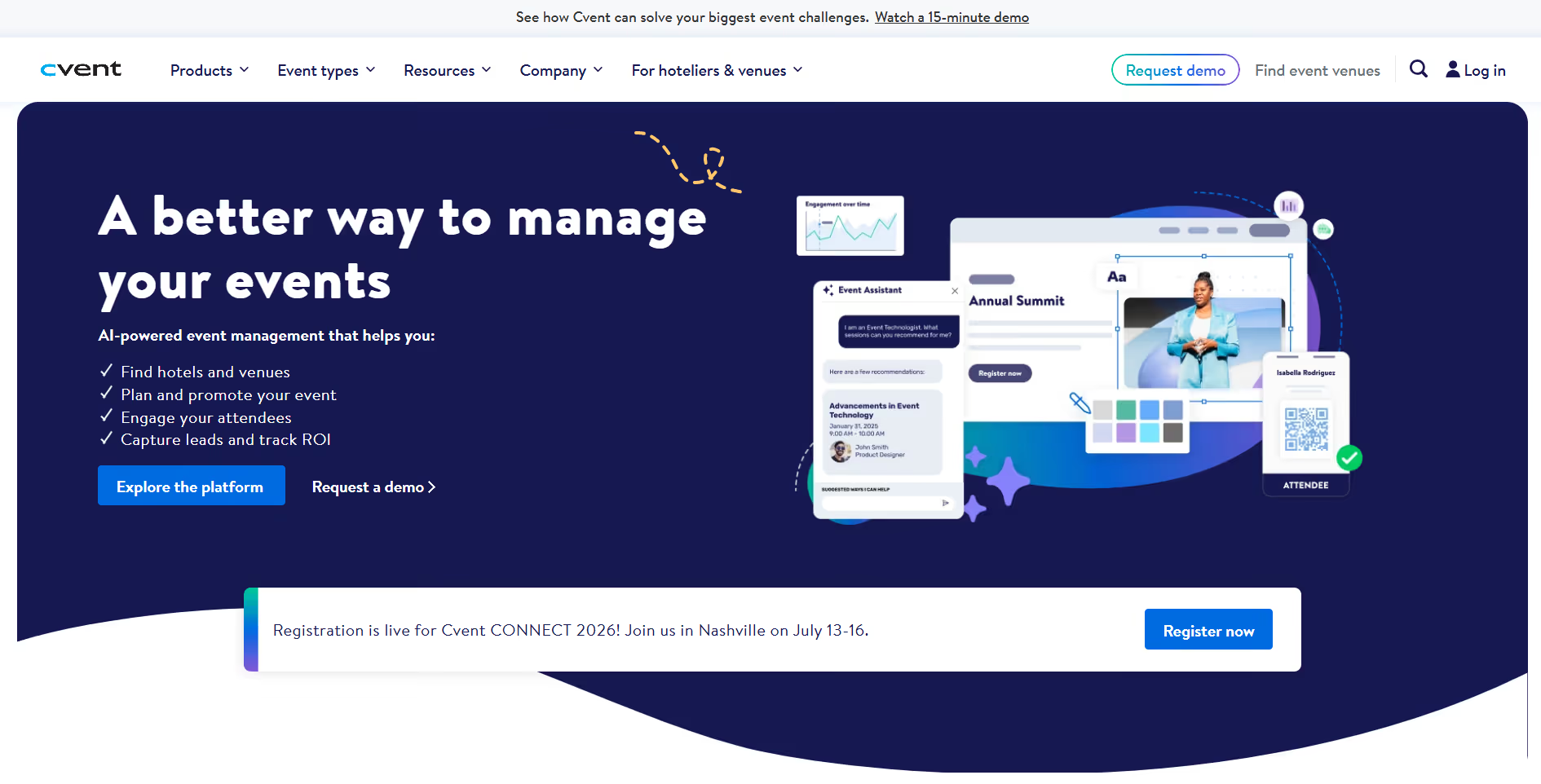
Cvent is one of the most established enterprise platforms in the event tech space and is often evaluated alongside platforms like Bizzabo. It comes in handy especially when event programs become larger, more complex, and globally distributed. While Bizzabo is rooted in B2B marketing events, Cvent is built to support the full event lifecycle at scale. That includes venue sourcing, planning, on-site execution, and post-event reporting.
Its breadth makes it a strong choice for organizations managing multiple events across regions, teams, and business units, particularly where standardization and governance are critical.
Core capabilities:
- Advanced Registration & Attendee Management: Highly configurable registration workflows with approval paths, group bookings, automated communications, and complex logic.
- Venue Sourcing & Housing Management: One of Cvent’s strongest differentiators. Access to a massive global venue marketplace, along with tools for RFP distribution, contract management, and hotel room block coordination.
- On-site Event Technology (OnArrival): Supports check-in, badge printing, and session tracking for large in-person events. It performs well in standard conference environments and integrates tightly with the broader Cvent ecosystem.
- Analytics & Cross-Event Reporting: Consolidates data across multiple events into a unified view, helping enterprise teams track performance, attendance, and engagement at scale.
- CRM & MarTech Integrations: Native integrations with platforms like Salesforce, HubSpot, and Marketo, enabling strong alignment with marketing and sales workflows.
- Enterprise Governance & Controls: Features like SSO, role-based permissions, budget tracking, and task management support large, distributed teams with strict compliance requirements.
- Attendee Engagement Tools: Includes agendas, networking, live chat, polls, and Q&A, offering a broader suite of engagement options than many app-first platforms.
- Event Marketing & Promotion: Centralized tools for email campaigns, lead capture, and event promotion across large portfolios.
- Expanding AI & Marketing Capabilities: Through recent acquisitions, Cvent is investing heavily in areas like AI-powered video content creation and post-event marketing activation.
Common challenges reported by users:
- Steep onboarding curve: The platform’s depth can make initial setup time-consuming, especially for smaller teams or those new to enterprise tools.
- Interface complexity: With such a wide range of features, the interface can feel overwhelming and difficult to navigate efficiently.
- On-site limitations in low-connectivity environments: While OnArrival includes basic offline caching, it’s not a fully offline-first system. In venues with unstable or restricted internet, performance can be impacted during peak check-in.
- Higher total cost: Pricing can scale quickly, particularly when combining annual licensing with per-registrant fees and additional modules.
Best suited for: Organizations where venue sourcing is a primary workflow, enterprise teams managing hundreds of events annually, and companies already embedded within the Cvent ecosystem.
Pricing: Custom pricing, typically structured as an annual license combined with per-registrant fees.
Also Read: Top 10 Cvent Alternatives and Competitors
3. Whova
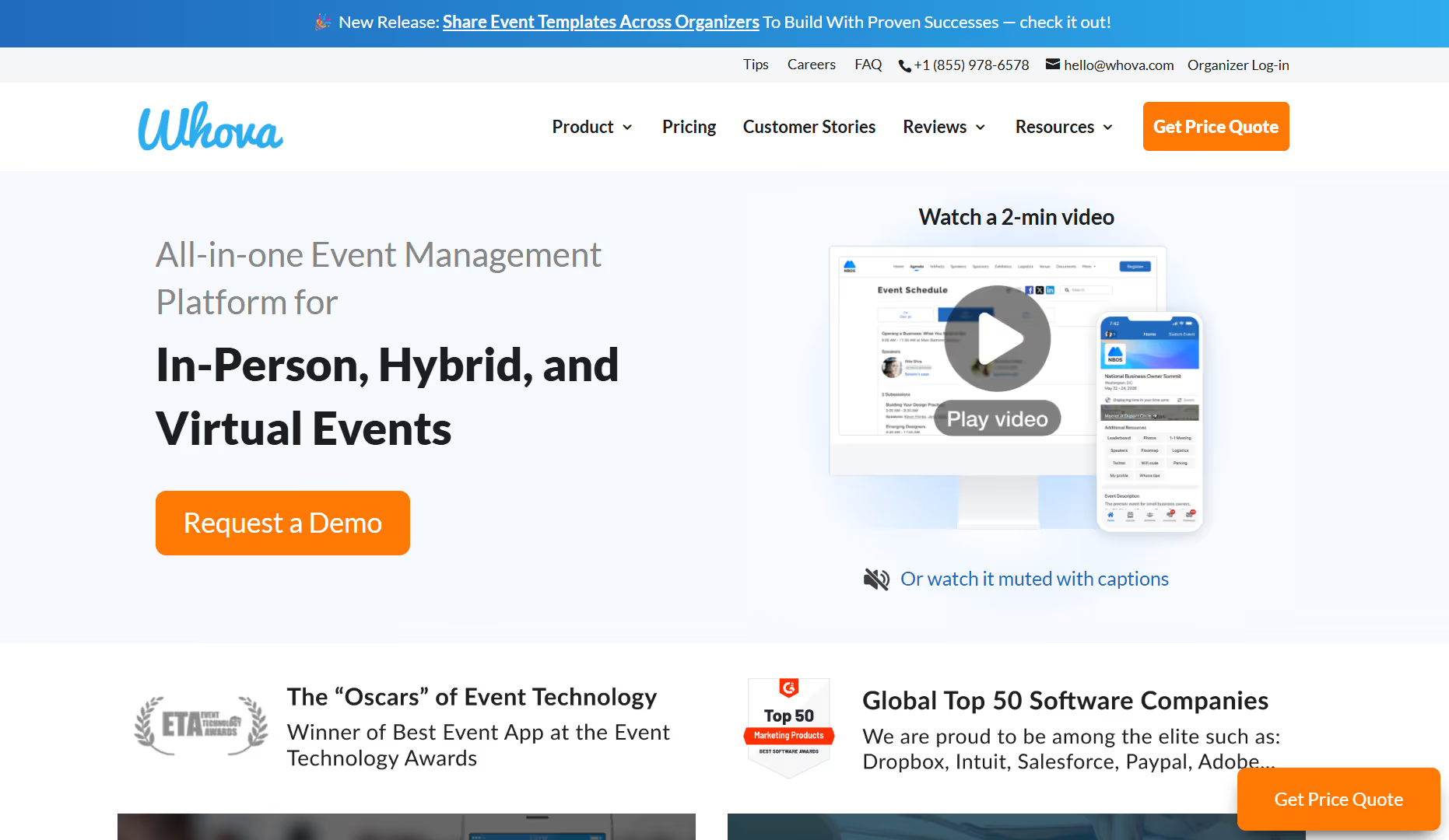
Whova is a mobile-first event platform often compared with tools like Bizzabo, particularly for conferences and association workshops, where attendee engagement is a top priority. While Bizzabo leans more toward marketing-driven event management, Whova has built its reputation around delivering an event app that attendees actually use.
If your primary goal is to drive interaction, networking, and in-app participation rather than to manage on-site operations in depth, Whova is a strong contender among Bizzabo competitors.
Core functionality:
- Registration & Mobile Check-In: Supports app-based ticket scanning and attendee management, along with self-service kiosk check-in and on-demand badge printing for basic on-site needs.
- Mobile Event App Experience: A well-designed native app with personalized agendas, speaker and sponsor profiles, session access, and push notifications to keep attendees informed throughout the event.
- Engagement & Interaction Tools: Includes live polls, Q&A, surveys, gamification, and announcements, designed to boost participation and keep sessions interactive.
- Agenda & Speaker Management: Centralized tools for managing schedules, speaker profiles, exhibitor listings, and session updates. Also includes a Speaker Center for abstract submissions and content management.
- Attendee Networking & Community Features: Community Boards that automatically connect attendees based on shared interests, along with messaging, discussion forums, and content sharing to encourage networking.
- Exhibitor Lead Capture: QR-code-based lead retrieval through a dedicated app, enabling exhibitors to scan attendee badges and collect contact information.
- Hybrid Event Support: Zoom integration allows for virtual sessions and hybrid event delivery.
- Event Analytics & Reporting: Post-event insights focused primarily on engagement metrics and attendance trends, rather than real-time on-site operations.
Common challenges noted by users:
- App navigation complexity: Some attendees find it difficult to locate sessions or important information within the app quickly.
- Limited on-site depth: While the app supports offline access for schedules and networking, core functions like check-in, badge printing, and real-time syncing remain cloud-dependent.
- Notification fatigue: Frequent push notifications can reduce the effectiveness of critical updates.
- Data inconsistencies: Users report occasional issues with missing attendee details or mismatches between mobile and desktop data.
Best suited for: Associations, academic conferences, and community-driven events where attendee engagement, networking, and in-app interaction matter more than enterprise-grade on-site operations.
Pricing: Custom pricing based on event size, format, and selected features.
Also Read: Top 10 Whova Alternatives and Competitors in 2026
4. Eventtia
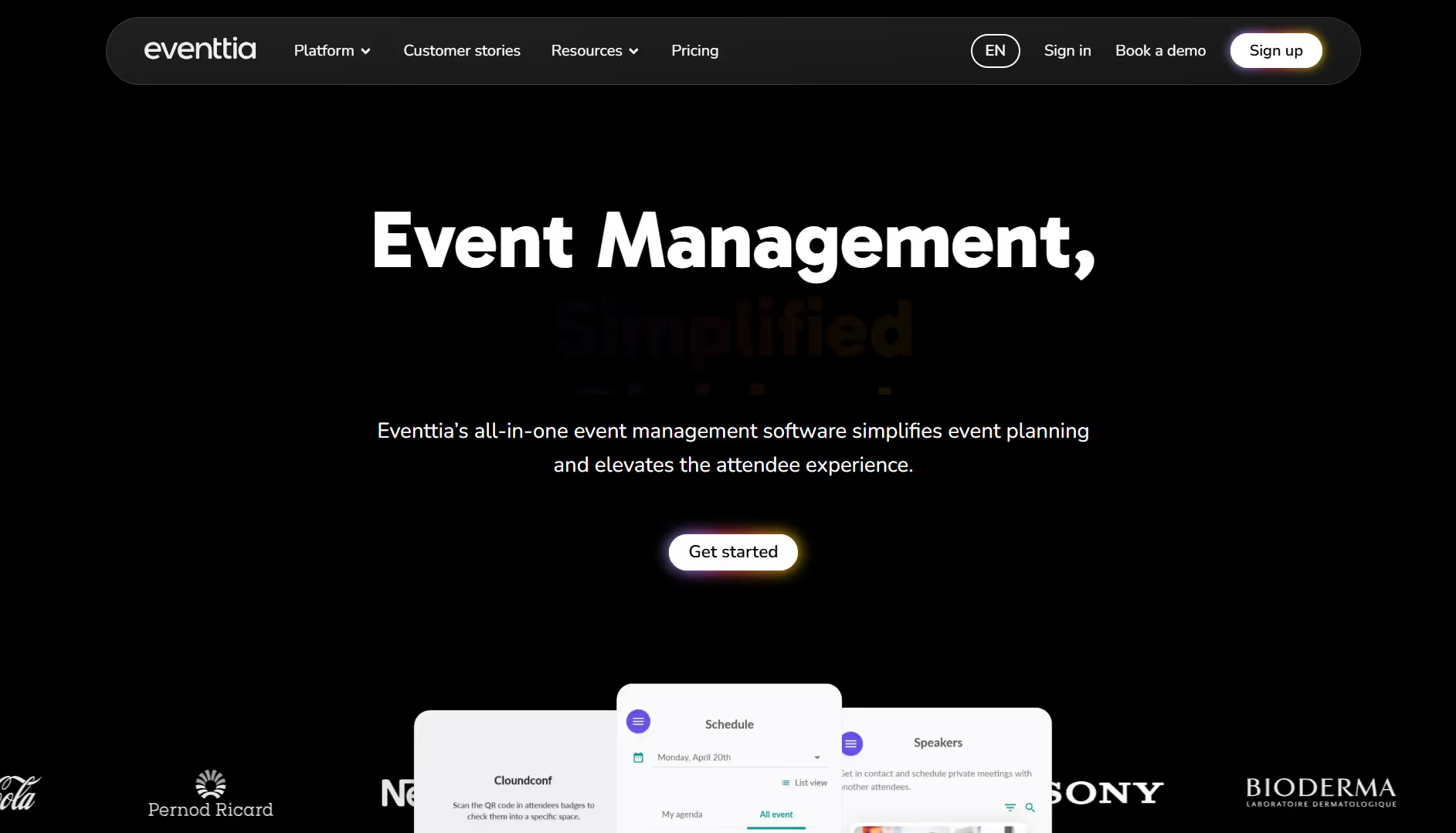
Eventtia is a modular event management platform used across a wide range of industries, including retail, pharmaceuticals, government, and corporate events. While Bizzabo is more structured around marketing-led events, Eventtia focuses on adaptability. It offers a strong backend system that can be tailored to different workflows, audiences, and event types.
Notable capabilities:
- Centralized Multi-Event Management: A unified dashboard and event calendar that allows you to manage multiple events, programs, and recurring initiatives from a single platform.
- Built-In Marketing & Promotion: Tools for email campaigns, landing pages, and social media integrations, reducing reliance on external marketing platforms.
- Networking & Matchmaking Tools: Structured networking features, including attendee matchmaking and one-on-one meeting scheduling, enabling more intentional and relevant connections.
- Customizable Registration Workflows: Flexible registration logic that supports both online and on-site scenarios, making it easier to adapt to different event formats and audience types.
- On-site Check-In & Badge Printing: QR code-based check-in and badge printing via a dedicated app to manage attendee arrivals for in-person events.
- Multilingual Event Support: Built-in language capabilities designed for international audiences and globally distributed events.
- Enterprise-Grade Controls & Extensibility: Includes white-labeling, SSO, role-based permissions, audit logs, unlimited API access, custom portals, and data integrations.
Challenges commonly noted by users:
- Integration limitations: Some users report challenges integrating with external systems, particularly invoicing tools and CRMs such as Salesforce.
- Backend complexity: The interface can be less intuitive, requiring onboarding time and internal training to use effectively.
- Gaps in the attendee-facing experience: Compared to more polished front-end platforms, certain website and content features (such as image editing) can feel limited.
Best suited for: Teams seeking more flexibility and configurability than platforms like Bizzabo, particularly when managing diverse event formats or multiple programs throughout the year.
Pricing: Credit-based, tiered pricing starting at approximately $1,600, with usage credits typically valid for 12 months.
5. Swapcard
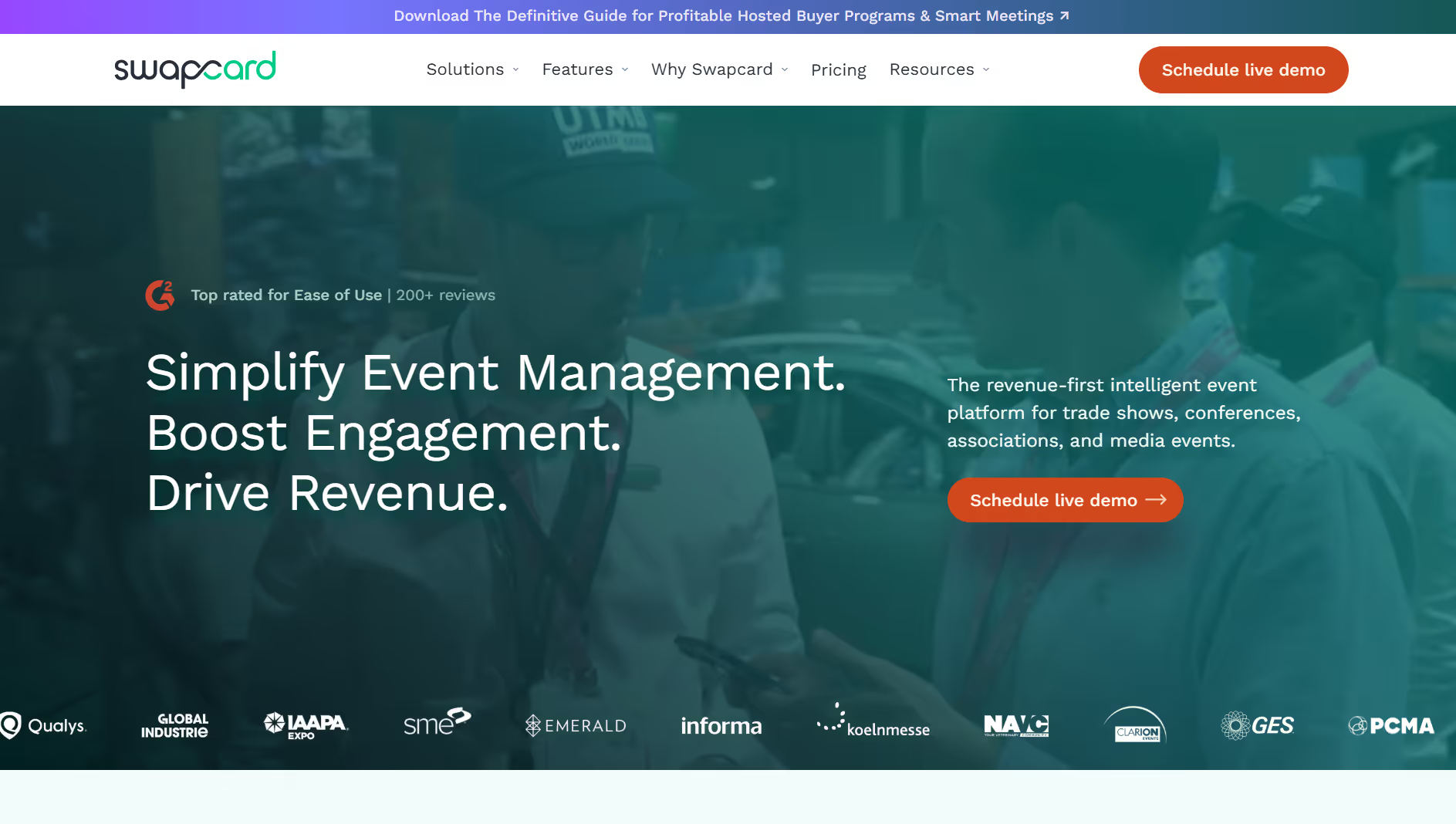
Swapcard started as an AI-powered networking platform and has evolved into a broader event management solution supporting in-person, virtual, and hybrid events. It’s often considered alongside platforms like Bizzabo, particularly for B2B conferences and trade shows where networking and lead generation are key success metrics.
While Bizzabo focuses on marketing-led event experiences, Swapcard’s core strength lies in AI-driven matchmaking and connection-building.
Core capabilities:
- AI-Powered Networking Engine: This is Swapcard’s standout feature. The platform analyzes attendee profiles, exhibitor data, and declared interests to recommend relevant connections and automatically set up meetings.
- Registration & Access Management: Ticketing, attendee segmentation, and access control features to manage entry and permissions across different event zones.
- Sponsor & Exhibitor Tools: Lead capture and analytics tools that help exhibitors track engagement and measure ROI, particularly valuable for sponsor-driven events.
- Community & Engagement Features: Persistent community spaces that allow attendees, sponsors, and exhibitors to stay connected before, during, and after the event.
- Mobile App Experience: A polished, user-friendly app that supports networking, messaging, and event navigation.
- Enterprise Solutions: White-label options, dedicated customer success support, and infrastructure to support large-scale deployments.
- Integrations & Enterprise Security: Includes integrations, SSO, compliance features, and enterprise-grade security controls.
Common user pain points:
- Limited flexibility in networking workflows: While AI matchmaking is strong, some teams find customization options for networking flows and interactions limited.
- Basic messaging capabilities: Messaging features can feel too simple for complex or exhibitor-heavy events.
- On-site execution limitations: Compared to more operations-focused platforms, Swapcard has limited badge printing capabilities, no hardware rental programs, and no dedicated on-site support teams.
- No offline check-in support: The platform is fully cloud-dependent, with no native offline check-in or local data sync, posing risks in low-connectivity environments.
- Occasional agenda sync issues: Users report inconsistencies in agenda updates and cross-device synchronization.
Best suited for: B2B conferences, trade shows, and association events where AI-driven networking, meeting scheduling, and exhibitor ROI are the primary focus.
Pricing: Plans begin at $610 per year, with custom enterprise pricing available for larger deployments. Add-ons are also available.
6. vFairs
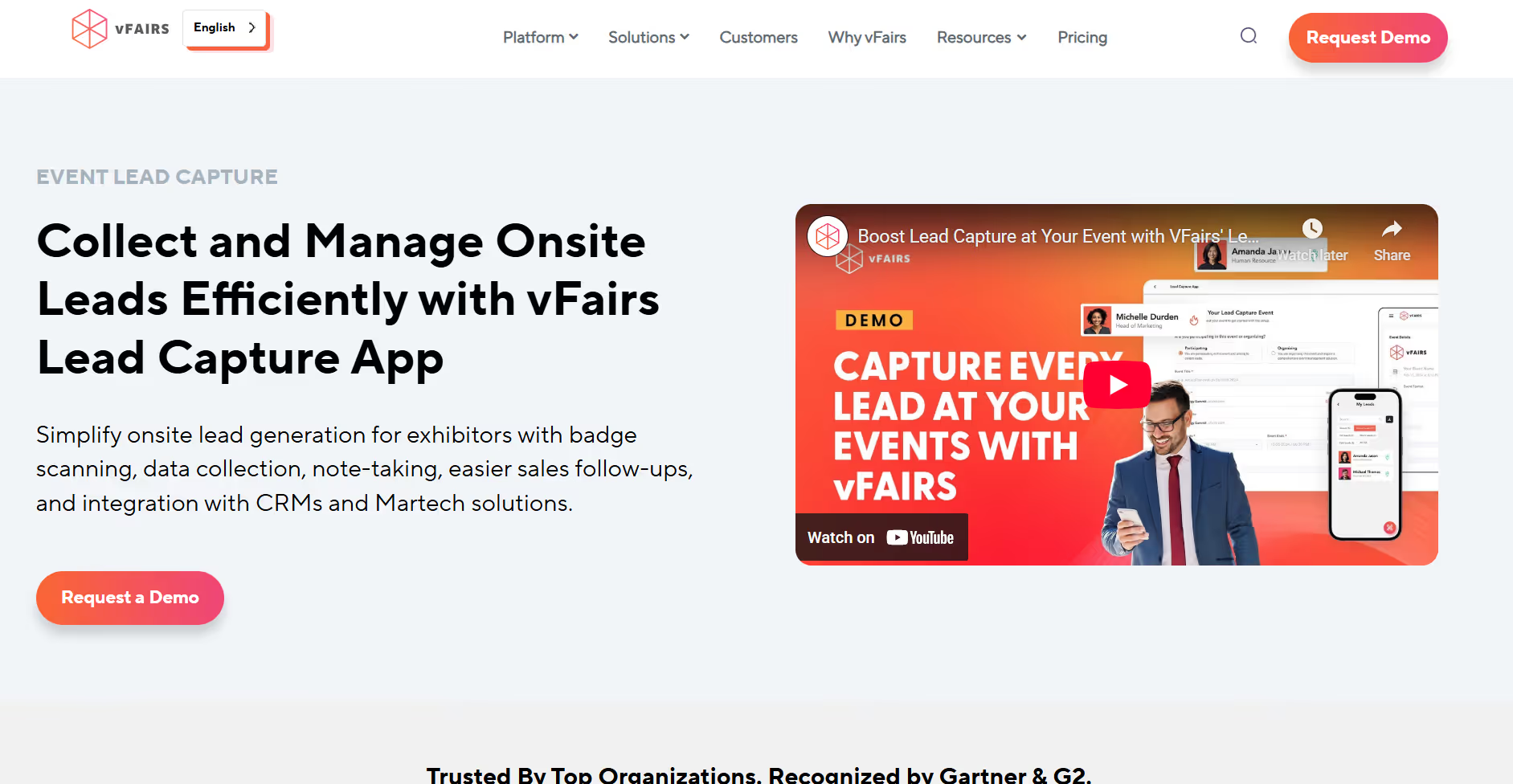
vFairs is a virtual-first event platform known for its immersive, 3D-style environments. It’s often evaluated alongside platforms like Bizzabo and other competitors when the focus shifts toward virtual or hybrid experiences. It's especially useful for online conferences, expos, and career fairs where visual engagement is a primary objective.
While Bizzabo offers hybrid capabilities within a broader event ecosystem, vFairs is purpose-built for digital-first experiences. That makes it a strong choice when on-site execution is less critical than virtual interaction and branding.
Primary capabilities:
- Immersive 3D Event Environments: One of vFairs’ standout features. It offers highly customizable 3D virtual spaces, including lobbies, exhibit halls, booths, and networking lounges. That creates a visually engaging, game-like experience for attendees.
- Virtual & Hybrid Event Delivery: Supports fully virtual and hybrid formats, including conferences, trade shows, expos, and recruitment events.
- Live & On-Demand Content: Supports live streaming, session replays, and content libraries, enabling attendees to engage with sessions during and after the event.
- Registration & Attendee Management: Built-in registration, ticketing, and access control features to manage attendee participation across virtual environments.
- Branding & Customization: Extensive customization options for event layouts and branding, allowing you to align the experience with sponsors and event themes.
- Event Marketing Tools: Includes email campaigns, landing pages, and promotional tools to support audience acquisition and engagement.
Common challenges reported by users:
- Administrative complexity: Routine tasks like updating content, configuring settings, and generating reports can take longer than expected.
- No on-site infrastructure support: There’s no hardware rental program, no RFID/NFC capabilities, no offline check-in architecture, and no dedicated on-site teams.
- Limited operational depth: Compared to platforms focused on on-site execution, features such as sales visibility and operational controls can feel limited.
- Usability challenges: Both organizers and attendees may face friction with navigation, session discovery, and chat functionality.
- Technical reliability concerns: Users report occasional connectivity issues during live sessions and delays in session replays and chat interactions.
Best suited for: Virtual-only events, career fairs, trade shows, and expos where immersive 3D environments and exhibitor engagement are the primary focus.
Pricing: Custom pricing based on event size, format, and selected features.
Also Read: Top 8 vFairs Alternatives Event Teams Can Consider Switching To (2026)
7. Stova
Stova is a unified event management platform created through the merger of Aventri, MeetingPlay, and Eventcore. It’s designed to support a wide range of organizations. It brings multiple event workflows into a single system. Often considered alongside platforms like Bizzabo, Stova aims to provide an all-in-one enterprise solution spanning registration, engagement, virtual delivery, and on-site operations.
Core capabilities:
- Attendee Networking & Engagement: Tools for audience interaction before, during, and after events, including live polls, Q&A, and screen sharing. Integrates with platforms like HubSpot, Marketo, and Salesforce.
- Event Registration & Management: Supports online registration, attendee tracking, and meeting management across different event formats.
- Multi-User & Role-Based Management: Role-based permissions and access controls allow teams to collaborate across departments and regions.
- On-site Check-In & Attendance Tracking: Provides tools to manage attendee arrivals and track participation during in-person events.
- Enterprise Scalability & Controls: Built for larger organizations with configurable workflows, security infrastructure, and support for complex event programs.
- Virtual & Hybrid Event Delivery: Includes live streaming, content hosting, and digital engagement features for both virtual and hybrid experiences.
Common challenges reported by users:
- Post-merger platform complexity: Integrating multiple legacy platforms has made navigation and settings confusing for users.
- Design and layout limitations: Making changes to event layouts or branding often requires technical expertise, reducing flexibility for non-technical teams.
- Customization constraints: Advanced or highly branded event requirements can be difficult to implement without workarounds.
Best suited for: Corporate event teams, associations, public sector, and educational institutions
Pricing: Plans typically begin around $1,995 and range up to $12,995, plus per-registrant fees (typically $3.00–$5.60).
8. RingCentral Events (formerly Hopin)
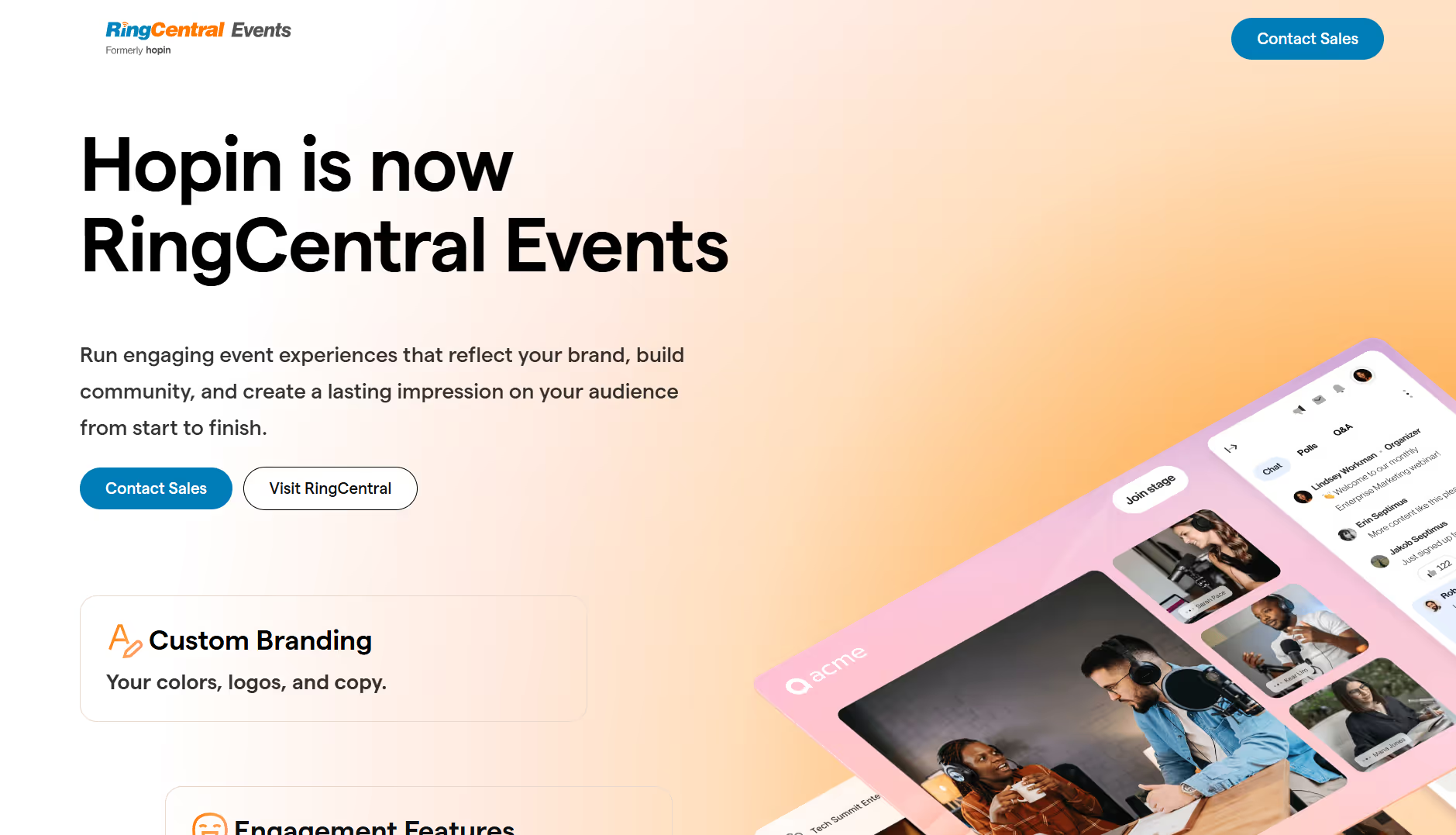
RingCentral Events, previously known as Hopin, is a unified event platform built with a strong virtual-first foundation. It’s widely used for events where high-quality streaming and digital engagement are the primary focus. While it has expanded to include hybrid and limited in-person capabilities, its core strength remains online event production. That makes it a relevant option among Bizzabo competitors for teams prioritizing virtual experiences over on-site execution.
Core capabilities:
- Virtual Event Environment: Offers a structured digital experience that mimics website navigation, with reception areas, main stages, breakout sessions, and expo spaces.
- Livestream & Production Tools: Studio-grade broadcasting features, including live and pre-recorded video, greenrooms, overlays, and multi-stage production setups, ideal for polished, content-heavy events.
- Integrations: Connects with tools like Slido, Miro, Salesforce, Mailchimp, and HubSpot to support marketing, engagement, and sales workflows.
- Registration & Ticketing: Built-in registration flows, ticketing, and attendee management designed for virtual and hybrid formats.
- Audience Networking & Interaction: Includes one-on-one video meetings, group networking sessions, chat, polls, quizzes, and matchmaking features to replicate in-person interaction digitally.
- Analytics & Reporting: Dashboards provide insights into attendance, engagement levels, and session performance.
Where it falls short:
- Limited on-site capabilities: Compared to platforms designed for physical events, on-site features such as check-in, badge printing, and attendee flow management are limited.
- Restricted branding flexibility: Advanced customization can be limited for highly tailored or complex event experiences.
- Technical reliability concerns: Users report video playback disruptions when switching tabs and access limitations due to strict firewalls.
- Missing key integrations and features: No native Zoom integration, no built-in live captioning, and limited support options during live events (primarily email-based).
Best suited for: Webinars, virtual conferences, online summits, sales kickoffs, and hybrid events where livestream quality, audience interaction, and digital engagement are the primary priorities.
Pricing: Offers a 30-day free trial, with paid plans typically ranging from $99 to $299 per organizer per month, billed annually.
9. EventMobi
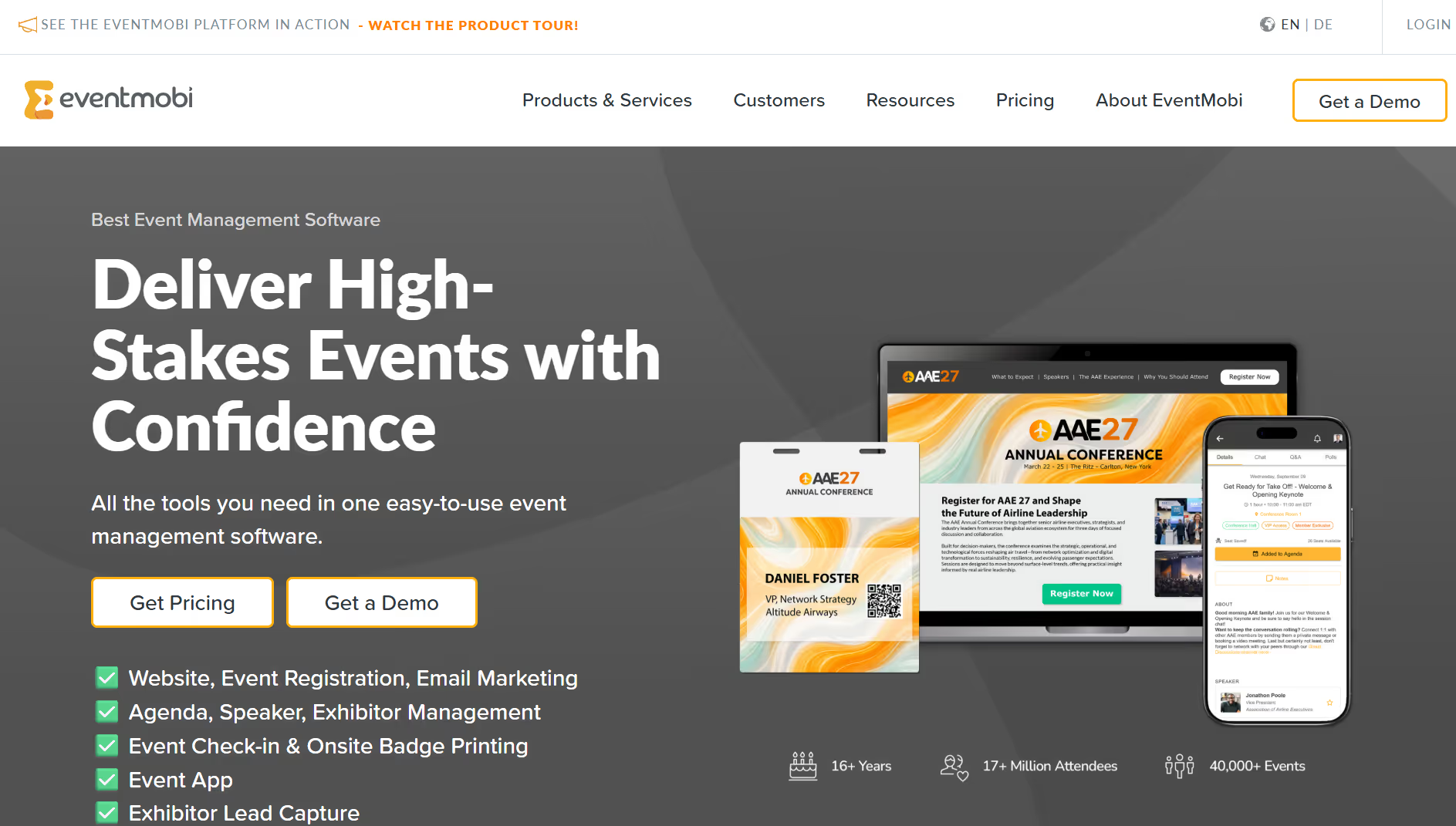
EventMobi is a modular event management platform often used by smaller teams running recurring events throughout the year. Compared to tools like Bizzabo, which are more marketing and data-driven, EventMobi takes a simpler, operations-light approach. It covers registration, mobile apps, and basic on-site functionality.
Among Bizzabo competitors, it’s typically considered when ease of use matters more than deep customization or advanced on-site execution.
Core capabilities:
- Registration & Attendee Management: Straightforward tools to manage registrations and attendee data across individual or recurring events.
- Mobile Event App: A native app where attendees can view agendas, speaker profiles, and real-time updates during the event.
- On-site Badge Printing: Supports badge printing at the venue, though with fewer advanced options compared to more specialized on-site platforms.
- Networking Features: Built-in messaging and interaction tools to help attendees connect and engage during the event.
- Multi-Event Management: Allows teams to manage multiple events from a single dashboard. That's useful for ongoing programs and repeat formats.
- Professional Services: Optional support for setup, design, and on-site delivery, helping teams that don’t have dedicated technical resources.
Common limitations reported by users:
- Not ideal for large-scale or complex events: The platform can feel limited when handling high-volume events or exhibitor-heavy environments.
- Performance slowdowns during live events: Some users report glitches or reduced responsiveness during peak usage.
- Inefficient badge printing workflows: Badge printing processes can be slower and less optimized for high-traffic check-in scenarios.
- Limited branding flexibility: Customization options are basic, and full white-labeling isn’t available.
- Limited integrations: Fewer native integrations mean teams often rely on additional tools, increasing overall tech stack complexity.
Best suited for: Organizers who want a reliable, easy-to-use system without the complexity of more enterprise-focused platforms.
Pricing: Pricing generally starts at around $3,500 per event, with annual plans starting at around $7,900, depending on the features and services included.

Which Bizzabo Competitor Should You Choose? A Quick Decision Guide
You’ve seen the options, now let’s make the decision practical. The right choice depends on what actually matters most in your events: on-site execution, engagement, scalability, or virtual delivery.
Key Considerations When Choosing the Right Bizzabo Alternative
Before shortlisting Bizzabo competitors, it’s critical to evaluate them against real-world event requirements, not just feature lists. The right platform should support how you plan, execute, and measure your events across different environments, teams, and scales.
Below are the key criteria that should guide your decision:
1. Event Type Flexibility
A lack of flexibility means switching platforms as your needs grow, creating unnecessary complexity. Your platform should support in-person, virtual, and hybrid events without requiring separate tools or workarounds. Ask the following questions before selecting:
- Can it handle everything from large conferences to smaller workshops?
- Does it adapt as your event strategy changes over time?
2. Integration Capabilities & Data Flow
Smooth integrations are essential to avoid manual work and data silos. They ensure your event data flows directly into your marketing and sales systems in real time. Verify the following:
- Does it offer native integrations with CRMs like Salesforce, HubSpot, Dynamics 365, Marketo, or Veeva?
- Are APIs open and reliable for custom integrations?
- Does data sync automatically without relying on middleware or CSV exports?
3. Pricing Transparency & Scalability
Cost clarity is often overlooked, but critical. The best Bizzabo competitors offer transparent pricing and can scale from small events to large, multi-day conferences without hidden costs.
- Can you estimate pricing upfront without a long sales cycle?
- Are essential features included, or locked behind add-ons?
- Does pricing scale predictably as your attendee count grows?
4. User Experience (For Teams & Attendees)
Ease of use directly impacts both setup efficiency and attendee satisfaction. A complex interface slows your team down, while a poor attendee experience reduces engagement. So, find out:
- Is the interface intuitive for building events, managing schedules, and configuring workflows?
- Can attendees easily navigate agendas, sessions, and networking features?
- Are engagement tools like chat, polls, and Q&A properly integrated?
5. On-site Execution & Offline Reliability
This is yet one of the most overlooked yet critical factors. For instance, if your events take place in convention spaces, government venues, or low-connectivity environments, offline capability is the difference between smooth entry and long queues. Therefore, confirm:
- Can the platform check in attendees, print badges, and scan sessions without an internet connection?
- Does it cache data locally and sync automatically once connectivity returns?
6. Enterprise-Grade Security & Compliance
For organizations handling sensitive attendee data, security is non-negotiable. If the following standards aren’t clearly documented, it’s a major risk.
- Does the platform offer SOC 2 Type II, GDPR compliance, and ISO 27001?
- Is data encrypted and securely stored?
- Does it support SSO via Azure AD or Okta?
7. Hosting & Infrastructure Flexibility
Some organizations, such as government, healthcare, and regulated industries, require more control over where and how data is hosted.
- Can the platform run on a private cloud or dedicated AWS/Azure instance?
- Does it align with your organization’s governance and compliance requirements?
8. Agenda & Session Management at Scale
Complex events require dynamic scheduling tools. In such cases, manual updates across multiple systems can quickly become a bottleneck. Confirm:
- Can you easily manage multiple parallel tracks (5 to 20+)?
- Does the agenda update in real time across apps, websites, and on-site displays?
- Is there a drag-and-drop interface for quick changes?
9. Hybrid & Virtual Capabilities (Built-In, Not Bolted-On)
Hybrid events require seamless integration, not patched solutions. That's because native capabilities ensure consistent data and smoother experiences across formats.
- Are streaming, breakout rooms, and virtual lobbies built into the platform?
- Or are they dependent on third-party integrations?
10. Branding & Customization
For enterprise events, brand consistency is critical. Your event experience should reflect your brand, not the platform’s. Therefore, ensure the following:
- Can you fully customize registration pages, apps, emails, kiosks, and badges?
- Is there a true white-label experience with no platform branding?
11. Customer Support & On-site Reliability
Support quality can make or break your event. For large-scale events, real human support, especially on-site, can prevent operational failures. Before signing the contract, scrutinize the following aspects.
- Do you get a dedicated project manager or just a help center?
- Is support available across time zones?
- Are there on-site teams available for live event execution?
The more closely the platform aligns with these criteria, the more confident you can be on event day.
Wrapping Up
Evaluating Bizzabo competitors goes beyond comparing features. It’s more about understanding how each platform performs when your event moves from planning into execution. Registration, engagement, and integrations all matter. But what ultimately defines success is how smoothly your event runs on-site, how well your data holds up, and how confidently you can measure outcomes.
As you’ve seen, different platforms solve different problems. Some excel at networking, others at virtual delivery, and some at enterprise-scale management. The key is to align your choice with your biggest gaps, whether that’s attendee experience, exhibitor ROI, operational control, or data visibility.
For in-person and hybrid events, execution is where everything is tested. And this is exactly where many platforms start to show limitations. fielddrive takes a different approach. It works with you early to design attendee flow, align technology with your event goals, and deliver fast, reliable on-site experiences backed by real-time insights.
So, if you're exploring Bizzabo competitors and want a solution built for how events actually run, not just how they’re planned, it's worth considering fielddrive. And to see what that looks like in practice, book a demo.
FAQs
1. How long does it typically take to switch from Bizzabo to another platform?
Switching timelines varies based on complexity, but most teams need 4–12 weeks. This includes data migration, registration rebuilds, integrations, and on-site workflow setup. Platforms with onboarding support or migration assistance can significantly reduce internal workload and transition risks.
2. What’s the biggest risk when switching event platforms close to event day?
The biggest risk is operational misalignment, especially around check-in, badge printing, and data sync. Even if registration works, on-site execution can fail without proper testing. You should always run dry runs and validate real-world workflows before go-live.
3. What should we check before committing to a platform’s integrations?
Don’t rely on “integration available” claims. Ask how data flows in real time, what fields sync, and how errors are handled. Test a real use case, such as syncing attendee updates to the CRM, to avoid breakdowns during live events.
4. How can we compare the total cost of Bizzabo's competitors accurately?
Don’t just compare base pricing. Factor in add-ons, integrations, on-site tools, support, and scalability costs. Request a full breakdown early, including what’s included versus optional, to avoid budget surprises later in the planning cycle.
5. How do we know if a platform will scale with our future events?
Evaluate whether the platform can handle increasing attendee volumes, multi-track agendas, and multiple events per year. Also, check if pricing, performance, and workflows remain manageable as your event program grows.
.svg)
.svg)
.svg)
Want to learn how fielddrive can help you elevate your events?
Book a call with our experts today


.svg)