

.svg)
.webp)

You invest time, money, and effort to make your exhibition presence stand out, but how do you know if it truly paid off?
For many exhibitors, measuring ROI feels confusing or time-consuming. Leads pile up, sales take months to close, and the connection between booth traffic and business results often gets lost. Yet, in today’s data-driven world, proving event success is essential.
The good news? Measuring exhibitor ROI doesn’t need to be complicated. With a few clear steps and the right tools to capture and analyze data, you can see exactly what your event delivered, and make every show more profitable.
Let’s break it down in simple, practical terms.
Key Takeaways
Why Measuring Exhibitor ROI Matters
Trade shows and exhibitions are powerful marketing channels, but also among the most expensive.
From booth design to staff travel, every dollar counts. That’s why ROI measurement isn’t just a finance exercise; it’s how you justify spend, refine your event strategy, and secure future budgets.
Here’s why it matters more than ever:
- Budget justification: Exhibitors can clearly show how event investments translate into business results.
- Marketing evaluation: Helps identify which tactics, demos, giveaways, or sessions generated the best engagement.
- Performance comparison: Lets you evaluate event profitability versus other channels like paid ads or webinars.
- Strategic insight: Gives your leadership visibility into what drives results and where to optimize next.
When you measure ROI effectively, events stop being a cost center and become a growth driver.
With fielddrive’s event analytics and lead tracking tools, you can see your ROI story unfold in real time, from booth entry to closed deals.
Measuring ROI helps justify marketing spend and optimize future participation. The same principle applies to sponsors; explore how to measure and evaluate event sponsorship ROI for greater partnership value.
Key Metrics for Measuring Exhibitor ROI
Before diving into ROI formulas, it’s important to understand what to measure. ROI isn’t just about counting leads; it’s about tracking every action that contributes to business value.
Here are the most meaningful metrics you should track at every event:
a. Foot Traffic
Foot traffic is your first signal of booth performance. It shows how many people visited, how long they stayed, and how interest shifted throughout the day.
You can measure it using:
- Badge or QR code scans
- RFID or NFC tracking
- Session attendance monitoring
With fielddrive’s Session Scanning Solution, you can see real-time booth traffic, dwell times, and visitor flow, helping you visualize exactly when and where engagement peaks.
b. Leads and Contacts
Leads are your clearest ROI driver, but not all leads hold equal value. Prioritize quality over quantity.
Here’s how to do it:
- Capture lead details digitally at your booth
- Tag leads by category or interest level
- Sync data directly into your CRM for instant follow-up
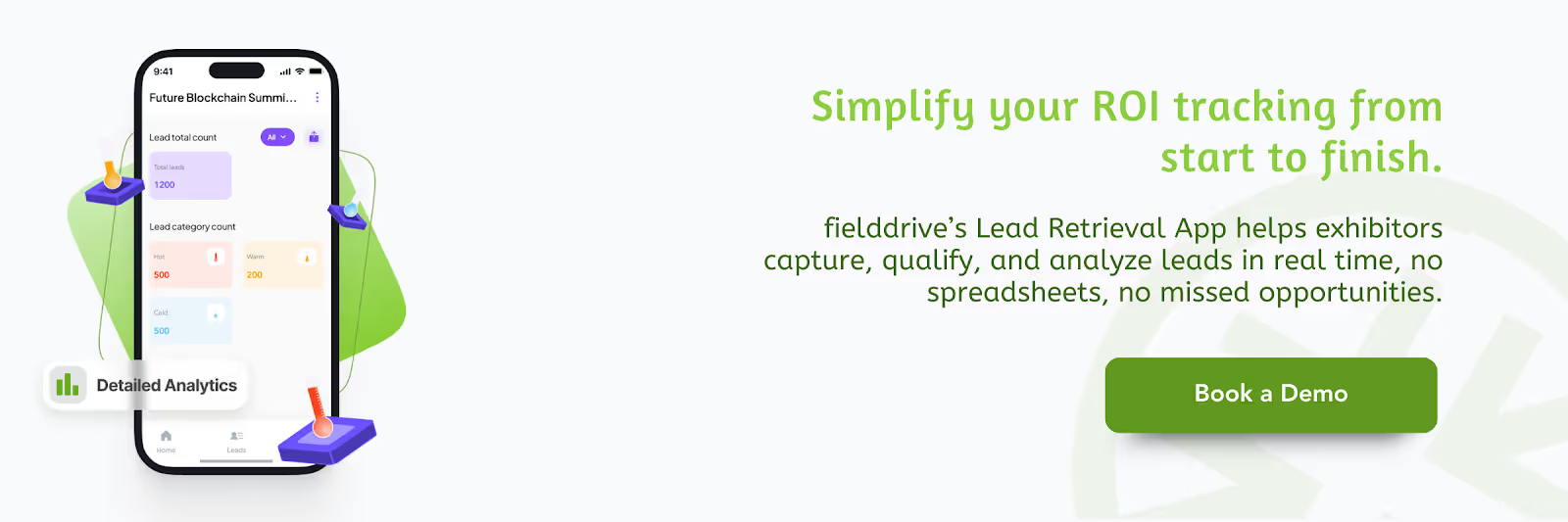
The fielddrive Lead Retrieval App helps exhibitors scan badges, qualify leads, and add notes or categories instantly, ensuring no opportunity is lost after the show.
c. Engagement
Engagement measures how actively visitors interact with your booth, demos, or staff. It’s a strong predictor of sales potential and brand recall.
You can measure engagement through:
- Product demo participation
- Booth games or polls completed
- QR code scans or digital downloads
Deeper engagement typically means higher-quality leads. With fielddrive’s event analytics dashboard, you can see which booth areas or sessions attracted the most attention in real time.
d. Deals and Sales
At the end of the day, ROI comes down to business results. Track:
- Revenue is directly tied to captured leads
- Number of closed deals or contracts post-event
- Pipeline opportunities that are still in progress
This combination gives you a complete short- and long-term ROI picture, showing not just what you earned today, but what’s likely to convert tomorrow.
e. Brand Awareness
Some returns are less direct but just as valuable. Brand visibility drives future sales, partnerships, and customer trust.
Measure brand awareness using:
- Post-event website traffic or landing page visits
- Social media mentions, shares, and engagement rates
- Press coverage or influencer mentions
- Tracking links and UTM codes for campaign monitoring
These insights show how your presence extended beyond the booth, especially useful for measuring PR or marketing ROI from large expos.
Calculating Exhibitor ROI (Simplified Formula)
Now that you’ve identified what to track, let’s put it all together. Measuring ROI doesn’t have to involve complex spreadsheets or guesswork; a simple formula can give you a clear view of event profitability.
ROI (%) = (Revenue – Investment) ÷ Investment × 100
It’s straightforward, but the key lies in defining revenue and investment correctly.
- Revenue (Value Gained): Includes closed sales, qualified leads expected to convert, new partnerships, and brand visibility value.
- Investment (Cost): Covers booth rental, design, travel, staff time, marketing materials, tech tools, and follow-up costs.
Example Calculation
Tip: Don’t ignore pipeline value. If your post-show deals typically close after 60–90 days, estimate their contribution and include them for a truer ROI picture.
Bonus Metric: You can also calculate Cost per Qualified Lead (CQL) to measure efficiency:
CQL = Total Cost ÷ Number of Qualified Leads
Example: $50,000 ÷ 200 qualified leads = $250 per lead. This gives you another lens to measure performance and compare across shows.
ROI is just one part of the bigger picture. For a deeper look at post-event performance, see our guide on how to effectively measure event success.
Tools and Methods to Simplify Exhibitor ROI Measurement
Measuring ROI used to mean collecting business cards, updating spreadsheets, and manually matching data with sales reports. Today, technology makes it faster, cleaner, and far more accurate.
Here’s how modern tools are replacing traditional methods:
Let’s look at the tools that make this transformation possible:
1. Lead Retrieval App
Capture leads instantly by scanning badges or QR codes. No manual entry, no lost contacts. You can add notes, qualify leads by interest, and sync them straight to your CRM.
fielddrive’s Lead Retrieval App allows exhibitors to:
- Scan and categorize leads in seconds
- Capture notes and scoring data instantly
- Access real-time reports and analytics
This ensures you leave no lead behind, and your follow-up team starts working while the event is still live.
Download App Now:
2. Event Analytics Dashboard
Once your leads are captured, analytics tools help you understand performance in context.
Key features to look for:
- Real-time data visualization of booth visits, engagement, and lead flow
- ROI breakdown by session, product, or location
- Exportable reports for post-event presentations
With fielddrive analytics, exhibitors can see how engagement translates into ROI, comparing booth traffic, conversions, and post-event revenue from one simple dashboard.
See how global organizers used advanced analytics to measure event performance and sustainability in our Routes success story with fielddrive.
3. CRM Integration and Automation
ROI analysis gets messy when data is scattered. Integration ensures a smooth handoff from lead capture to follow-up.
Integrated systems allow you to:
- Automatically sync leads with your CRM
- Track conversion outcomes post-event
- Measure ROI by sales stage or account type
Automation also cuts reporting time dramatically, freeing your team from manual entry so they can focus on outreach and sales.
Analytics don’t just benefit exhibitors; sponsors can also gain from smart data insights. Learn how to maximize sponsorship ROI with event sponsor analytics.
Strategies to Maximize Exhibitor ROI
Measuring ROI is one thing; improving it is where the real value lies. The secret to higher exhibitor ROI starts with planning smarter, engaging better, and following up faster.
Here’s a practical breakdown you can use before, during, and after every event.
a. Pre-Show Planning
Great ROI starts before the first attendee arrives. Think of this stage as setting the foundation for measurable success.
Plan smarter with these actions:
- Set clear goals: Define what success looks like, for example, “150 qualified leads with a 10% post-event conversion rate.”
- Choose events strategically: Focus on shows where your target audience actively attends.
- Promote your booth early: Use email, LinkedIn, and your event app to drive pre-show awareness.
- Prepare your data tools: Set up your Lead Retrieval App, CRM connections, and analytics dashboard ahead of time.
With proper planning, your ROI measurement starts at zero, not at the registration desk.
Setting clear goals and planning make a huge difference. If you’re preparing for your next big event, our conference checklist and timeline guide for 2026 can help you stay organized.
b. On-Site Engagement
Once the event begins, your goal is to turn foot traffic into meaningful interactions.
Engaged attendees remember your brand and convert more often.
Here’s how to boost on-site engagement:
- Interactive demos: Let attendees experience your product hands-on.
- Smart booth layout: Create easy flow paths and clear visual messaging.
- Gamification or polls: Use interactive screens or contests to increase dwell time.
- Instant content sharing: Send brochures or case studies digitally through your lead app.
Tools like fielddrive’s Analytics Dashboard track booth engagement and dwell time in real time, helping you adapt mid-event to keep interest high.
c. Post-Show Follow-Up
Your ROI depends heavily on what happens after the event. A fast, personalized follow-up turns leads into deals, and missed follow-ups can sink even the best-performing shows.
To close the ROI loop:
- Follow up within 48 hours while interest is fresh.
- Segment leads by quality or engagement level using your lead retrieval data.
- Send personalized content (like demos, decks, or offers).
- Track conversions through your CRM and connect results back to the event.
With fielddrive’s Lead Retrieval App, all your lead data syncs instantly, making post-show outreach faster and smarter.
Evaluate Long-Term ROI and Marketing Impact
Measuring ROI shouldn’t stop when the event wraps up. True performance comes from understanding the long-term value of each event, not just immediate revenue.
Here’s how to take a broader, smarter view:
1. Customer Lifetime Value (CLV)
Some leads won’t convert right away but may become long-term customers.
Incorporate Customer Lifetime Value to see how trade shows contribute to lasting revenue.
CLV = (Average Purchase Value × Purchase Frequency) × Customer Lifespan
Example: If one customer spends $10,000 yearly for three years, their CLV = $30,000.
Including CLV helps you understand how event relationships build future business, not just short-term results.
2. Benchmarking Against Industry Standards
Don’t measure ROI in isolation. Compare your performance against benchmarks for similar industries or event types.
You can track:
- Average cost per lead in your sector
- Typical conversion rates from trade shows
- ROI ratios across previous years
Benchmarking helps identify where you excel and where you can optimize.
3. Continuous Optimization
Once you’ve measured and compared, use those insights to refine your event strategy.
Ask:
- Which events delivered the best ROI?
- What booth designs or demos generated the most engagement?
- Which lead sources closed the fastest?
By analyzing these patterns, you can cut inefficiencies and double down on what truly drives impact.
As event data accumulates, you build a clearer picture of what success looks like, not just per show, but across your entire event portfolio.
ROI grows when sales and marketing teams work together. Watch our webinar on driving event ROI through sales and marketing synergy to learn how alignment improves returns.
Conclusion
Measuring exhibitor ROI doesn’t have to feel complicated or abstract. When you define clear goals, track the right data, and rely on connected digital tools, you gain full visibility into what’s working and where to improve.
With fielddrive, measuring and improving ROI becomes simple. From lead capture and analytics to real-time insights and post-event reporting, every step is built to help exhibitors see and grow their true event value.
FAQs
1. What’s a good ROI for exhibitors?
A strong exhibitor ROI ranges between 3:1 and 5:1, though high-performing shows can exceed that.
2. How soon should I measure ROI after an event?
Start analysis within 30–60 days; that’s when most follow-up conversions happen.
3. What if my ROI isn’t immediate?
Include pipeline value and Customer Lifetime Value (CLV) to get a more realistic view of long-term returns.
4. How can technology improve ROI measurement?
Digital tools like fielddrive’s Lead Retrieval App and Analytics Dashboard automate data capture, analysis, and reporting.
5. How do I compare ROI across multiple events?
Use consistent metrics and centralized tools, fielddrive’s Analytics Platform lets you view performance for every event in one place.
.svg)
.svg)
.svg)
Want to learn how fielddrive can help you elevate your events?
Book a call with our experts today


.svg)