

.svg)
.webp)
Top 8 vFairs Alternatives Event Teams Can Consider Switching To (2026)
Explore the 8 best Vfairs alternatives for complex virtual, hybrid, and in-person events. Compare platforms, avoid friction, and choose the apt fit for 2026.
If you’re running virtual, on-site, or hybrid events on vFairs, you’ve likely felt the strain when your requirements move beyond standard templates. You need more control over booth customization, clearer visibility into attendee and exhibitor data, and reporting that requires less manual cleanup.
As you manage larger conferences, exhibitions, or recurring programs, vFairs' limitations around integrations, steep learning curve, data ownership, and operational flexibility can slow you down. When lead quality, sponsor ROI, and post-event insights matter as much as engagement metrics, the platform you choose becomes a strategic decision.
In this article, we break down the top Vfairs alternatives and competitors. This comprehensive list will help you identify platforms that better support complex event workflows, stronger data outcomes, and scalable virtual, hybrid, and in-person experiences.
At a Glance
- Teams move away from vFairs as backend complexity, limited integrations, operational gaps, and friction grow as events scale beyond basic virtual setups.
- The best alternatives support in-person, virtual, and hybrid events from a single platform, with clearer data ownership, easier workflows, and fewer manual dependencies.
- Platforms like fielddrive, Cvent, Bizzabo, Stova, and Hopin address different primary priorities: on-site execution, enterprise logistics, engagement, or virtual production. Only a few handle everything together.
- Before switching, evaluate format flexibility, integrations, pricing transparency, usability, analytics depth, on-site check-in, and long-term vendor maturity.
- fielddrive stands out as a differentiated option for teams running complex, hybrid, or in-person events. It combines early-stage advisory, on-site technology, and execution-focused intelligence.
Where vFairs Creates Friction for Event Teams
If you’re responsible for managing events on vFairs, many of the challenges reported by users likely feel familiar.
A recurring theme across G2 reviews is backend complexity. While vFairs offers a broad feature set, users consistently report that managing the admin dashboard requires more effort than expected. Key tasks, such as updating content, pulling reports, or adjusting event settings, often aren’t intuitive. That usually leads teams to rely heavily on customer support to complete routine workflows.
Beyond the backend, usability issues affect both organizers and attendees. Organizers mention confusing processes that slow down setup and communication, while attendees struggle with navigation, session discovery, and chat functionality.
While vFairs' support is often praised for its responsiveness, users also highlight a few other common pain points. Those include:
- Chat timing issues and delayed access to livestream replays
- Limited engagement tools, with gaps in gamification, polling, and interactivity
- Missing operational features such as sales rep visibility and timely platform updates
- Frequent technical issues, including connectivity disruptions during live sessions

As these limitations accumulate, many event teams like yours begin to reassess whether vFairs remains the right fit for their needs. Below, we’ve curated the top VFairs alternatives and competitors for 2026 that address these gaps and offer greater flexibility, usability, and data control.
Best vFairs Alternatives for Teams Running Complex Events in 2026
If you’re evaluating a move away from vFairs, the key question is which one removes friction from planning, execution, and reporting. The platforms below are commonly chosen by organizers who need more precise data, easier workflows, and better support for high-stakes virtual, hybrid, and exhibitor-driven events.
1. fielddrive

fielddrive is an intelligence-driven on-site event partner that helps you design and deliver smooth attendee journeys for in-person and hybrid events. Beyond technology, fielddrive works with event teams early in the planning process, advising on event flow, layout, hardware setup, and data mapping before execution begins. The result is faster entry, smoother visitor movement, and cleaner, more actionable event data.
Key Capabilities:
- On-site Tech Advisory Program: Early-stage consultation to map attendee journeys, identify bottlenecks, advise on layouts and hardware, and align technology with event goals.
- Touchless Check-In Kiosks: Facial recognition, QR/barcode scanning, name lookup, and assisted modes to reduce queues and improve first impressions.
- Live Badge Printing: Full-color, double-sided badges printed on demand in six seconds, eliminating pre-printing waste and last-minute errors.
- fielddrive Easy Badging: A simplified, all-inclusive badging and check-in solution for events up to 500 attendees, including on-site support, pre-designed templates, and sticker printing for accurate attendee data.
- Lead Retrieval & Exhibitor Tools: Fielddrive Leads enables real-time lead capture, custom qualifiers, scoring, and instant access for exhibitors.
- Session Scanning & Access Control: Secure session entry and accurate attendance tracking with mobile and offline scanning.
- Third-Party Integrations: Easy integration with CRMs, registration, and event management systems to keep event data connected.
- Sustainability Options: Eco-friendly badge materials and on-demand printing to reduce event waste.
- Real-Time Data & Analytics: Live dashboards showing check-in volumes, session attendance, visitor flow, and engagement metrics.
- Global Logistics & On-site Support: Proven delivery across 50+ countries with local hubs and experienced on-site teams.
Best for: Large conferences, trade shows, exhibitions, conventions, and corporate events that prioritize fast on-site check-in, secure access, branded badging, and real-time operational insights.
Real Case Studies:
- Routes and fielddrive: leveraging modern tech to host sustainable global events
- fielddrive + ADS Group: Elevating Security With Cutting-Edge Event Tech
User Reviews:
- “Our delegates had an amazing check-in experience with fielddrive, we received excellent feedback from our attendees.” - Adam Clay, Director of Finance at Royal Microscopic Society
- "Adding fielddrive to our event was one of the best decisions we've made in a very long time. From start to finish, the experience with the fielddrive team was outstanding. We cannot wait to start planning for our next event with fielddrive!" - Erika Dyer, United Soccer Coaches
- “fielddrive always goes above and beyond, and I couldn’t be happier! You wow’d all of our attendees. Here’s to the next one!” - Matt Cannon, Event Manager at Keller Williams Realty International
Pricing: Custom quote based on event size, format, and on-site requirements. Demo available on request.
.avif)
2. Whova
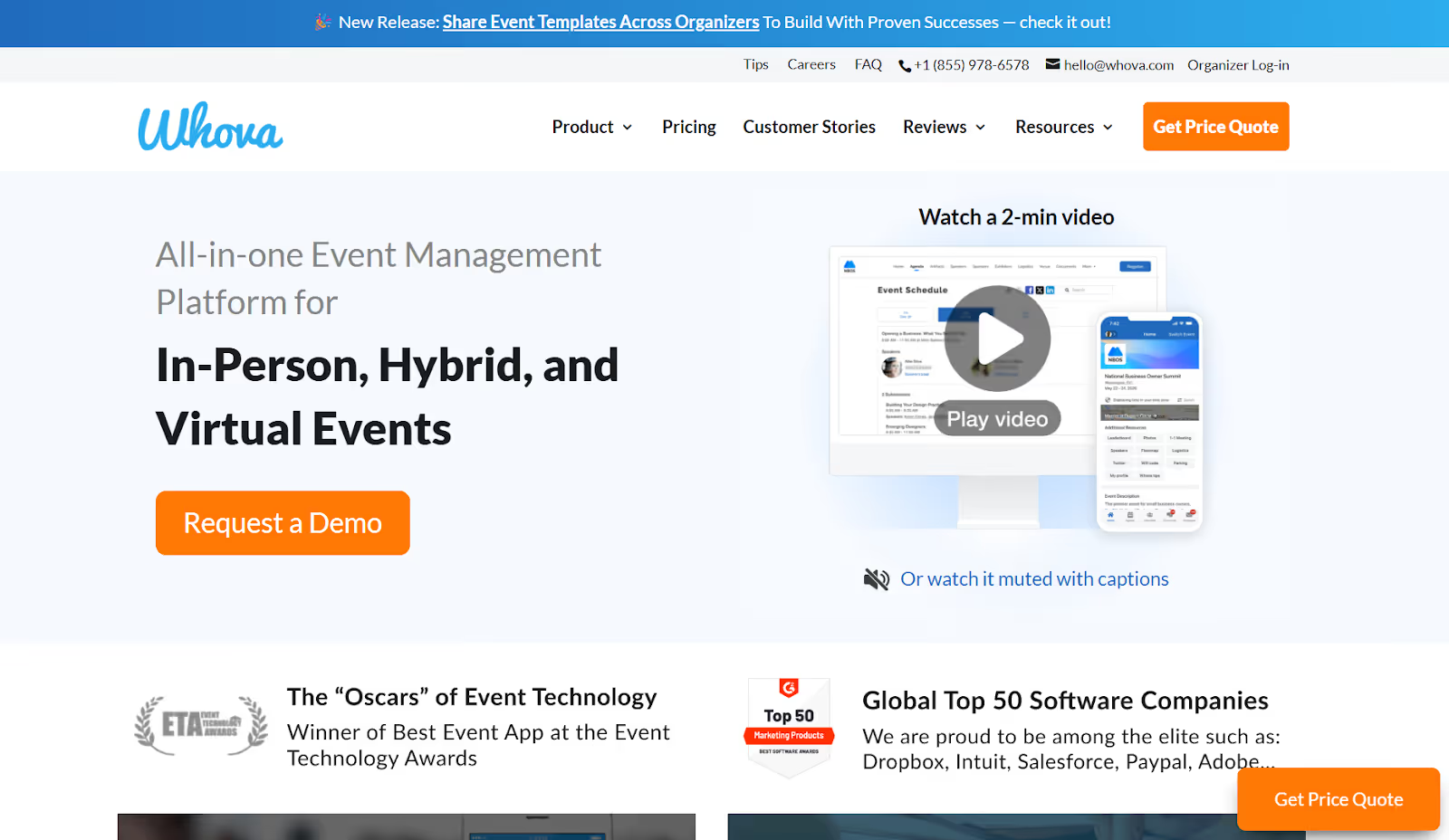
Whova is a mobile-first event management platform often evaluated as a vFairs alternative by organizers who prioritize attendee engagement, networking, and in-app communication. It’s commonly used for conferences, workshops, and association events where agenda personalization and attendee interaction are key.
Key Capabilities:
- Mobile Event App: Personalized agendas, speaker profiles, session access, and push notifications.
- Attendee Networking: Discussion boards, direct messaging, photo sharing, and community-style interaction.
- Engagement Tools: Live polls, Q&A, surveys, gamification, and announcements to drive participation.
- Registration & Check-In: Mobile check-in, ticket scanning, and attendee management.
- Event Operations: Session scheduling, speaker management, exhibitor listings, and agenda updates.
- Marketing & Communication: Email automation, social media promotion, and in-app notifications.
- Analytics & Reporting: Post-event reports on engagement and attendance.
What Users Dislike:
- Excessive, overwhelming notifications make it challenging to focus on important updates.
- Navigation challenges, especially on mobile devices, make it difficult for users to locate features, links, or specific event content.
- Missing or inconsistent information, such as incomplete contact details or gaps between mobile and desktop views.
Pricing: Custom quote based on event size, format, and feature requirements.
Also Read: Top 10 Whova Alternatives and Competitors in 2026
3. Cvent

Cvent is an enterprise-grade event management platform often evaluated as a vFairs alternative. Its strength lies in managing the whole event lifecycle, from venue sourcing and registration to on-site execution and post-event reporting. This makes it a common choice for global enterprises with advanced logistical needs.
Key Capabilities:
- Event Registration & Attendee Management: Highly customizable registration forms, group bookings, approvals, and automated communications.
- Venue Sourcing & Housing: Tools for venue discovery, RFP management, and hotel bookings.
- On-site Solutions: Check-in kiosks, badge printing, RFID tracking, and attendance management.
- Event Marketing: Email campaigns, social media promotion, and lead generation tools.
- Attendee Engagement: Personalized agendas, networking features, chat, polls, and Q&A.
- Enterprise Controls: Single sign-on (SSO), multi-factor authentication (MFA), budget management, task management, and role-based access.
- Analytics & Reporting: Event performance reporting across registration, attendance, and engagement.
- CRM & MarTech Integrations: Native integrations with Salesforce, HubSpot, Marketo, and other enterprise systems.
What Users Dislike:
- Steep learning curve, especially for smaller teams or first-time users
- Longer setup times due to extensive configuration options
- The interface can feel overwhelming given the platform’s breadth.
- Higher cost compared to lighter-weight or modular event tools
Pricing: Custom quote with an annual license fee plus per-registrant pricing.
4. Bizzabo

Bizzabo is an all-in-one, cloud-based event management platform designed primarily for B2B conferences and enterprise events. The platform supports in-person, virtual, and hybrid events and is widely used by Fortune 500 companies across industries such as technology, healthcare, marketing, and finance. Bizzabo’s strength lies in combining event marketing, engagement, and analytics into a single system.
Key Capabilities:
- Event Registration & Management: Branded registration flows, agenda setup, session scheduling, and multi-event management.
- Attendee Engagement: Networking tools, gamification, live chat, polls, surveys, and interactive content.
- Mobile Event App: Personalized agendas, session access, and real-time updates for attendees.
- Event Marketing: Email automation, customization, and promotional tools to drive registrations.
- Virtual & Hybrid Support: Broadcasting, media hosting, recording, and video-on-demand capabilities.
- Enterprise-grade features: Gated events and registrations with Single Sign-On (SSO), custom-branded apps, dedicated IP address, video-on-demand
- Sponsors & Exhibitors: Lead capture tools and analytics to track sponsor engagement and ROI.
- Analytics & Reporting: Centralized dashboards for attendance, engagement, and performance insights.
What Users Dislike:
- Higher pricing can be prohibitive for smaller organizations or one-off events.
- Some advanced configurations require onboarding or training.
- Limited customization
- Registration issues
Pricing: Tiered pricing based on event size and features. Starts at $499 per user per month (billed annually, three-user minimum), with custom pricing for large or enterprise clients. Premium add-ons are also available.
5. Swapcard
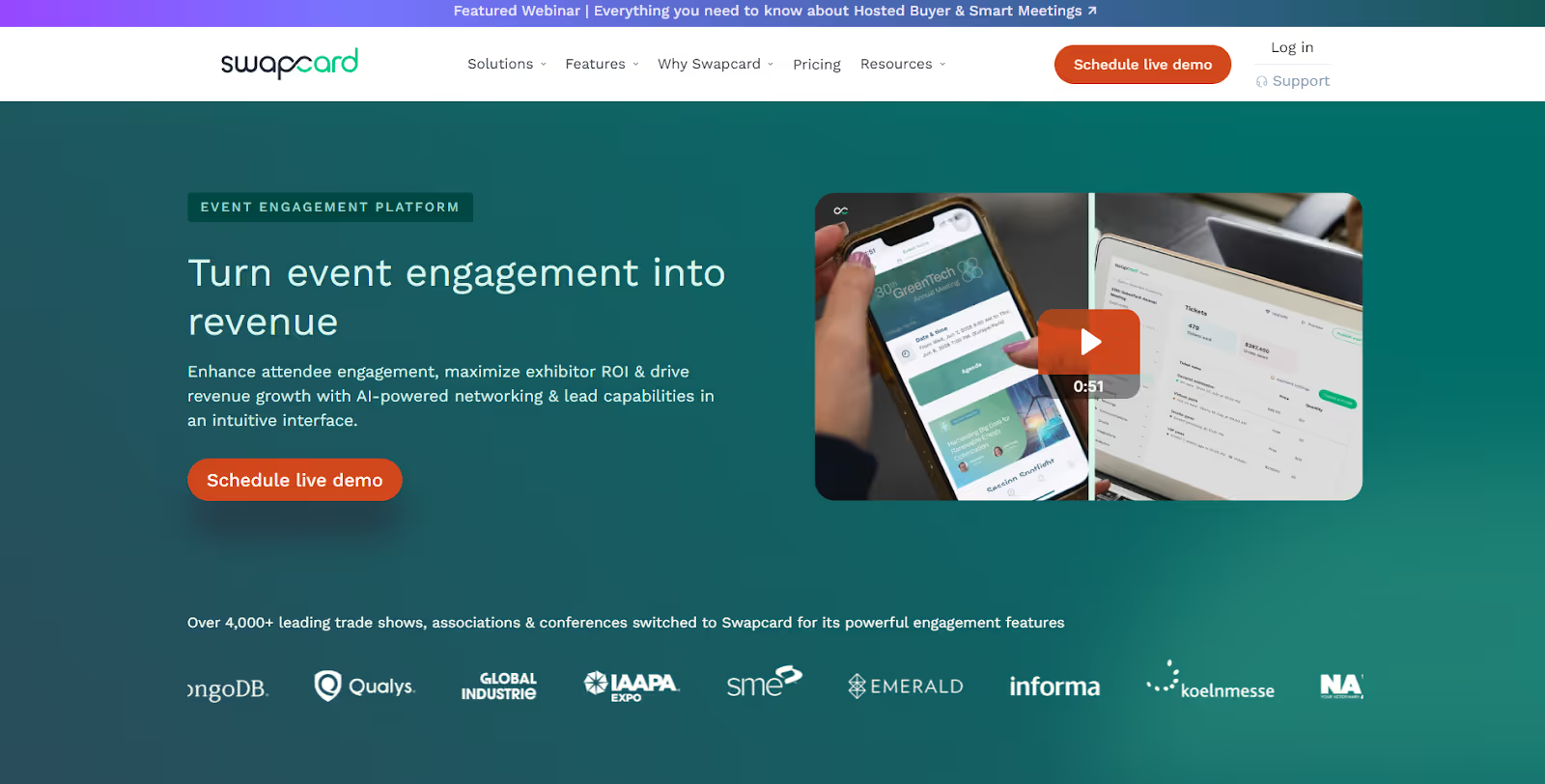
Swapcard started as an AI-powered networking platform and has evolved into a full-scale event management solution for in-person, virtual, and hybrid events. The platform is widely used for conferences, trade shows, exhibitions, and corporate events across industries ranging from non-profits to technology companies.
Swapcard’s core strength lies in enabling meaningful connections before, during, and after the event through intelligent matchmaking and engagement tools.
Key Capabilities:
- Event Management & Promotion: Tools to plan, promote, and manage events across formats.
- Registration & Access Control: Ticket sales, attendee access management, and secure entry workflows.
- Networking & Engagement: AI-powered matchmaking, attendee messaging, and meeting scheduling.
- Community Builder: Ongoing engagement spaces that extend networking beyond the event dates.
- Sponsors & Lead Generation: Lead capture and analytics to help sponsors track engagement and ROI.
- On-site Support: Tools for on-site production and attendee management at in-person events.
- Audience Engagement: Interactive content and engagement features to increase participation.
- Integrations & Security: Native integrations, data security controls, and enterprise-grade compliance.
For enterprise clients, Swapcard offers full white-labeling, Single Sign-On (SSO), dedicated success managers, and security review support.
What Users Dislike:
- Lack of customization options in networking and attendee interaction
- Limited chat functionality
- Technical difficulties with incorrect agendas
Pricing: Tiered pricing, starting from $610 per year, with custom enterprise plans available.
6. Hopin (RingCentral Events)
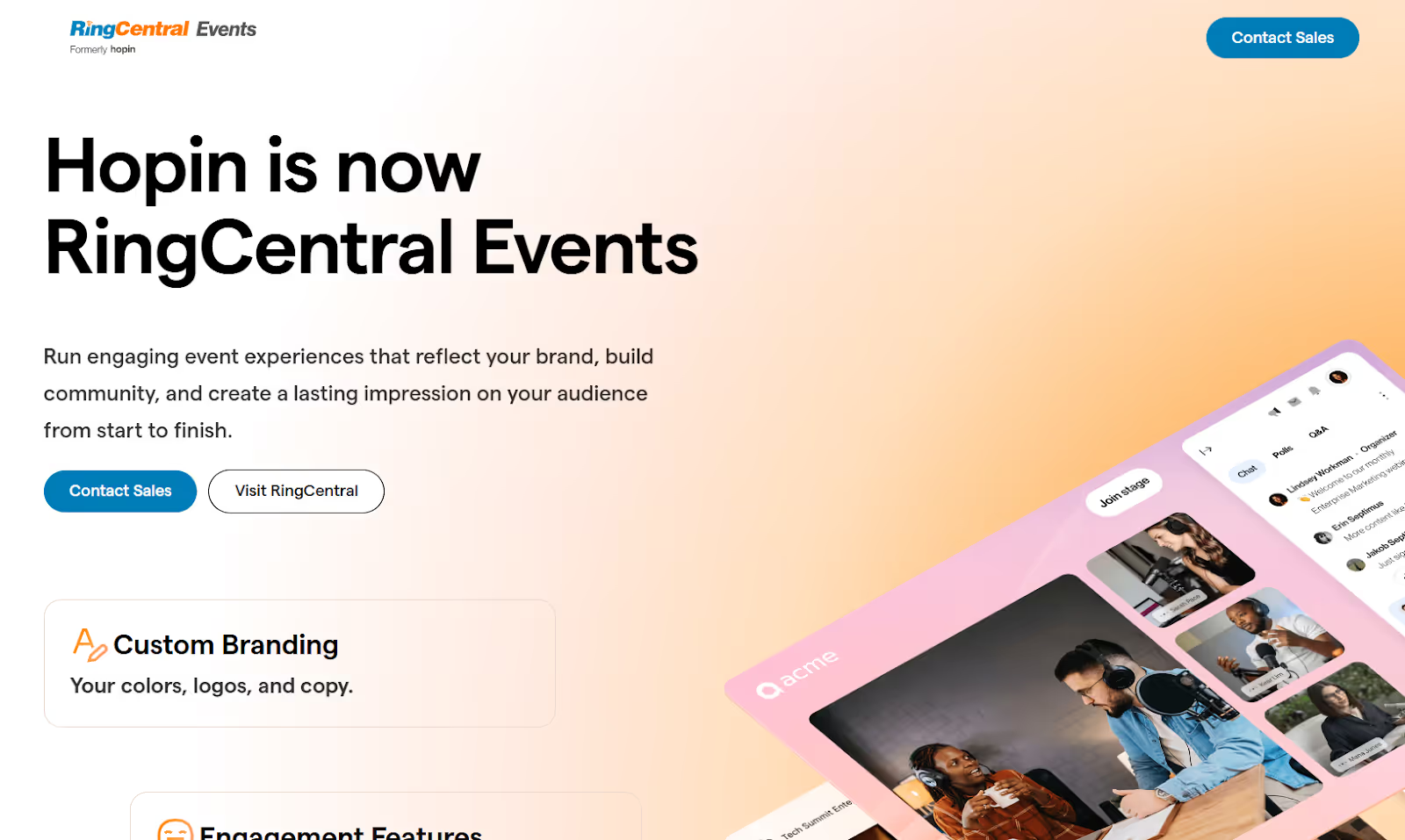
Hopin, now branded as RingCentral Events, is an all-in-one live events platform built primarily for virtual and hybrid formats, with lighter support for in-person events. Originally virtual-first, the platform is widely adopted by organizations that prioritize high-quality livestream production, immersive online experiences, and interactive audience engagement.
As a vFairs alternative, Hopin is often chosen for webinars, sales kickoffs, industry summits, and large virtual conferences.
Key Capabilities:
- Virtual Venue: Supports large-scale events with live and recorded sessions, expo areas, and networking rooms.
- Livestream Production: Studio-grade tools including live and pre-recorded video, greenrooms, overlays, and multi-stage setups.
- Attendee Networking: 1:1 video meetings, group networking, chat, and matchmaking features.
- Event Registration & Ticketing: Built-in registration flows, ticket sales, and attendee management.
- Branding & Customization: Event branding, interface customization, and branded communications.
- Engagement Tools: Live chat, polls, surveys, and interactive features to drive participation.
- Analytics & Reporting: Dashboards for attendance, engagement, and session performance.
- Integrations: Connects with external platforms to support broader event and marketing workflows.
What Users Dislike:
- On-site features are less developed than those on platforms built for in-person execution.
- Branding customization has limitations in certain areas.
- Less suited for events requiring advanced on-site check-in, badging, or lead retrieval
- Video playback issues when switching tabs
- Access issues due to strict firewalls and limitations in messaging and integration functionalities
Pricing: Free 30-day trial available. Paid plans typically range from $99 to $299 per organizer per month, billed annually.
7. Stova
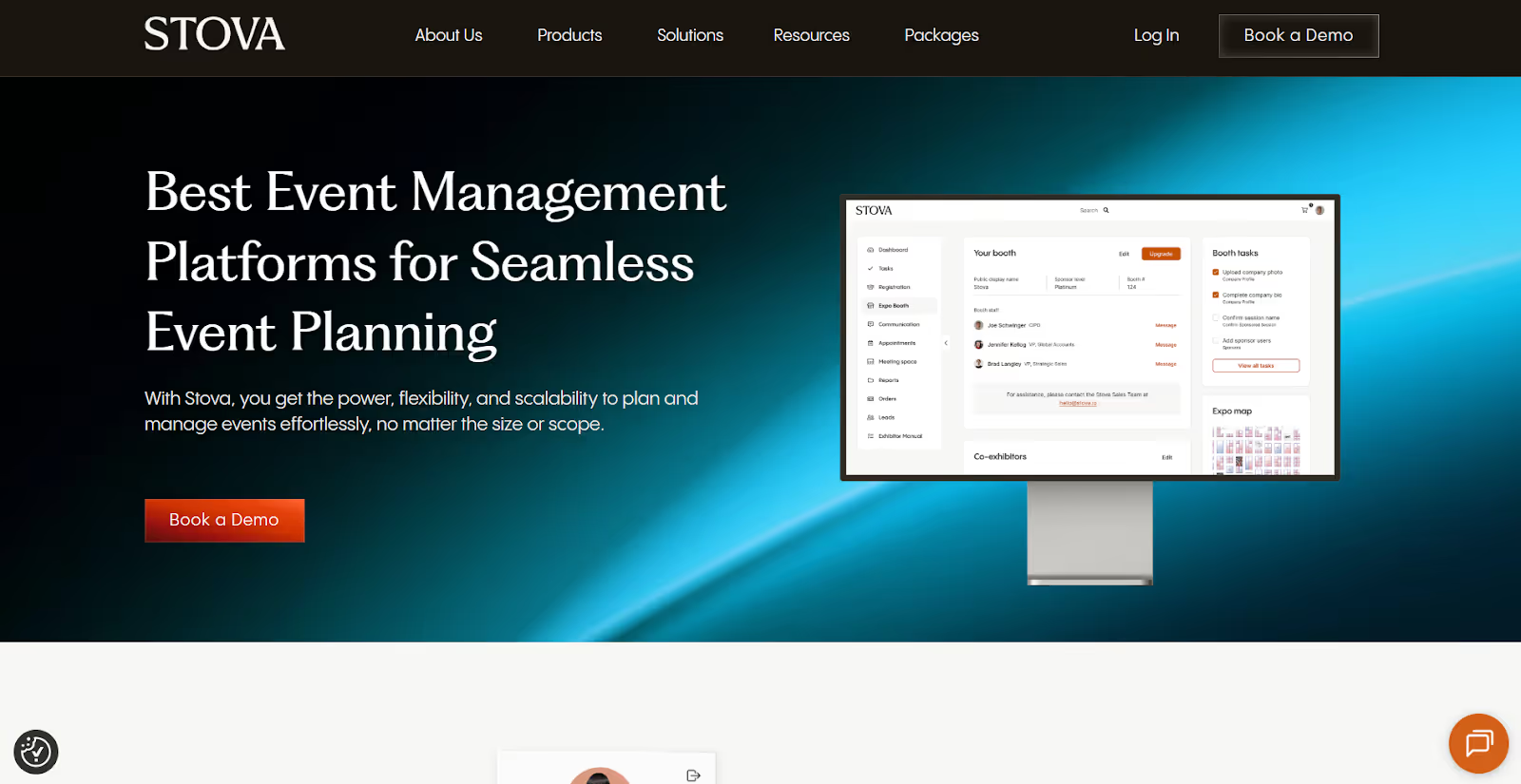
Stova is an end-to-end event management platform formed through the merger of Aventri, MeetingPlay, and Eventcore. It serves a wide range of organizations, including corporate event teams, non-profits, educational institutions, and government agencies. It supports events from small meetings to large conferences and exhibitions.
As a vFairs alternative, Stova appeals to teams looking for a single platform that combines registration, mobile apps, streaming, networking, and on-site services.
Key Capabilities:
- Virtual & Hybrid Events: Streaming, content management, and virtual engagement features.
- Event Registration & Management: Online registration, attendee management, and meeting management tools.
- Analytics & Reporting: Reports covering registration, attendance, and engagement metrics.
- On-site Check-In: Tools to support in-person entry and attendance tracking.
- Networking & Engagement: Attendee networking and interaction features.
- Enterprise Controls: Role-based access, multi-user management, customizable workflows, and scalable security infrastructure.
What Users Dislike:
- Mixed user experience following the merger, with confusing settings and navigation
- Design limitations that require technical expertise to format content
- Limited flexibility in certain customization areas
Pricing:
- Starter plan: Flat fee of $4,995 for smaller or simpler events
- Higher-tier plans: Start at $1,995 plus per-registrant fees (ranging approximately from $3.00 to $5.60 per registrant), with enterprise pricing available
8. PheedLoop
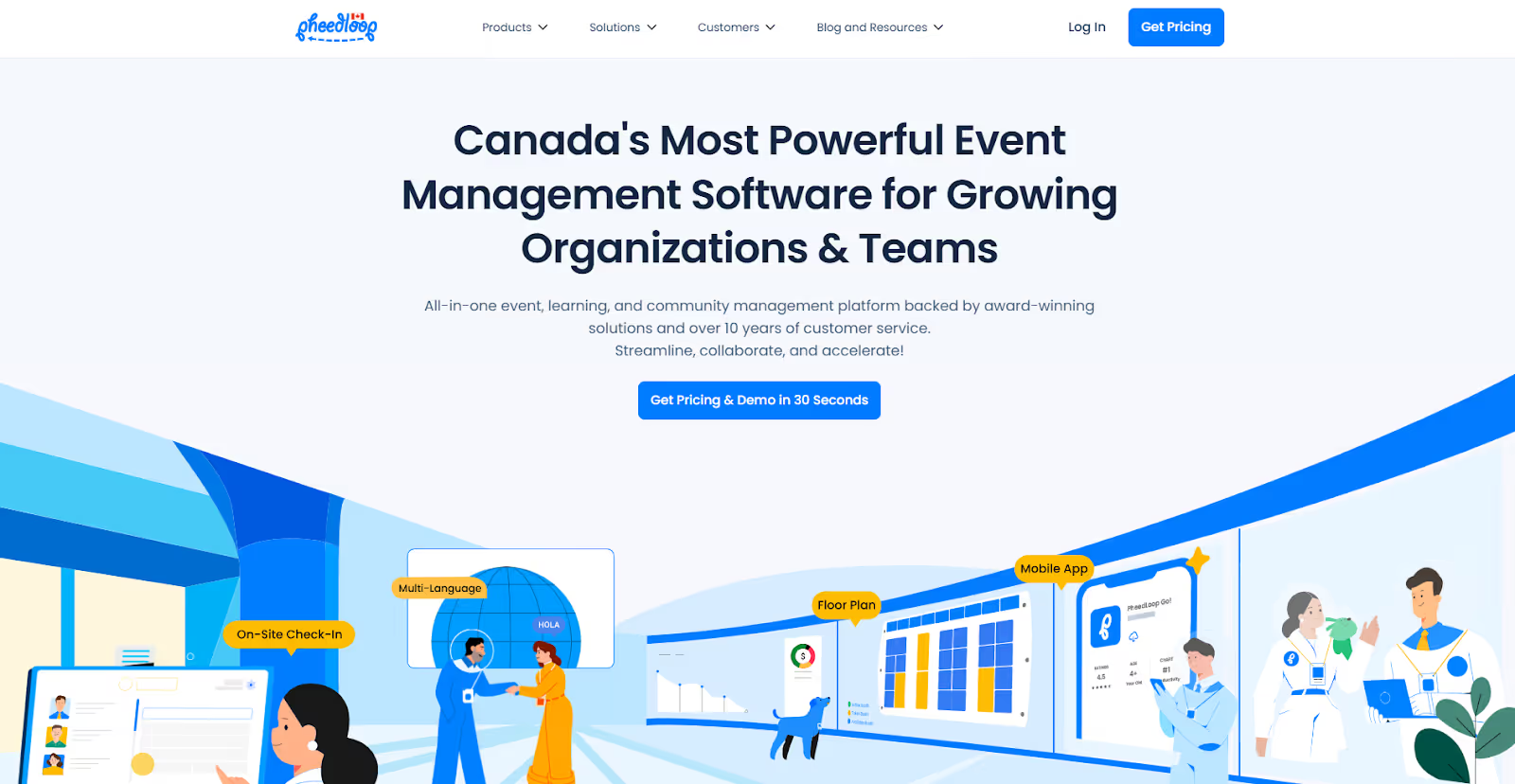
PheedLoop is a budget-friendly yet feature-rich event management platform designed for SMBs, associations, and mid-sized organizations. It's often used for conferences, trade shows, AGMs, meetings, and fundraising events. Frequently evaluated as a vFairs alternative, it is a flexible, modular platform that combines on-site, virtual, and engagement features at an affordable price.
Key Capabilities:
- Event Registration & Ticketing: Custom registration flows, ticket sales, and automated attendee communications.
- On-site Check-In & Badging: Badge printing, staff management, and entry workflows for in-person events.
- Mobile Event App: Personalized agendas, networking, and real-time updates for attendees.
- Multi-Language Support: Suitable for international or multilingual audiences.
- Virtual & Hybrid Streaming: HD video streaming for online and hybrid sessions.
- Website Creation: Built-in event website builder and live display systems for on-site signage.
- Automation & Workflows: Automated email reminders, session scheduling, and task workflows.
- Analytics & Reporting: Reporting on registrations, attendance, and engagement metrics.
What Users Dislike:
- Fewer enterprise-level integrations compared to larger platforms
- Some onboarding complexity for first-time users
- Integration challenges reported with WordPress
Pricing: Flexible, pay-as-you-go pricing based on selected features.
Also Read: 8 Best Event Attendance Tracking Types & Tools 2025

Comparing platforms is only half the equation. To confidently shortlist the right vFairs alternative, you need a clear evaluation framework.
How to Choose the Right vFairs Alternative: Proven Evaluation Criteria
Selecting from today’s vFairs alternatives requires more than comparing feature lists. Event teams like yours now manage diverse formats, complex tech stacks, tighter budgets, and higher expectations for engagement and ROI. To make a confident decision, you need a framework that reflects how events are actually planned, delivered, and measured.
Below is the complete set of criteria to assess modern vFairs competitors.
1. Format Flexibility: Supporting Every Event Style
A viable vFairs alternative must support in-person, virtual, and hybrid events from one platform, without forcing you to use separate systems or purchase additional licenses.
What to look for:
- Multi-format compatibility: One backend for in-person, hybrid, and virtual events, ensuring consistent data and reporting
- Quick format pivoting: Ability to switch from in-person to virtual (or expand to hybrid) without rebuilding sessions or losing data
- Event-type versatility: Support for enterprise summits, exhibitions, training workshops, community events, and roadshows
- No migration hurdles: Infrastructure that scales with event size and complexity; no relearning new systems
2. Simplified Connectivity Through Smart Integrations
Disconnected tools slow teams down and fragment data. Leading vFairs competitors prioritize smooth integration as a core capability.
What to look for:
- CRM integrations: Native connections with Salesforce, HubSpot, and similar systems
- Marketing tool compatibility: Email platforms, analytics tools, and automation workflows
- Real-time data synchronization: Automatic attendee and lead updates across systems
- Open API access: Custom integrations with internal or niche tools
- Workflow efficiency: Reduced manual exports, imports, and duplicate data entry
3. Clear Investment Structure and Growth Capacity
Pricing clarity protects your budget and ensures long-term ROI when switching from vFairs.
What to look for:
- Transparent, upfront pricing with no hidden fees
- Explicit feature inclusion at each pricing tier
- Scalable pricing that supports both small events and large, multi-day conferences
- No forced upgrades as attendance grows
- Consistent user experience regardless of event size
- Competitive value compared to traditional, rigid platforms
4. Intuitive Design for Organizers and Attendees
Usability directly affects execution speed and attendee satisfaction.
What to look for:
- Easy event creation, scheduling, and registration management
- Minimal learning curve for internal teams
- Error-resistant workflows that reduce setup mistakes
- Smooth attendee navigation for content, sessions, and networking
- Strong return-visitor potential through positive experiences
5. Advanced Features and Innovation Leadership
Beyond basics, the best vFairs alternatives continue to evolve with the industry.
What to look for:
- AI-powered recommendations: Smart matchmaking and content personalization
- Advanced analytics: Engagement depth, dwell time, session popularity, not just attendance
- Security & compliance: GDPR, CCPA, enterprise-grade controls, privacy-aware biometric processing (where applicable)
- Customization flexibility: White-labeling and deep branding options
- Predictive intelligence: Tools that anticipate trends and optimize events using data
6. On-site Check-In and Access Control (Critical for Hybrid & In-Person)
First impressions happen at entry. Platforms with weak on-site execution struggle to deliver smooth experiences. Prioritize platforms offering:
- Fast, contactless check-in (QR, facial recognition where applicable)
- On-site badge printing
- Secure session access and scanning
- Reliable attendance tracking and flow management
7. Attendee Networking and Engagement
Connection is the core value of events. Key engagement capabilities you must assess include:
- Live chat and real-time messaging
- Meeting scheduling
- Polls, surveys, and interactive Q&A
- Mobile apps and networking lounges
8. User Experience, Support, and Vendor Maturity
Execution doesn’t stop at go-live. You also need to factor in the following aspects:
- Ease of onboarding and training
- Availability of live and 24/7 support
- Dedicated customer success teams
- Vendor innovation roadmap and release cadence
- Platform trials, demos, or pilot event options
Also Read: Top 18 Conference Management Platforms for Efficient Event Planning in 2026
Wrapping Up
Selecting the right platform from vFairs alternatives means choosing a solution that fits how your events actually run. Format flexibility, integrations, usability, analytics, and on-site execution should work together to eliminate friction and support consistent, measurable results across every event.
For teams managing hybrid or in-person events, success depends on more than virtual features. Reliable on-site operations, intentional attendee flow, and real-time data are what ultimately shape experience quality and ROI, and this is where many alternatives fall short.
If you’re looking for a future-ready alternative that combines strategy, technology, and execution, fielddrive is built for that reality. As an intelligence-driven on-site event partner, fielddrive supports you from early planning through live delivery and post-event insights.
Request a demo today and see how fielddrive helps you move faster on site, capture better data, and turn event vision into smooth execution.
FAQs
1. Can you migrate historical event data when switching from vFairs to another platform?
Most modern platforms allow partial or complete data migration, but the scope varies. You should confirm whether attendee profiles, engagement logs, exhibitor leads, and session data can be imported, and whether migration support is included or billed separately.
2. How do vFairs alternatives handle attendee data ownership and access?
Data ownership policies differ significantly. Some platforms restrict raw data exports or limit API access, while others give you complete control. Always review contract terms around data retention, export formats, and post-event access rights.
3. Are vFairs competitors suitable for recurring or multi-event programs?
Yes, but not all equally. Look for platforms with multi-event management, shared templates, centralized reporting, and reusable attendee profiles. These features reduce setup time and ensure consistent data across recurring conferences or roadshows.
4. Can exhibitors reuse lead data across events on alternative platforms?
Some platforms treat each event as siloed, while others allow exhibitors to build cumulative lead histories. If exhibitor ROI is critical, confirm whether lead data can persist across events and sync cleanly with external CRMs.
5. Do vFairs alternatives support custom compliance or internal IT reviews?
Enterprise-ready platforms typically support security questionnaires, MSAs, DPAs, and IT audits. If your client/organization has strict procurement or compliance requirements, confirm this early to avoid delays during vendor approval.
.svg)
.svg)
.svg)
Want to learn how fielddrive can help you elevate your events?
Book a call with our experts today


.svg)