

.svg)
.webp)

If you own event outcomes, you know the real pressure doesn’t come from planning decks. It hits on show day. Peak-hour check-ins back up, badge fixes pile on, on-site teams juggle manual workarounds, and data you need to prove success is scattered across tools. When your event platform can’t keep up with high-volume on-site operations, you’re forced into firefighting mode instead of running a controlled, repeatable event machine.
That said, when you start evaluating Zuddl competitors, it’s rarely because it isn’t doing its job at all. More often, your event model is evolving. Maybe you’re adding larger in-person components, running more complex hybrid formats, or supporting exhibitors who expect deeper lead qualification and faster follow-up. In those moments, comparing Zuddl competitors becomes more about finding a platform that aligns with the operational complexity you’re responsible for.
In this article, we break down the best Zuddl alternatives for 2026. We'll explore tools that better support complex hybrid and in-person events, provide robust on-site performance, and enable operational excellence from check-in to post-event analytics.
In a Nutshell
- Event owners start comparing Zuddl competitors when on-site execution, scalability, and real-time data become more complicated to manage than digital engagement or setup.
- Common Zuddl limitations teams encounter include heavy setup effort, limited workflow customization, gaps in notifications and reminders, and rising costs as event complexity increases.
- Enterprise and ops-led platforms (like fielddrive and Cvent) focus on flow, control, and reliability.
- Hubilo, Bizzabo, Swapcard, and Whova each solve distinct problems, such as engagement, enterprise programs, networking, or community.
- Early planning involvement, clear on-site accountability, predictable scaling costs, and real-time and post-event intelligence set strong alternatives apart.
The Zuddl Friction Points That Push Event Leaders to Consider Alternatives
Zuddl positions itself as a unified platform for B2B conferences, hybrid events, and virtual experiences. It’s often chosen by marketing and events teams looking to consolidate registration, agendas, engagement, and basic on-site workflows into a single system.
But once you’re accountable for execution at scale, especially when events grow more complex or move on-site, certain limitations become harder to work around. Based on recurring user feedback and hands-on usage patterns, these are the areas where teams feel limited using Zuddl.
1. Setup Complexity
Zuddl’s breadth comes with a tradeoff: the initial setup can feel heavy, especially for teams running multiple events or tight timelines. For lean event teams, this complexity adds cognitive load at the exact moment speed and clarity matter most.
- Event configuration involves many interdependent steps, making it easy to miss something critical.
- First-time users often rely heavily on demos or support to get live.
- Changes late in the setup process can require retracing earlier steps.
2. Steep Learning Curve for Day-to-Day Operations
Even after onboarding, teams report that Zuddl takes time to feel intuitive to use.
- Key workflows aren’t always obvious without prior experience.
- New staff or temporary team members struggle to self-serve.
3. Limited Customization for Real-World Event Needs
As events diversify, teams often want more control than Zuddl comfortably allows. This pushes organizers to adapt their processes to the platform instead of the other way around.
- Custom workflows require deeper platform involvement.
- Branding, logic, and reminders have limited flexibility.
- Teams feel constrained by preset structures rather than empowered by them.
4. Feature Gaps That Emerge
As you add complexity, such as multiple sessions, integrations, or stakeholder groups, certain missing features become more visible.
5. Cost Sensitivity for Mid-Market Teams
Zuddl is often perceived as more expensive than comparable platforms in its category, especially when weighed against operational flexibility. This is a common trigger for teams reassessing whether the platform still fits their growth stage.
- Pricing feels high relative to customization limits.
- Teams question the value as they add external tools to fill gaps.
- ROI discussions intensify as event volume increases
In the next section, we’ll compare leading Zuddl alternatives based on on-site execution strength, flexibility, and how well they support real-world event operations.
Smarter Zuddl Alternatives for Event Teams in 2026
The Zuddl competitors below are trusted by event owners and ops leaders running high-volume, execution-driven events. It works well for those who need tighter on-site control, faster throughput, and clearer performance intelligence when show-day pressure is highest.
1. fielddrive

fielddrive is built for event owners and operations leaders who are judged on what happens on-site. While Zuddl centers heavily on unified digital experiences across virtual and hybrid formats, fielddrive is designed around the moment your event is most exposed. That includes arrival surges, badge accuracy, exhibitor demands, session access, and real-time operational visibility.
Rather than stepping in late as a check-in vendor, fielddrive works upstream. Through its On-Site Tech Advisory Program, teams collaborate early before layouts are locked. It helps you design attendee flow, anticipate bottlenecks, and align data across registration, access control, exhibitors, and post-event reporting. For teams evaluating Zuddl competitors, this consultative model is often the difference between reacting on show day and running a controlled system.
Key Capabilities:
- Touchless, high-throughput check-in: Kiosks support facial recognition, QR and barcode scanning, name lookup, and assisted check-in, built to handle peak arrivals without degrading the attendee experience.
- Session access control & scanning: Mobile and offline scanners secure paid or restricted sessions, accurately track attendance, and continue working even in challenging venue conditions.
- Real-time analytics dashboards and performance insights: Live visibility into arrivals, session traffic, dwell times, and visitor flow, followed by post-event reporting that helps prove outcomes and refine future events.
- Exhibitor lead capture with fielddrive Leads: Exhibitors scan badges, apply custom qualification questions, score leads, share materials, and access real-time data.
- Six-second live badge printing: Full-color, double-sided badges printed on demand at check-in. This reduces reprints and handles last-minute changes cleanly.
- Easy Badging for events up to 500 attendees: An all-inclusive package using portable kiosks, customizable badge templates, live sticker printing, offline capability, and on-site support, without enterprise complexity or hidden logistics costs.
- Sustainability-first workflows: Eco-friendly badge materials reduce waste while maintaining sponsor-ready branding standards.
- Clean integrations: Reliable data flow into CRMs, registration platforms, and event systems, so on-site data stays unified instead of fragmented across tools.
- Global logistics and on-site teams: Delivery, setup, and support across 50+ countries with regional hubs and experienced on-site staff who operate comfortably under tight timelines.
Best Suited For:
Large conferences, exhibitions, trade shows, conventions, and corporate events where fast entry, secure access, exhibitor ROI, branded badging, and real-time operational intelligence are non-negotiable. Also well suited to smaller events where lean teams need simple systems that still feel enterprise-grade.
Real-World Results:
- Routes and fielddrive: leveraging modern tech to host sustainable global events
- Efficiency in action: OMcollective’s check-in success story with fielddrive
What Clients Say:
- “The member experience is always key for me. Now that we’ve switched to fielddrive’s electronic check-in and on-site printing, our members just love it! The staff time that it saves makes it worth every penny. Partnering with fielddrive has been great!” - Melanie Seiden, Membership Director, LEAF, Inc.
- “Our delegates had an amazing check-in experience with fielddrive, we received excellent feedback from our attendees.” - Adam Clay, Director of Finance at Royal Microscopic Society
Pricing:
Custom quotes based on event size, format, and on-site requirements.
2. Cvent

Cvent typically steps in when your event program outgrows mid-market platforms and requires enterprise-grade structure, governance, and scale. While Zuddl emphasizes unified experiences for B2B marketing teams across virtual and hybrid formats, Cvent is built to manage large, distributed event portfolios. It stands out where compliance, venue sourcing, and centralized control matter as much as attendee experience.
Core capabilities
- Highly configurable registration paths, approval flows, group registrations, and automated communications designed for large audiences and complex policies.
- Integrated tools for venue discovery, RFP workflows, contract tracking, and hotel room block management, areas where Zuddl is more limited and often requires external tools.
- Support for check-in kiosks, badge printing, RFID-based tracking, and attendance management built for large-scale, high-throughput environments.
- Role-based access, SSO, MFA, budgeting controls, and task management to support global teams operating under shared standards.
- Dashboards that roll up registration, attendance, and engagement data across entire event programs, giving leadership a portfolio-level view.
- Native connections with Salesforce, HubSpot, Marketo, and other CRM/MarTech systems to maintain data continuity across departments.
- Personalized agendas, networking, live chat, polls, Q&A, and session interaction
Where teams feel the tradeoffs:
- Onboarding can be demanding, especially for smaller or leaner teams without dedicated platform owners.
- The feature depth can slow down everyday tasks without formal training.
- Pricing is significantly higher than mid-market tools and escalates as programs scale.
- No public pricing, free plan, or trial, making early evaluation more complex.
Pricing: Cvent uses custom pricing, typically structured as an annual platform license combined with per-registrant fees.
3. Hubilo
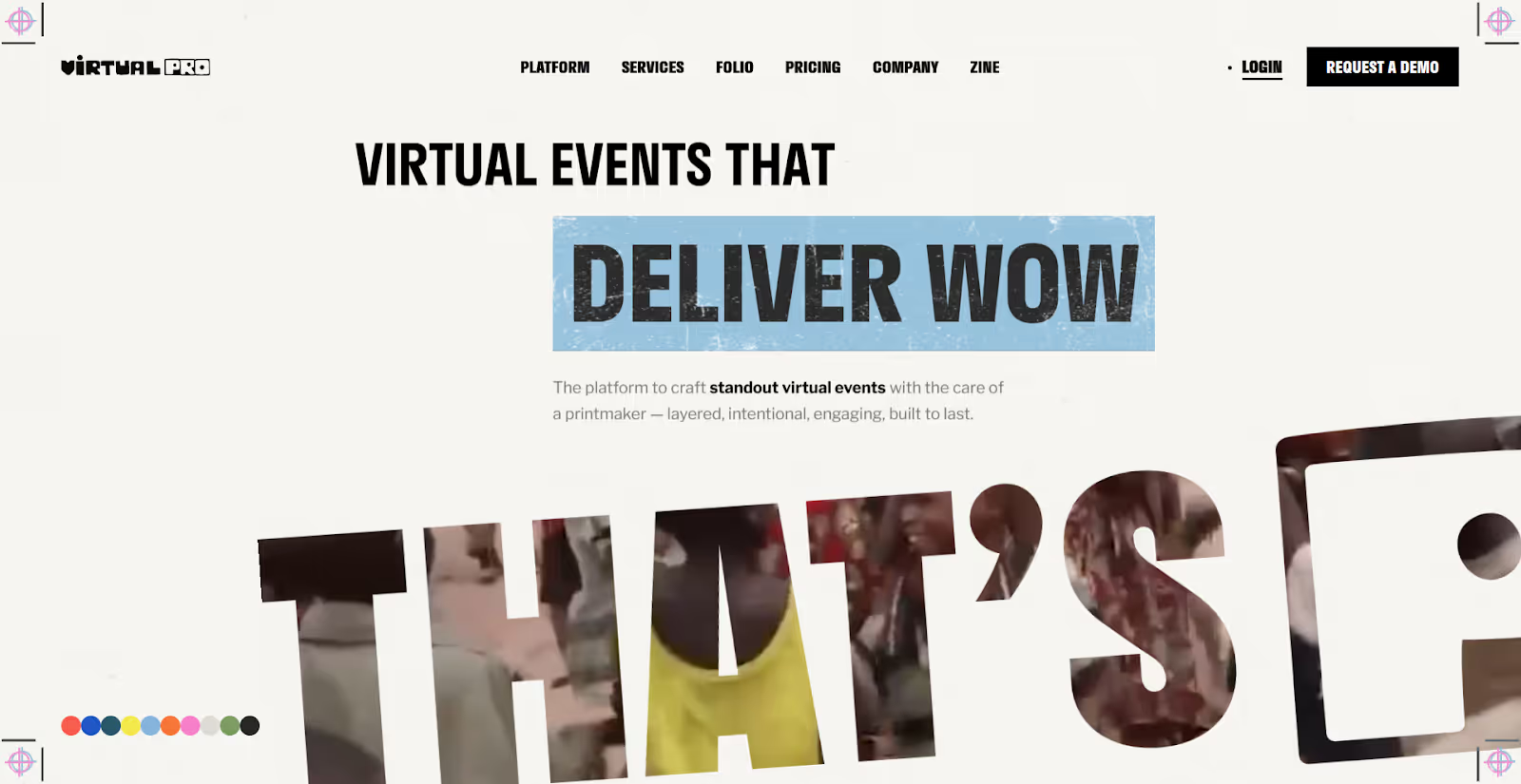
Hubilo is often evaluated alongside Zuddl when teams prioritize virtual and hybrid engagement over deep operational or on-site complexity. Like Zuddl, Hubilo supports virtual and hybrid formats, but it differentiates itself through a strong emphasis on attendee interaction, real-time engagement tools, and customer support. For teams running high-stakes digital events where audience participation and live troubleshooting are critical, Hubilo is frequently seen as a safer operational bet.
Core capabilities
- Built-in tools for live polls, chats, Q&A, and interactive sessions are designed to keep virtual audiences active rather than passive.
- Points, leaderboards, and engagement incentives to drive participation across sessions and networking activities.
- Dedicated, around-the-clock support during event execution is often cited as a key differentiator for mission-critical events.
- Real-time visibility into attendee behavior, engagement levels, and session interaction to help teams adjust programming on the fly.
- Attendee profiles, session-level interaction tracking, and networking features that support community-building goals.
Limitations
- When more than three sessions run concurrently, some tracks can become hidden behind scrolling controls, making navigation less intuitive for attendees.
- Running on-demand video playback while hosting live speaker Q&A has proven challenging for some teams.
- Users have reported initial issues, such as audio problems with the speaker during live webinars, particularly during early adoption.
- Registration workflows are often described as basic, with limited flexibility compared to those of enterprise- or ops-focused platforms.
Pricing: Hubilo (Virtual Pro) was recently acquired by Brandlive and uses an annual, admin-based pricing model. Plans generally range from $15,000 to $125,000 per year, with custom enterprise plans available for complex deployments.
Also Read: Top 10 Cvent Alternatives and Competitors
4. Bizzabo

Bizzabo is commonly shortlisted by enterprise teams running recurring B2B conferences and multi-event programs requiring a single system to manage registration, engagement, marketing, and reporting. While Zuddl focuses on unifying virtual, hybrid, and on-site experiences with speed and simplicity, Bizzabo positions itself as an “Event Experience OS.”
Key features
- Branded registration paths, agenda building, session scheduling, and multi-event oversight for teams managing repeat programs.
- Networking, live chat, polls, surveys, and gamification to drive interaction, comparable to Zuddl’s engagement focus but embedded in a heavier enterprise stack.
- Lead capture and dashboards that track engagement across booths, sessions, and digital touchpoints to help sponsors assess ROI.
- Klik SmartBadges™ (wearable networking badges) are designed to increase attendee connections and exhibitor lead volume at in-person events.
- Email automation, campaign workflows, and promotional features to support demand generation alongside event delivery.
- SSO, gated registrations, custom-branded apps, dedicated IPs, and centralized video libraries for large organizations.
- Bizzabo Studios (in-house creative and production services) for teams outsourcing event content and broadcast execution.
Where teams feel the friction
- Pricing is at the higher end, making it harder to justify for single events or teams without year-round programs.
- Users report occasional registration issues, platform bugs, and difficulty extracting highly granular insights.
- Advanced setups often require onboarding support or training, slowing deployment.
- Website and experience customization frequently requires HTML/CSS or developer involvement.
Pricing: Bizzabo uses a tiered pricing model based on event size and feature access. Plans typically start at $499 per user per month (billed annually, with a three-user minimum), with custom pricing and premium add-ons for enterprise deployments.
5. vFairs
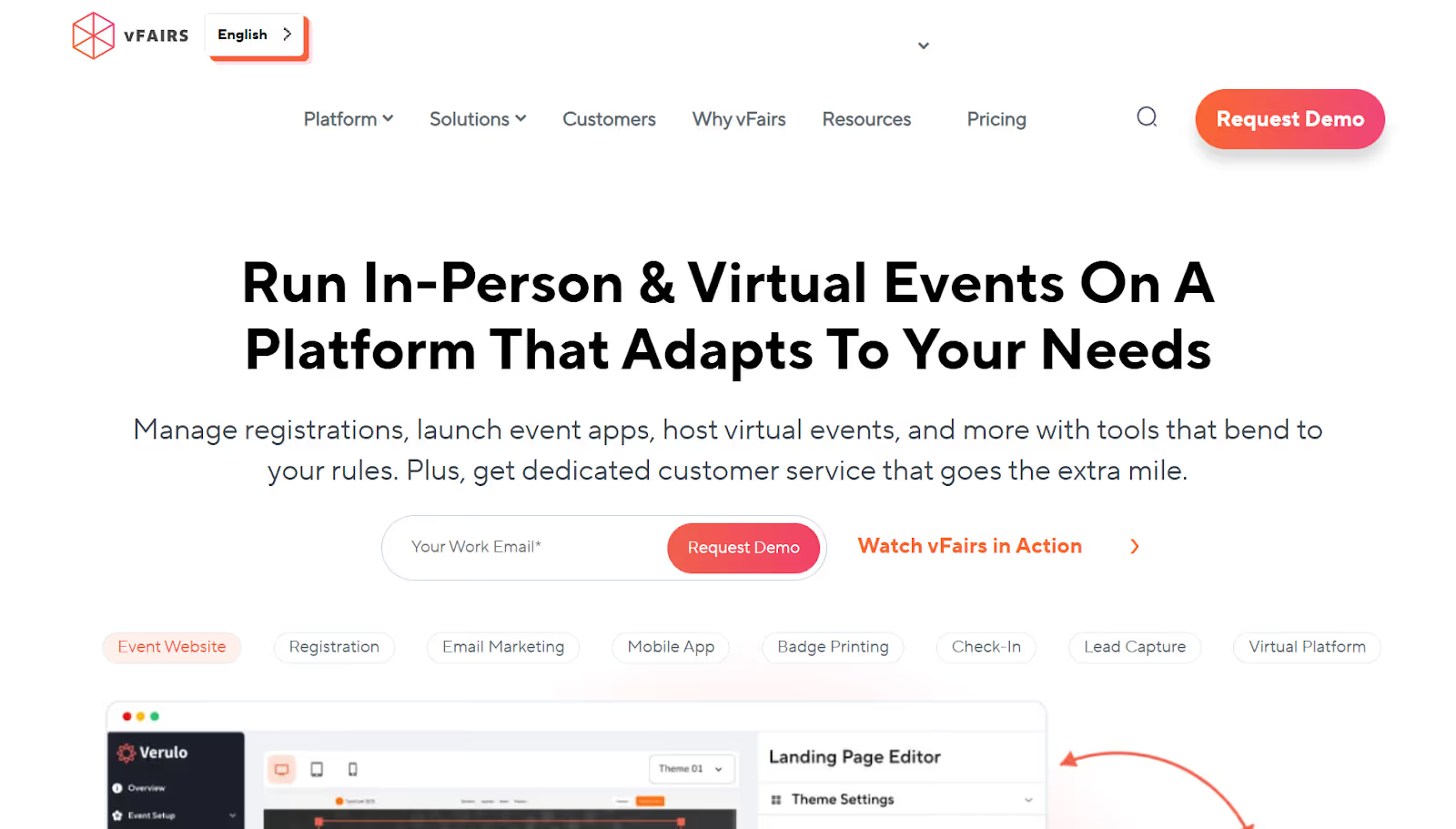
vFairs is a virtual-first platform, typically shortlisted for online conferences, virtual expos, and career fairs, where visual presentations and branded digital spaces are central to the experience. It places greater emphasis on how the virtual environment looks and feels, rather than on how efficiently events are run or measured.
What it prioritizes
- Digitally rendered event spaces that simulate halls, auditoriums, and sponsor booths, encouraging exploration and interaction.
- Strong branding and theme customization for virtual venues and sponsor areas
- Built-in registration, ticketing, and access controls tailored to online audiences
- Live-streamed sessions combined with on-demand content libraries and session replays
- Chat and interaction tools to support attendee engagement
- Basic marketing capabilities, including landing pages, email campaigns, and promotional workflows
Where teams commonly experience friction
- Organizer-side tasks, such as content updates, configuration changes, and reporting, can be time-consuming.
- Limited depth for operational use cases like sales enablement, exhibitor performance tracking, or rapid iteration
- Navigation and usability challenges for both attendees and internal teams, especially in complex layouts
- Technical reliability concerns during live sessions, including lag, delayed chat responses, and slow session replays
Pricing: vFairs uses custom pricing based on event size, format, and selected features.
6. Swapcard
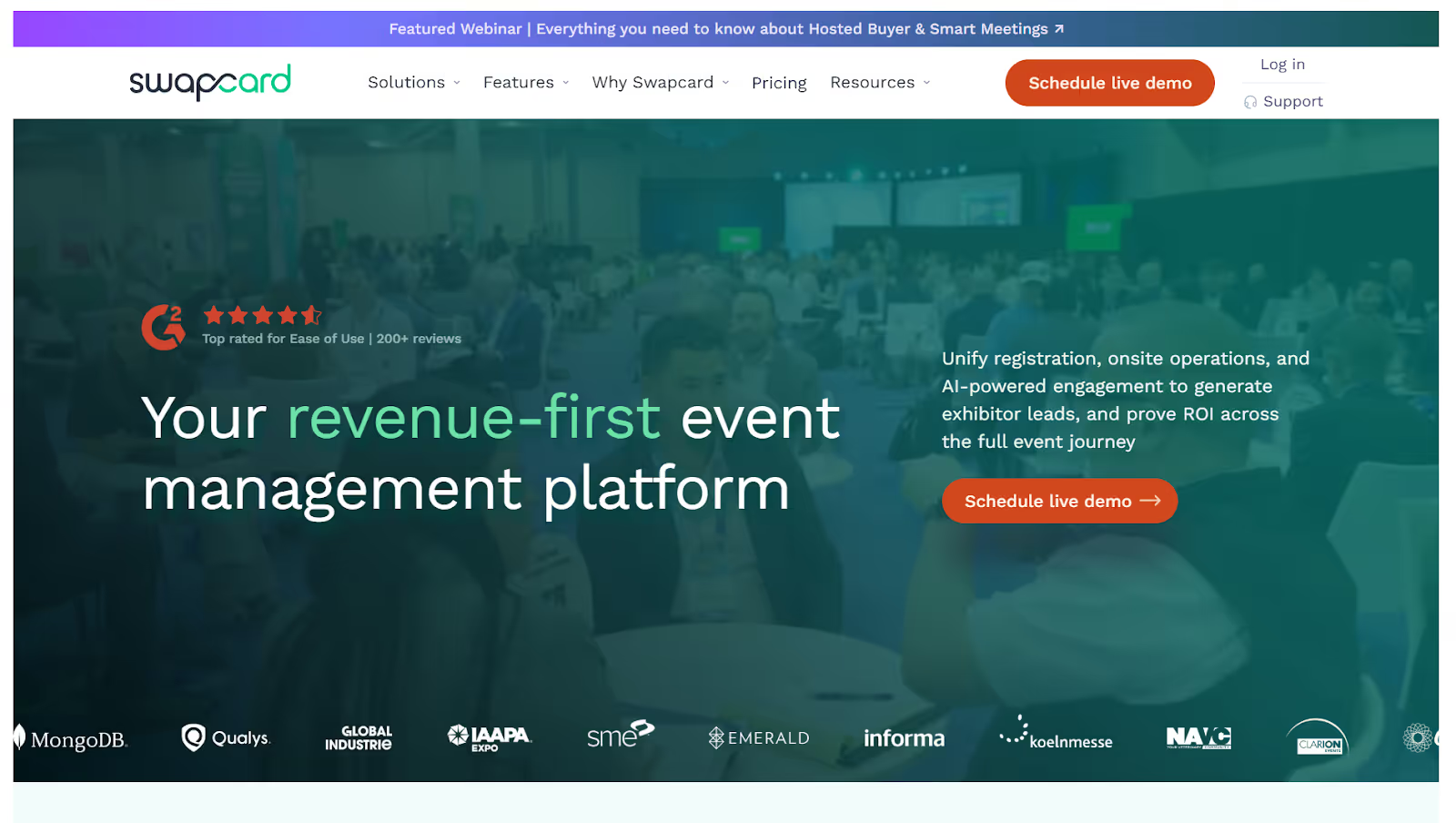
Swapcard started as an AI-powered networking solution and has expanded into a broader event platform used across conferences, exhibitions, trade shows, and corporate events. It’s most often evaluated by teams who believe networking, sponsor discovery, and community engagement are core drivers of event value. Compared to Zuddl, Swapcard’s strength lies in connecting the right people at the right time, before, during, and after the event.
Among Zuddl competitors, Swapcard is typically shortlisted when improving attendee-to-attendee and attendee-to-exhibitor interactions is a top priority.
What Swapcard is known for
- Event planning and management tools supporting in-person, virtual, and hybrid formats
- On-site attendee management and production support features
- Lead capture and analytics tools to help sponsors and exhibitors track interactions
- Registration, ticketing, and access control to manage entry and permissions
- Native integrations, enterprise security features, and compliance support
- AI-driven matchmaking, messaging, and meeting scheduling between attendees, exhibitors, and sponsors
- Advanced options, including white-labeling, SSO, dedicated customer success teams, and readiness for formal security reviews
- Persistent community spaces that extend engagement beyond event dates
Where teams report limitations
- Networking workflows can feel rigid for events requiring highly customized exhibitor or sponsor interactions.
- Messaging capabilities are relatively basic for complex sponsor-led or sales-driven engagement models.
- Agenda updates and synchronization issues have been reported, affecting session accuracy.
Pricing: Swapcard offers starter plans beginning around $610 per year, with custom enterprise pricing available.
7. EventMobi
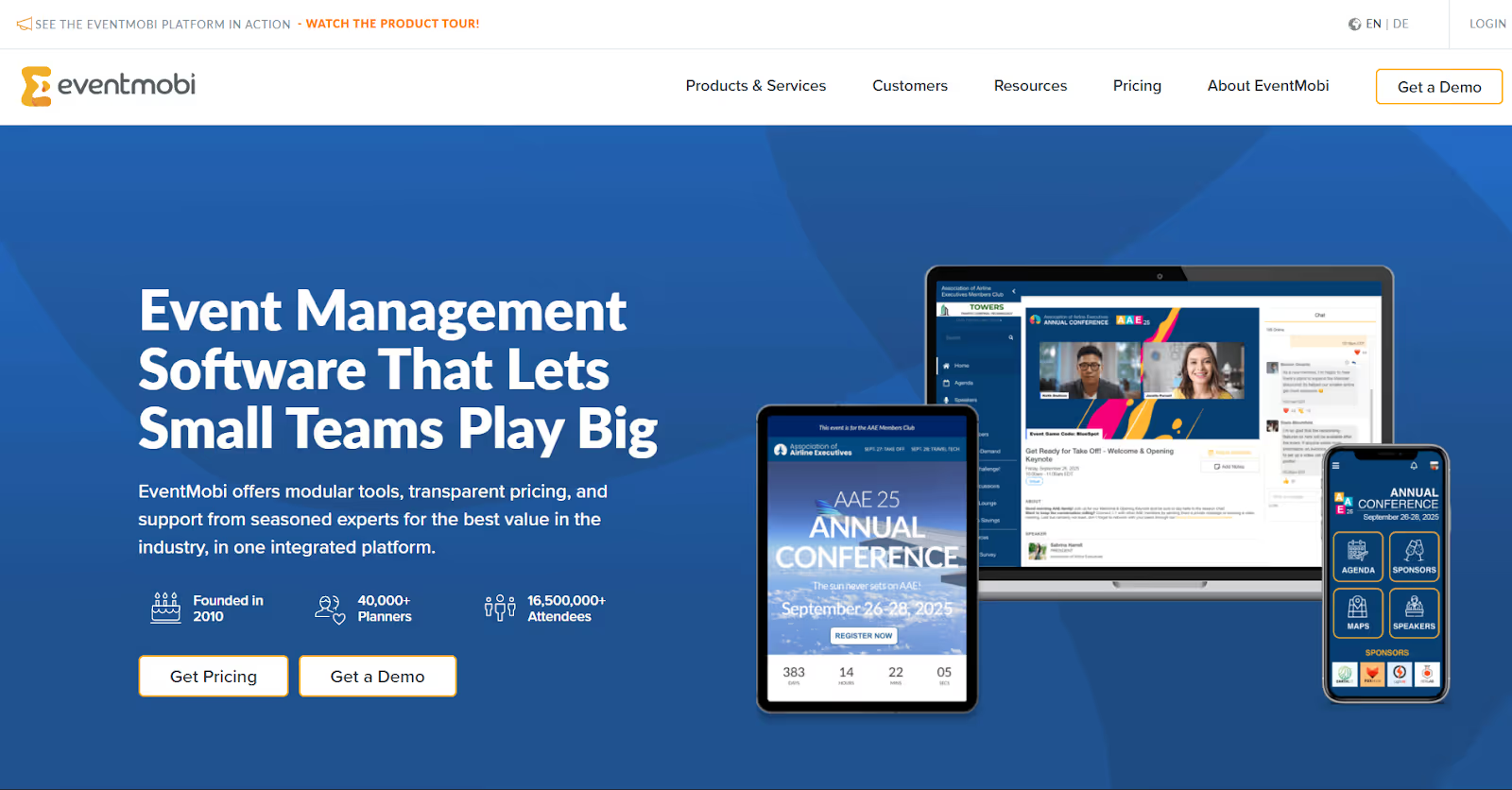
EventMobi is a modular event management platform. It is often adopted by lean teams running recurring events who value ease of use and predictable workflows over deep customization or heavy operational control. It’s commonly compared with Zuddl at the lower-to-mid market level, particularly by teams that want a simple, app-centric setup.
Core capabilities
- Straightforward tools to manage attendees across single events or repeat programs without complex logic or approvals.
- A single platform view for teams managing multiple events throughout the year.
- Badge printing is included in its on-site operations offering and is suitable for lower-volume check-ins.
- Centralized access to agendas, speaker profiles, announcements, and updates through a branded attendee app.
- Messaging and basic networking features to support interaction during the event.
- Add-on support for event setup, design, and on-site execution, useful for teams with limited internal resources.
Where teams commonly face hurdles
- Less comprehensive than enterprise or ops-first platforms, making it harder to support large, exhibitor-heavy, or high-throughput events.
- Badge-printing workflows are often described as cumbersome, which can slow peak-hour check-in compared to faster, kiosk-driven solutions.
- Layout and design flexibility are restricted, and EventMobi branding cannot be entirely removed due to the lack of a true white-label option.
- Fewer native integrations push teams toward third-party tools, increasing overall workflow complexity.
- Users report occasional glitches or slower performance during active event periods.
Pricing: EventMobi pricing typically starts at around $3,000 per event, with annual plans beginning near $8,900, depending on selected features and services.
8. Whova
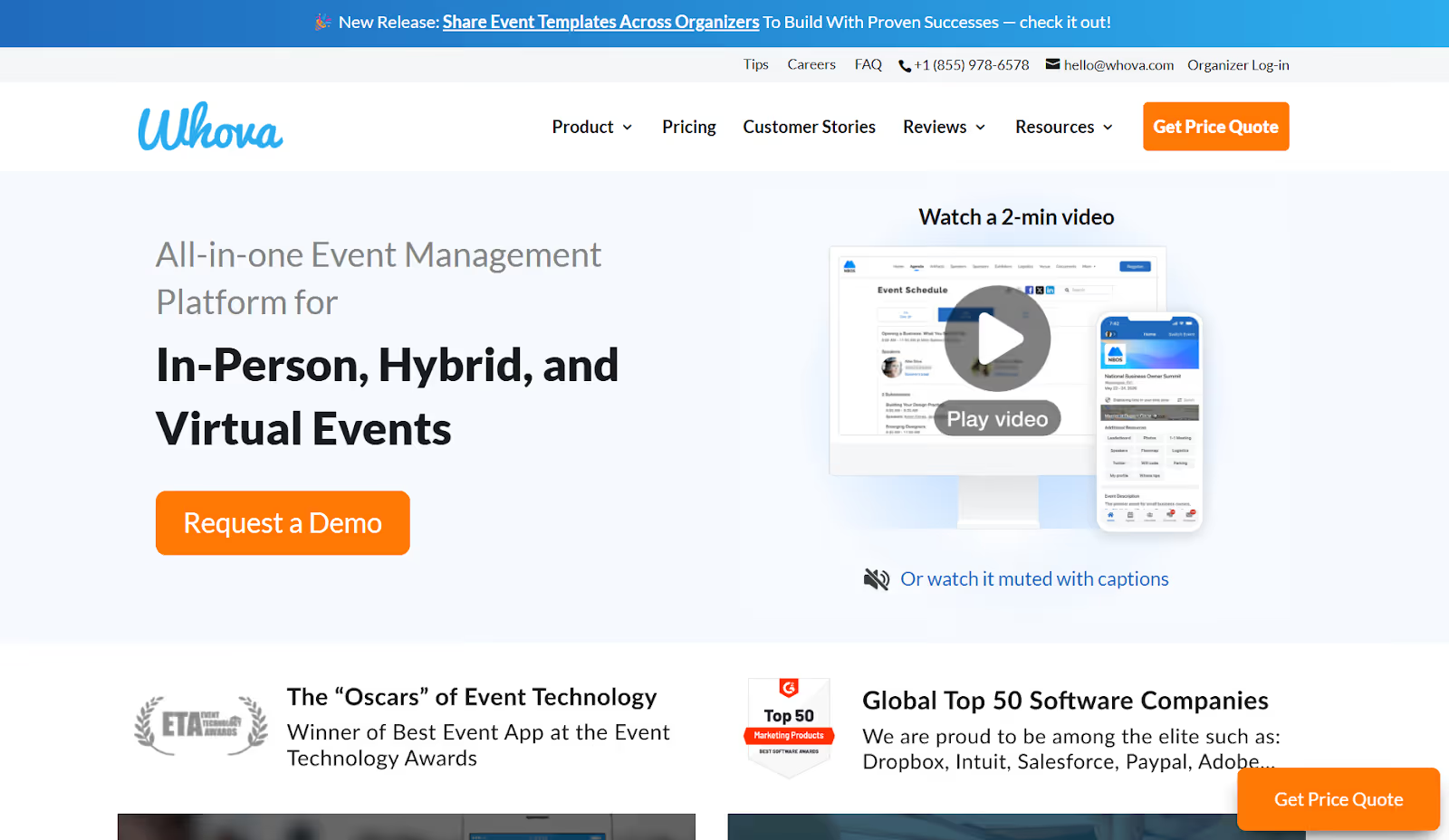
Whova is a mobile-first event platform most often evaluated for conferences, workshops, and association events where attendee interaction and community engagement are the primary goals. For event owners, Whova works best when success is measured by participation and conversation, not merely by operational speed, exhibitor ROI, or precise on-site flow control.
Core capabilities
- Ticket scanning and attendee check-in are handled through mobile devices, with optional self-service kiosk check-in and on-demand badge printing for in-person events.
- Discussion boards, direct messaging, contact exchanges, photo sharing, and Community Boards that automatically connect attendees based on shared interests.
- Live polls, Q&A, surveys, gamification, announcements, and real-time push notifications are designed to boost session participation.
- Personalized agendas, speaker and sponsor profiles, session access, and event updates delivered through a native app.
- Session scheduling, speaker management, exhibitor listings, agenda updates, and abstract submissions are managed through a built-in Speaker Center.
- QR-code-based badge scanning via a dedicated lead retrieval app to support basic exhibitor follow-up.
- Post-event reports centered on attendance and engagement metrics rather than deep operational or flow analysis.
Where teams often encounter limitations
- High volumes of alerts can overwhelm attendees, making it harder to identify critical updates.
- Some users find the mobile interface difficult to navigate efficiently, especially for first-time attendees.
- Reports of missing contact details or mismatches between mobile and desktop data views.
Pricing: Whova uses custom pricing, typically based on event size, format, and selected features.
Also Read: Top 10 Whova Alternatives and Competitors in 2026

As this comparison shows, Zuddl's competitors are built to solve very different challenges. Before committing to any platform, it’s essential to assess each option through a consistent, execution-first lens.
What Separates Effective Zuddl Competitors from Those That Fall Short
If you’re comparing Zuddl competitors, you’re likely past surface-level demos. At this stage, the real question is which one holds up when events move from planning to live execution, and then to ROI review. The framework below consolidates what actually matters before, during, and after show day, based on how modern B2B events operate in real conditions.
1. Registration Architecture That Holds Under Real Conditions
Registration is not just a form; it’s the first operational gate. If it’s brittle, everything downstream suffers. A strong Zuddl alternative should support:
- Multiple attendee types (VIPs, exhibitors, speakers, staff, media, groups)
- Conditional logic, approvals, and role-based access
- Smooth late and on-site registrations without manual overrides
- Reliable payments (Stripe, PayPal, invoicing, refunds)
- Automated confirmations, reminders, and last-minute updates
Reality check: If your team is fixing registrations manually on show day, the platform wasn’t built for scale.
Pro tip: Ask how the platform handles on-site registrations when connectivity is inconsistent. Many tools perform well weeks before the event but break down at the door.
2. Arrival-Phase Performance & Attendee Flow Control
This is where most platforms are exposed. “Supports check-in” isn’t enough; you need proof of throughput. For that, evaluate whether the platform offers:
- Contactless check-in via QR, barcode, or facial recognition
- High-speed, on-demand badge printing that performs at peak arrival times
- Session scanning and access control with offline fallback
- Hardware or workflows proven to operate under load
- Transparent backup processes for connectivity, printer, or power failures
Also Read: On-site Badge Printing Methods: How to Reduce Check-In Delays
3. Engagement That Converts Into Actionable Intelligence
Engagement features should inform decisions, not just inflate dashboards. Verify that engagement data:
- Covers polls, Q&A, networking, sessions, and meetings
- Is tracked at the individual attendee level
- Feeds directly into reporting and CRM systems
- Supports structured 1:1 meetings or matchmaking
Red flag: If reports only show aggregate clicks or attendance, you won’t know who engaged or why it mattered.
4. End-to-End Brand Control (Not Just a Branded App)
Fragmented branding erodes trust, especially for sponsors and executives. Look for:
- True white-labeling across websites, apps, kiosks, emails, and signage
- Custom domains and fully branded communications
- Personalized agendas and content recommendations
- A consistent experience across mobile, desktop, and on-site touchpoints
5. Integration Depth & Data Ownership
Event data should move freely, not get trapped inside the platform. Use this checklist:
6. Scalability Without Cost or Performance Surprises
Many Zuddl competitors look affordable until attendance doubles or increases manifold. Assess whether the platform can:
- Perform equally well for small events and large conferences
- Scale during peak concurrency without degradation
- Support multi-event or multi-region programs
- Maintain predictable pricing as volume grows
Pro tip: Always request pricing scenarios at 2× and 5× your current attendance.
7. Support Model & Partnership Mindset
Live events don’t pause for support tickets. Evaluate whether the provider offers:
- Structured onboarding and implementation support
- Clear SLAs and escalation paths
- Transparent product roadmap communication
- On-site or regional logistics support (when relevant)
Key insight: The best partners help you design success before show day, not just troubleshoot during it.
8. Live Visibility & Post-Event Intelligence
Delayed insights lose value quickly. Strong alternatives provide clarity in real time. Look for:
- Live dashboards for check-ins, sessions, and engagement
- Metrics tied to individuals, accounts, and the CRM pipeline
- Early indicators like session popularity or traffic bottlenecks
- Post-event reports that don’t require manual data stitching
9. Security, Compliance & Enterprise Readiness
Event platforms handle sensitive personal and commercial data. That raises the bar for security considerations. Confirm support for:
- Role-based permissions, SSO, and MFA
- GDPR, CCPA, and regional compliance
- Encryption in transit and at rest
- SOC 2 Type II / ISO 27001 (where applicable)
- Audit trails and incident reporting
A Reality-First Checklist for Choosing the Right Zuddl Competitor
Before you finalize a platform, it’s worth pressure-testing your shortlist against how your event actually runs, not how a demo looks. The table below helps you move from comparison to confident decision-making.
Final Thoughts
Comparing Zuddl competitors makes one thing clear: no platform fits every event model. Enterprise tools like Cvent and Bizzabo suit large, governed programs. Engagement-first platforms such as Hubilo and Whova work well for content-driven or community-focused events. Swapcard stands out when networking and sponsor discovery are the priority, while EventMobi appeals to smaller teams that value simplicity and repeatability.
For in-person and hybrid events, however, the real test is on-site execution. This is where many registration- or engagement-first platforms struggle. fielddrive takes a different approach as an intelligence-driven on-site event partner. By working with teams early to design attendee flow and on-site setup, it delivers reliable execution through touchless check-in, on-demand live badge printing, session scanning, and analytics.
If you’re evaluating Zuddl alternatives because your events demand stronger on-site control and measurable outcomes, look beyond feature lists. Request a demo to see how a design-before-deliver approach can change how your events run, from first arrival to post-event insights.
FAQs
1. Is it risky to move away from an “all-in-one” platform like Zuddl?
Not necessarily. Many teams find that operationally strong platforms outperform all-in-one tools when execution matters most. The key risk isn’t fragmentation; it’s choosing a system that can’t scale under real event conditions.
2. How hard is it to retrain staff or volunteers on a new platform?
Complex platforms often require dedicated admins or repeated training. Ask whether temporary staff can learn core workflows (check-in, scanning, troubleshooting) quickly, or if execution depends on a few power users being present.
3. Do Zuddl competitors support post-event operational reviews, not just reports?
Some platforms stop at dashboards. Others support structured post-event walkthroughs that tie flow data, attendance, and engagement back to decisions made during planning, helping you explain what worked, what didn’t, and why.
4. What questions should you ask while verifying the exhibitor lead data quality of Zuddl alternatives?
Ask how leads are qualified, time-stamped, and synced to CRMs. High-quality systems preserve context: session attended, booth visited, questions answered, rather than delivering flat contact lists that exhibitors struggle to act on.
.svg)
.svg)
.svg)
Want to learn how fielddrive can help you elevate your events?
Book a call with our experts today


.svg)