

.svg)
.webp)
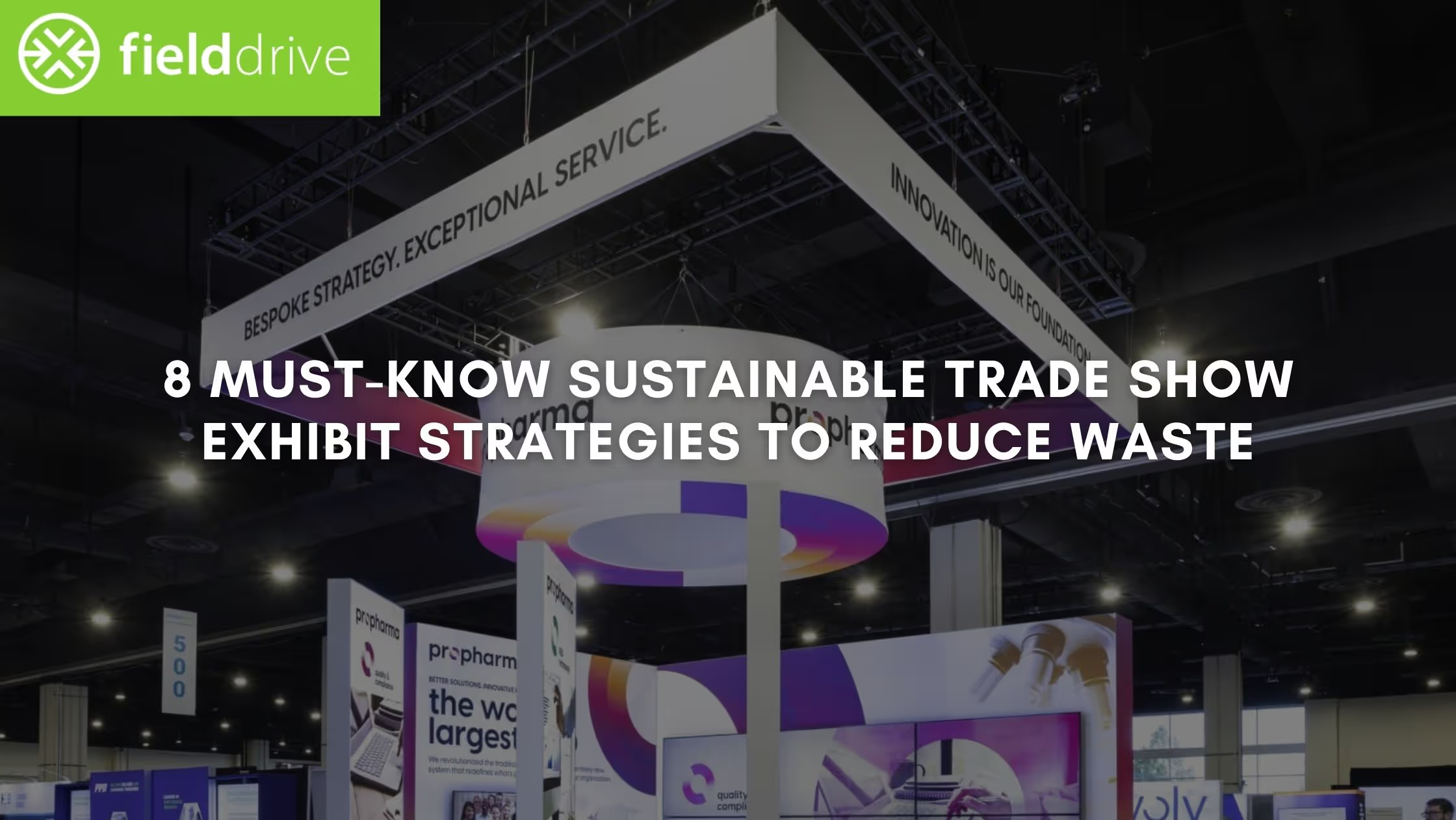
Trade shows have long been associated with scale, visibility, and impact, but also with significant waste. From booth construction to printed materials and single-use displays, the environmental footprint of exhibitions is hard to ignore. In fact, a recent report shows that the average trade show attendee generates around 2.5 kg of waste per day.
At the same time, expectations are shifting. Sustainability is no longer a “nice-to-have” add-on. It’s becoming a baseline requirement. A 2025 industry report found that 73% of exhibitors now demand sustainable booth solutions, yet many still struggle with how to implement them effectively. This gap between intent and execution is where most event teams feel the pressure, especially when balancing brand impact, operational efficiency, and environmental responsibility.
Designing a sustainable trade show exhibit is about rethinking how your booth is built, used, reused, and measured across its lifecycle. In this article, we’ll break down practical and creative sustainable trade show exhibit and display ideas. You'll come to know how these can help you reduce waste, optimize design, and deliver a high-impact presence on the show floor.
At a Glance
- Start with the right materials. Choose durable, reusable, and eco-conscious materials to reduce waste and improve lifecycle efficiency across multiple events.
- Design for reuse. Modular booth systems and scalable layouts help you avoid rebuilding, cut costs, and maintain consistency across events.
- Reduce waste through smarter operations. Shift to digital content, optimize logistics, and use energy-efficient technologies to lower environmental impact without sacrificing performance.
- Rethink engagement and attendee experience. Replace disposable giveaways with reusable or digital alternatives that create meaningful, lasting interactions.
- Plan early to avoid costly sustainability mistakes. Align teams, design for real-world usage, and focus on long-term adaptability to make sustainability scalable, not a one-time effort.
The Foundation of Sustainability: Materials That Make Your Booth Last
Choosing the right materials is the first step toward building a high-performing, sustainable trade show exhibit. Each material plays a role in reducing waste, improving lifecycle efficiency, and aligning your booth with modern sustainability expectations.
Below is a structured list of key sustainable trade show exhibit materials, along with their core benefits:
Core Sustainable Materials
- Aluminum
- Highly recyclable without loss of quality
- Lightweight yet durable, reducing transport impact
- Long lifecycle, making it ideal for repeated use across multiple events
- Bamboo
- A rapidly renewable resource that grows faster than traditional timber
- 100% natural and biodegradable
- Strong and resilient despite being lightweight
- Salvaged Wood
- Collected from dead or naturally fallen trees
- Reduces environmental impact by utilizing existing resources
- Supports waste reduction through upcycling
- Reclaimed Wood
- Sourced from previous constructions or furniture
- Eliminates the need for new tree harvesting
- Adds character while supporting sustainable reuse practices
Recycled & Recyclable Materials
- Recycled Plastic
- Converts waste plastic into functional, durable materials
- Helps reduce landfill contributions
- Maintains strength and versatility for structural use
- FSC-Certified Wood
- Sourced from responsibly managed forests
- Ensures sustainable forestry practices
- Can be reused or recycled after event use
Natural & Biodegradable Materials
- Natural Fabrics (Organic Cotton, Linen, Tencel)
- Biodegradable and environmentally friendly
- Free from harmful synthetic processing
- Biodegradable Materials
- Designed to decompose naturally over time
- Reduce landfill waste for short-term components
- Ideal for elements that are not intended for reuse
Eco-Friendly Printing Materials
- Fabric-Based Printing
- Durable and reusable across multiple events
- Produces less waste compared to paper-based printing
- Supports long-term sustainability in branding materials
- Soy-Based Inks & Recycled Paper
- Lower environmental impact than traditional inks
- Improve the recyclability of printed materials
- Reduce chemical footprint during production

Smart Design Strategies for a High-Impact Sustainable Trade Show Exhibit
Sustainability at trade shows results from multiple operational choices working together. From booth structure to engagement tactics and logistics, every layer contributes to the efficiency, scalability, and environmental responsibility of your presence.
Below is a practical, implementation-focused breakdown to help you design a sustainable trade show exhibit that performs both operationally and environmentally.
1. Build Smart With Modular Booth Systems
One of the most effective ways to reduce waste is to eliminate the need to rebuild your booth for every event. That's because single-use booth builds are one of the biggest contributors to trade show waste. Modular systems shift your approach from “build and discard” to “reuse and optimize.”
How to implement (step-by-step):
- Invest in a modular framework (e.g., aluminum systems) that can be reused.
- Design interchangeable elements (graphics, panels) for different events.
- Standardize booth components across your event calendar.
- Track usage lifecycle (number of events per structure).
Key benefits:
- Reduces material waste significantly
- Lowers long-term production costs despite having higher upfront costs
- Simplifies setup and teardown
- Reduces shipping weight and emissions
Pro tip: Replace sections, not entire booths. Modular systems allow you to swap damaged or outdated parts rather than discarding entire structures.
2. Optimize Energy Use With Smart Lighting & Displays
Traditional lighting and AV setups consume more power and generate excess heat, increasing both environmental impact and operational costs. That said, energy consumption is often overlooked, but it plays a major role in the sustainability of your exhibition booth.
What to use instead:
- LED lighting: lower energy consumption, longer lifespan, enhances booth aesthetics, and produces less heat, hence reducing the need for additional cooling within your booth.
- Solar-powered solutions: reduce reliance on venue electricity
- Energy-efficient AV setups: optimized for performance with lower consumption
Implementation workflow:
3. Shift to Digital-First Information (Reduce Print Waste)
Printed materials are one of the most common and avoidable sources of trade show waste. Brochures, flyers, and business cards are often discarded shortly after events, contributing to unnecessary waste.
How to transition:
- Use QR codes to share product information. This approach allows for real-time updates, so your materials are always current.
- Install interactive screens for dynamic content.
- Create a downloadable resource library for attendees.
- Replace paper business cards with digital contact-sharing apps.
Before vs After:
4. Optimize Logistics & Transportation
Transportation is a hidden but major contributor to event emissions. Shipping heavy booth materials across locations increases both cost and environmental impact. Practical strategies you can consider include:
- Sourcing materials locally where possible
- Using lightweight materials (e.g., tension fabrics, honeycomb panels)
- Consolidating shipments to reduce frequency
For instance, you can source booth materials within a 40-mile radius of your warehouse, cutting both shipping costs and emissions.
Pitfalls to Avoid:
- Last-minute shipping: Often leads to expedited freight, which has a higher carbon footprint and cost
- Over-engineered booths: Heavier designs increase both logistics complexity and emissions.
5. Design Sustainable Engagement & Giveaways
Sustainability doesn’t mean reducing engagement; it means redesigning it. For instance, giveaways often end up as waste. The goal is to provide value that lasts beyond the event.
Better alternatives:
1. Interactive Engagement
- Digital games focused on sustainability themes (tree-planting trivia games or carbon footprint challenges)
- Workshops (e.g., upcycling or eco-education DIY sessions)
- Experiences that educate while being engaging
2. Eco-Friendly Giveaways
- Reusable items (water bottles, tote bags, coffee mugs)
- Biodegradable products (seed paper, bamboo items)
- Digital giveaways (e-books, discount coupons)
Pro tip: Offer attendees the option to “plant a tree” on their behalf. This creates a memorable brand interaction while reinforcing sustainability values.
6. Choose Sustainable Flooring Solutions
Flooring is one of the most overlooked yet waste-heavy elements in a sustainable trade show exhibit. Traditional flooring is often installed for a few days and discarded immediately after, contributing significantly to landfill waste across large-scale events.
Shifting to reusable or sustainable flooring options can dramatically reduce this impact, while also improving durability and long-term cost efficiency.
Better Alternatives to Implement
- Modular bamboo tiles: reusable, durable, and visually appealing, easy to assemble and dismantle
- Recycled rubber flooring: can be rented and reused across events; designed as interlocking tiles for quick installation and removal
Additional Benefit: Compliance & Certifications
Both bamboo and recycled rubber flooring options can support alignment with sustainability standards such as LEED certifications.
7. Partner With Sustainable Venues
Your booth is only one part of the equation; the venue plays a critical role. Many venues already have sustainability infrastructure that you can utilize instead of building from scratch. Look for LEED-certified or environmentally recognized venues, built-in recycling programs, and energy-efficient systems.
How to collaborate:
- Engage venue teams early.
- Align on sustainability goals.
- Integrate your booth strategy with venue capabilities.
Key insight: Working with a venue that offers centralized recycling and energy-efficient systems can significantly reduce your booth’s operational footprint without additional setup.
Also Read: Sustainability Beyond Badges: Zero-Waste Catering and Venues
8. Measure and Communicate Your Impact
Sustainability efforts only deliver value when they’re measured and communicated. That's because transparency builds trust with attendees, sponsors, and stakeholders.
How to measure:
- Use carbon calculators to estimate the footprint.
- Track waste reduction (materials reused vs. discarded).
- Monitor energy consumption.
- Analyze engagement with sustainable initiatives.
How to showcase it:
- Display a live dashboard at your booth.
- Use signage to highlight sustainable choices.
- Share post-event sustainability reports.
Example: A booth displaying real-time data on emissions saved and waste reduced can attract attention while reinforcing brand credibility.
Also Read: 21 Smart Trade Show Booth Ideas for Small Budgets That Work in 2026
Common Mistakes to Avoid When Building a Sustainable Trade Show Exhibit
Even with the right intent, many teams struggle to execute a truly effective, sustainable trade show exhibit. The gap usually isn’t awareness; it’s in the details. Small operational oversights can quietly undermine sustainability efforts, increase costs, and limit long-term scalability.
Below are some less-obvious but highly impactful mistakes to avoid, along with practical ways to fix them.
1. Designing for a Single Event Instead of a Multi-Event Strategy
What happens: The booth layout, audience, or theme is designed around a single event without considering reuse.
Why does this create problems?
- Components don’t fit future booth sizes or formats.
- Graphics and structures become obsolete quickly.
- Teams are forced to rebuild instead of adapt.
Example: An exhibitor designs a booth with sustainable elements only for a 30x30 space. At the next event (20x20), most elements can’t be reused, leading to unnecessary rebuilds and waste.
How to fix it:
- Design with multiple event formats in mind (small booth, large booth, corner space, etc.).
- Create scalable layouts that can expand or contract.
- Standardize core dimensions and components.
2. Over-Customizing Without Considering Update Cycles
What happens: Highly customized booth elements are created with branding, messaging, or campaigns that change frequently.
Impact:
- Short lifespan of branded components
- Frequent redesign and reprinting
- Increased material waste
Better approach:
- Separate permanent elements (structure, base visuals) from changeable elements (messaging, campaigns).
- Use update-friendly components that allow quick swaps.
Key question to ask: Which parts of this booth will still be relevant 6–12 months from now?
3. Underestimating Storage and Post-Event Handling
What happens: After the event, materials are damaged, misplaced, or discarded due to poor storage planning.
Why it matters:
- Reusable materials lose value if not stored properly.
- Increases replacement costs
- Breaks the reuse cycle
How to implement better storage workflows:
- Assign inventory tracking for booth components.
- Use protective packaging for reusable elements.
- Define a storage location and ownership (who manages it post-event).
4. Ignoring Setup & Teardown Efficiency
What happens: Booths are designed without considering how quickly and efficiently they can be assembled or dismantled.
Impact:
- Increased labor time and costs
- Higher risk of damage during setup
- Delays that affect event readiness
How to optimize:
- Choose designs that require minimal tools and workforce.
- Standardize assembly processes.
- Test setup workflows before the event.
5. Failing to Align Internal Teams and Vendors
What happens: Sustainability goals are not clearly communicated across internal teams, agencies, and vendors.
Example: An event team prioritizes sustainability, but a vendor independently produces single-use elements due to a lack of alignment, thus undermining the entire effort.
Result:
- Inconsistent material choices
- Duplicate efforts (e.g., multiple vendors producing similar assets)
How to fix it:
- Define a clear sustainability brief before planning begins.
- Align all stakeholders on material standards, reusability goals, and logistics strategy.
6. Overlooking Attendee Behavior and Booth Wear
What happens: Booths are designed without considering how attendees interact with them over time.
Why this matters:
- High-touch areas degrade quickly.
- Materials may not withstand multi-day usage.
- Leads to premature replacement
How to plan for real usage:
- Identify high-traffic zones (entry points, demo areas).
- Use more durable materials in those areas.
- Plan for easy maintenance or quick fixes on-site.
Key insight: Sustainability is more than just about materials. It involves consideration of how long those materials can realistically perform under event conditions.
When you design for adaptability, maintainability, and real-world usage, sustainability becomes scalable, not just a one-time effort.
Also Read: 15 Great Ideas to Make Your Sustainable Event a BIG HIT

Wrapping Up
A high-performing sustainable trade show exhibit is not built on isolated tactics. In fact, it’s the result of intentional design across materials, structure, logistics, and engagement. When these elements work together, you reduce waste, create a booth that is easier to scale, more cost-efficient over time, and operationally reliable under event pressure. Sustainability, in this sense, becomes a system that improves how your booth is planned, executed, and reused event after event.
This is where fielddrive steps in as more than just a tech provider. With its intelligence-driven approach and On-site Tech Advisory Program, fielddrive helps you plan your event journey early. It assists you in mapping attendee flow, aligning booth design with operational realities, and integrating the right technologies to support both sustainability and performance.
Whether it’s enabling digital-first, touchless check-in to reduce print waste or offering sustainable badge printing to avoid harmful plastics, fielddrive helps you build a more efficient on-site experience. With real-time analytics, you can also measure impact and continuously improve how your booth performs both operationally and sustainably.
If you’re looking to design a sustainable trade show exhibit that runs smoothly, reduces waste, and delivers measurable ROI, it's time to rethink your on-site strategy. Connect with fielddrive to start planning earlier, execute smarter, and turn sustainability into a competitive advantage at your next trade show.
Also Read: Routes and fielddrive: leveraging modern tech to host sustainable global events
FAQs
1. What’s the best way to evaluate vendors offering eco-friendly trade show exhibit options?
Ask for transparency on sourcing, recyclability, and reuse rates, not just “green claims.” Request past project examples, lifecycle data, and material certifications. Vendors who can quantify impact and adapt to your event scale are typically more reliable partners.
2. How can small event teams implement sustainability without increasing workload?
Start with high-impact, low-effort changes like reusable structures, digital engagement, and simplified logistics. Standardizing processes across events reduces manual effort over time, making sustainability easier to maintain without adding operational complexity.
3. How do we justify the ROI of a sustainable trade show exhibit to stakeholders?
Focus on the total cost of ownership rather than the upfront costs. Track savings from reuse, reduced shipping, and fewer rebuilds across events. Pair this with brand-impact metrics such as attendee engagement and lead quality to demonstrate both financial and experiential ROI.
4. Are sustainable trade show exhibit materials as durable as traditional ones?
Yes, many sustainable trade show exhibit materials are designed for durability and repeated use. The key is selecting materials based on real-world conditions, such as foot traffic, setup frequency, and transport needs, rather than assuming all “green” materials are fragile.
5. Can sustainability efforts impact lead generation or booth performance?
When done correctly, sustainability can improve performance. Cleaner layouts, digital engagement, and efficient workflows often lead to better attendee interaction and higher-quality leads, rather than limiting your ability to attract and convert visitors.
.svg)
.svg)
.svg)
Want to learn how fielddrive can help you elevate your events?
Book a call with our experts today


.svg)