

.svg)
.webp)
Real-World Artificial Intelligence in Events Examples You Should Know
Discover real-world examples of artificial intelligence in events that improve check-in, attendee flow, and exhibitor ROI. Learn the major uses of AI in events.

Artificial intelligence is already reshaping how live events are designed, managed, and optimized. That said, many event leaders still struggle to see where it delivers real operational value. In simple words, it’s easy to hear about AI-powered personalization or automation in theory. The real question is how AI works on the ground. That includes predicting check-in surges before queues form, identifying high-value attendee behavior, optimizing session access, and helping you make faster, on-the-go operational decisions.
Also, this shift is happening quickly. In fact, 78% of organizations reported using AI in at least one business function in 2024, according to Stanford’s 2025 AI Index Report. That rapid adoption reflects how AI is becoming a practical tool for managing complex, real-time environments like conferences, exhibitions, and corporate events.
For event owners accountable for attendee experience and outcomes, understanding real-world examples of artificial intelligence in events is critical to separating hype from operational advantage. In this article, we’ll break down concrete examples of how artificial intelligence is being used in live events.
At a Glance
- AI improves real-time event operations: It helps predict check-in surges, optimize attendee flow, and monitor engagement so you can make faster, data-driven decisions during the event, not after it ends.
- Proven across major global events: Conferences like Google I/O, Snowflake Summit, Maha Kumbh Mela, and the US Open use AI for accessibility, personalization, analytics, and operational intelligence at scale.
- Enhances exhibitor ROI and attendee engagement: AI-powered lead capture, matchmaking, and personalization help exhibitors identify high-value prospects and guide attendees to relevant sessions and networking opportunities.
- Enables smarter planning through predictive insights: By analyzing registration, attendance, and behavioral data, AI helps you forecast session demand, allocate resources efficiently, and prevent overcrowding or underutilization.
- Requires secure integration and operational readiness: To unlock full value, AI must be integrated with check-in, badging, and analytics systems while ensuring data privacy, system reliability, and human oversight.
Artificial Intelligence in Events: Business Use Cases That Improve Operations and ROI
Artificial intelligence is delivering measurable operational improvements across live events. Not as a standalone feature, but as an intelligence layer embedded into check-in, session access, lead capture, and decision-making workflows. Instead of relying on static plans and manual monitoring, you can use AI to detect patterns, predict bottlenecks, and optimize operations while the event is still in progress.
Below are practical business applications of artificial intelligence in events.
1. Check-In and Arrival Flow Optimization
One of the most immediate and measurable examples of artificial intelligence in events is using AI to optimize check-in speed, forecast arrivals, and manage on-site flow.
How it works in practice:
AI systems analyze historical registration data, arrival patterns, ticket types, and real-time scan activity to:
- Predict arrival surges by time block
- Dynamically adjust staffing or open additional check-in points
- Reduce queue buildup before it escalates
- Monitor throughput per check-in station
Example: AI can identify that 40% of attendees typically arrive within a 30-minute window before keynote sessions. That allows you to allocate kiosks and staff proactively.
How to measure success: Use these operational metrics.
Real-world example: Check out how fielddrive improved event check-ins and badging for Burger King UK.
2. Lead Capture and Exhibitor ROI Optimization
For exhibition organizers, exhibitor ROI is one of the most critical success metrics. AI enhances lead capture by improving qualification accuracy and enabling real-time optimization.
AI-enabled lead retrieval systems can:
- Automatically classify leads based on engagement behavior
- Score leads based on visit duration, session attendance, and booth interactions
- Identify high-value prospects in real time
- Recommend follow-up priority lists
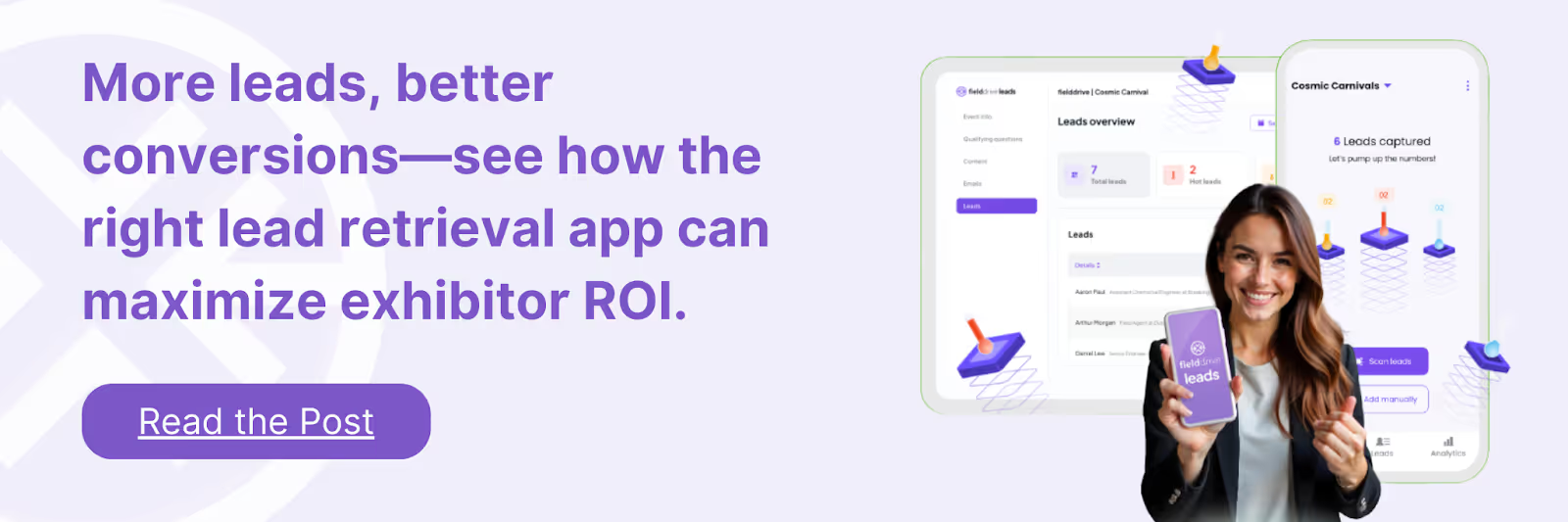
Real-world example: The fielddrive Leads app enables exhibitors to capture, qualify, and analyze leads instantly by scanning attendee badges. Exhibitors can adjust engagement strategies during the event based on real-time lead insights.
3. Session Attendance Prediction and Capacity Management
Session overcrowding or under-attendance creates operational inefficiencies and poor attendee experiences. AI helps predict attendance patterns before sessions begin.
AI analyzes:
- Registration data
- Session interest signals
- Historical attendance trends
- Attendee profiles and preferences
Based on these inputs, AI predicts attendance per session.
4. Networking and Matchmaking
Networking is a primary reason attendees participate in events, but manual networking is inefficient at scale. AI improves networking by recommending connections based on:
- Professional role
- Industry
- Behavior patterns
- Shared interests
- Session attendance
Also Read: AI Event Matchmaking and Networking Platform
5. Real-Time Event Analytics and Operational Decision-Making
Traditional event reporting is retrospective. AI enables real-time operational decision-making. AI-enabled dashboards provide visibility into:
- Check-in volume trends
- Session attendance patterns
- Exhibitor engagement levels
- Traffic across event areas
Example decision scenario:
Without AI, you discover overcrowded areas after complaints.
With AI, you detect congestion early and redirect flow immediately.
6. Chatbots and Attendee Support Automation
AI chatbots reduce support workload and improve attendee experience by providing instant answers.
Common chatbot use cases include:
- Registration assistance
- Session recommendations
- Venue navigation guidance
- Schedule reminders
Implementation steps:
- Deploy a chatbot on the event website and the mobile app.
- Train chatbot using event FAQs.
- Monitor query resolution rate.
7. Crowd Flow and Safety Management
Crowd management is critical for safety and operational efficiency. AI analyzes movement patterns, crowd density, and congestion risk. Then, it can trigger alerts when thresholds are exceeded.
Safe density:
- 2–3 people per square meter = manageable
- 4+ people per square meter = high congestion risk
Operational actions enabled by AI:
- Open alternative entrances
- Redirect attendee flow
- Adjust staffing allocation
Also Read: AI‑Powered Personalization with Event AI Tools: The Next Frontier in Event Marketing
While these use cases show how AI improves core operational workflows, seeing how leading events and global gatherings apply AI makes its impact even clearer.
Artificial Intelligence in Events Examples: Real-World Scenarios from Major Global Events
The most valuable examples of artificial intelligence in events come from environments where operational complexity, scale, and attendee expectations are highest. These real-world implementations show how AI is applied across critical operational areas, along with practical lessons that you can apply to your events.
1. Google I/O Developer Conference: Improving Accessibility Through AI-Powered Live Captioning
At Google I/O, Google’s annual developer conference, AI-powered live captioning was introduced across keynote presentations and breakout sessions. That was done to improve accessibility and ensure that all attendees could fully participate in the event.
Using advanced speech recognition technology, AI generated real-time captions for every spoken word during live presentations. Then, these captions were displayed instantly on large venue screens, allowing attendees to follow along without delays.
Operational and attendee experience improvements achieved:
- Enabled hearing-impaired attendees to fully participate in sessions without requiring separate accessibility support
- Improved comprehension for international attendees whose first language was not English
- Helped attendees follow technical discussions more accurately in real time
- Reduced reliance on manual transcription and post-session captioning workflows
Pro tip for implementation: Integrate AI-powered captioning into keynote sessions, technical workshops, and high-attendance presentations to ensure maximum accessibility and engagement across diverse attendee groups.
2. Maha Kumbh Mela, India, 2025: Using AI to Support Millions of Attendees and Manage Crowd Flow
At the 2025 Maha Kumbh Mela, one of the largest gatherings in the world, organizers deployed AI-powered chatbots to help attendees navigate the event and access real-time information. With millions of visitors spread across multiple zones, manual support alone could not scale to meet attendee needs.
Attendees used AI chatbots to:
- Ask questions about schedules and event timing
- Find and reach venue zones and locations
- Receive recommendations based on their interests
- Get instant responses without waiting for staff assistance
This allowed event staff to focus on operational and safety-critical responsibilities rather than routine attendee questions.
At the same event, AI-powered crowd monitoring systems analyzed real-time crowd density and movement patterns. These systems helped organizers detect congestion risks early and take preventive action to avoid overcrowding and maintain safe attendee flow.
3. Snowflake Summit 2025: Delivering Personalized Attendee Experiences with AI
At Snowflake Summit in San Francisco, organizers used AI to analyze attendee profiles, past participation, and behavioral signals to create personalized event journeys. Instead of leaving attendees to explore hundreds of sessions and exhibitors manually, AI guided them to the most relevant opportunities.
AI enabled the following:
- Personalized session recommendations based on attendee interests and roles
- Suggested one-on-one meetings with relevant exhibitors
- Recommendations for panels aligned with professional goals
This ensured attendees spent their time more effectively and engaged with the most relevant content and partners.
Why it matters: When attendees are directed toward relevant sessions and exhibitors, engagement improves significantly. This increases attendee satisfaction while improving the quality of exhibitor leads and the overall event value.
4. The Masters Golf Tournament: Enhancing Attendee Experience and Insights Using IBM Watson
The Masters Golf Tournament partnered with IBM Watson to enhance both on-site and remote attendee experiences using artificial intelligence. IBM Watson analyzed vast volumes of real-time and historical data. That included player performance, weather conditions, and event activity to deliver intelligent, personalized insights throughout the tournament.
One of the most impactful applications was IBM Watson’s natural language processing (NLP)-powered chatbot. It allowed attendees and viewers to interact directly with the AI system.
AI-powered capabilities included:
- Chatbot assistance that answered attendee and viewer questions instantly
- Real-time updates on player performance, scores, and event developments
- Personalized recommendations based on attendee or viewer preferences
- Predictive analytics that provided deeper insights into player performance trends
For fans, this meant they could:
- Access relevant information immediately.
- Track players more effectively.
- Make informed decisions when following matches, selecting fantasy teams, or engaging with tournament content.
5. The AI Summit London: Improving Networking Outcomes Through Intelligent Matchmaking
At the AI Summit London, AI-powered matchmaking tools helped attendees connect with peers, partners, and exhibitors who shared their professional interests and goals.
AI analyzed attendee data such as:
- Professional roles
- Industry sectors
- Interests and goals
- Event engagement behavior
Based on this analysis, AI recommended relevant networking opportunities.
Why it matters: Networking is a primary driver of value for conferences and exhibitions. AI improves connection quality by helping attendees meet the most relevant contacts rather than relying on random interactions. And better matchmaking improves attendee satisfaction and exhibitor ROI.
6. Data + AI Summit (San Francisco): Predicting Session Attendance and Optimizing Resource Allocation
At the Data + AI Summit, AI was used to analyze attendee behavior, registration trends, and engagement patterns to predict which sessions would attract the highest attendance.
These predictions allowed organizers to:
- Assign appropriately sized rooms
- Avoid overcrowded or underutilized sessions
- Allocate staff efficiently
- Improve overall session experience
Why this matters: Predictive intelligence helps you optimize logistics, improve the attendee experience, and reduce operational uncertainty.
Pro tip for event leaders: The most successful AI implementations are integrated into core operational workflows, not deployed as isolated tools. For instance, check-in, session access, attendee engagement, and analytics.
7. US Open Tennis Championships: Using AI to Deliver Real-Time Insights and Interactive Attendee Experiences
The US Open is one of the most attended sporting events in the world. It uses IBM’s WatsonX AI platform to transform live and historical data points into interactive, real-time experiences for attendees and viewers. IBM’s AI analyzes match performance, engagement behavior, and historical trends to generate insights, predictions, and automated content during the tournament.
AI-powered features deployed at the US Open included:
- AI-powered chatbot (“Match Chat”) that answered attendee and viewer questions instantly
- Live match predictions (“Likelihood to Win”) based on real-time player performance and momentum
- AI-generated summaries and insights to help fans understand match developments
- Automated commentary and editorial support, increasing content production efficiency
IBM’s AI systems processed more than 7 million data points throughout the tournament. It also delivered real-time insights and improved engagement for over 14 million global fans on the US Open's digital platforms.
The examples above demonstrate how AI can improve attendee navigation, session planning, networking, and operational decision-making. However, implementing it in live event environments requires careful planning and several considerations.
Challenges and Considerations When Applying AI in Real Event Environments
Event owners and operations leaders like you must ensure that AI systems are secure, properly integrated, and aligned with real operational workflows. Below are the most important considerations when applying AI in conferences, exhibitions, and corporate events.
1. Data Privacy and Security: Protecting Attendee and Exhibitor Information
In events, AI relies on attendee data: registration details, session attendance, networking activity, and engagement patterns. This makes data protection a critical responsibility.
Key risks to manage:
- Unauthorized access to attendee or exhibitor data
- Data breaches affecting personal or business information
- Non-compliance with regulations such as GDPR
Best practices you should implement:
- Encrypt attendee and lead data across systems.
- Restrict access based on staff and exhibitor roles.
- Use anonymized data for analytics where possible.
Example: At exhibitions where exhibitors scan badges to capture leads, secure systems ensure that attendee data is only accessible to authorized exhibitors. This protects attendee trust and ensures compliance with data protection requirements.
2. Integration with Existing Event Technology and Operational Workflows
AI cannot improve operations if it operates in isolation. Common integration requirements include:
Example: If AI predicts session overcrowding but room assignments and access control are not adjusted, the insight cannot prevent operational disruption. Integration ensures AI insights translate into real operational improvements.
3. Cost Considerations and Long-Term Operational Value
Implementing AI involves upfront investment, including software, hardware, and integration costs. However, most examples of AI in events demonstrate that it delivers measurable operational returns over time.
Cost areas to evaluate:
- AI software platforms and analytics tools
- Integration with registration and event systems
- Staff onboarding and training
- Hardware such as intelligent check-in kiosks
Operational benefits that offset cost:
- Faster attendee processing
- Improved exhibitor lead capture
- Better resource allocation
- Improved attendee experience
4. Data Accuracy, Bias, and Reliability of AI Insights
AI predictions and recommendations are only as accurate as the data used to train them. Poor or incomplete data can lead to inaccurate insights.
Potential risks include:
- Incorrect session attendance predictions
- Poor personalization recommendations
- Misinterpretation of attendee behavior
Best practices to ensure reliability:
- Validate AI predictions using real-time event monitoring.
- Continuously update data inputs.
- Combine AI insights with operational judgment.
5. Transparency, Consent, and Ethical Use of AI
Attendees and exhibitors must understand how their data is used in AI-driven systems. To ensure transparency, you must:
- Clearly communicate how attendee data is used.
- Provide opt-in consent during registration.
- Allow attendees to control their data preferences.
Transparency strengthens attendee trust and improves adoption of AI-powered experiences.
6. Operational Contingency Planning and Human Oversight
AI improves operational efficiency, but your team must prepare for unexpected scenarios such as system outages or data errors. Backup check-in options ensure attendee entry continues smoothly even if connectivity or system issues occur.
Recommended operational safeguards include:
- Backup check-in workflows
- Offline badge printing capability
- Manual fallback procedures if needed
- On-site staff trained to manage exceptions
Also Read: Interactive Event Badges: Enhance Engagement and Check-Ins
Wrapping Up
Artificial intelligence is no longer a future concept in event management. It’s already improving how conferences, exhibitions, trade shows, and corporate events operate today. The examples covered in this article demonstrate how AI enables event teams like yours to move from reactive troubleshooting to proactive operational control.
fielddrive applies these same AI-driven principles directly to on-site event operations. It offers touchless check-in kiosks, live badge printing, and session access control. This setup generates the high-quality operational data that AI systems rely on to deliver accurate predictions and actionable insights. Combining all of this with its On-site Tech Advisory Program, fielddrive helps you design smarter, data-driven event experiences from the start.
If you're exploring how artificial intelligence can translate into real improvements in events, the next step is to see how it works in your environment. Request a proposal to discover how fielddrive can help you run faster check-ins, capture better data, and position AI to deliver more measurable event outcomes.
FAQs
1. What’s the first practical AI use case you should consider implementing?
Start with AI-enabled check-in and analytics. These provide immediate operational visibility into attendee arrivals and flow patterns. This foundation enables additional use cases, such as session demand prediction, networking recommendations, and exhibitor lead scoring based on real attendee behavior.
2. How can you validate whether AI recommendations are reliable during live event execution?
Compare AI predictions against real-time operational metrics such as attendance counts, check-in throughput, and session occupancy. Reliable AI systems continuously refine predictions using live event data, improving accuracy as the event progresses.
3. What is the biggest operational mistake organizers make when applying AI from real-world event examples?
The most common mistake is implementing AI too late in the planning cycle. AI delivers the most value when integrated early, allowing systems to collect sufficient data and support operational planning before workflows and infrastructure are finalized.
4. How can you apply lessons from artificial intelligence in events examples without building custom AI systems?
Most event organizers use AI via integrated on-site event technology platforms that automatically collect and analyze operational data. This allows them to benefit from AI-driven insights without building or managing their own AI infrastructure.
.svg)
.svg)
.svg)
Want to learn how fielddrive can help you elevate your events?
Book a call with our experts today


.svg)