

.svg)
.webp)
Attendees rarely notice good logistics, but they immediately notice bad logistics. When registration data flows perfectly, hardware executes flawlessly, and badge printing takes mere seconds, the entire infrastructure becomes invisible, allowing visitors to focus entirely on the event itself.
However, the moment a single system lags, that invisibility shatters. A ten-second delay at a check-in terminal rapidly compounds into snaking venue queues, frustrated VIPs, and public operational friction before the opening keynote even begins. On-site event logistics is a zero-margin game where your preparation is judged entirely by the bottlenecks you prevent.
In this guide, we’ll explore the operational challenges that affect live events, the technologies changing onsite logistics, and how organizers can build more scalable event operations.
Key Takeaways
- Modern event logistics depends on connected operational systems that unify attendee registration, badge printing, access control, and real-time venue visibility to reduce onsite bottlenecks.
- Most event check-in failures happen when fragmented hardware, delayed attendee-data synchronization, and manual access-control workflows collapse under peak arrival traffic.
- Self-service kiosks, QR scanning, facial recognition, and live badge printing significantly improve attendee throughput by reducing manual coordination during high-volume entry periods.
- Real-time attendee analytics help organizers monitor congestion, session attendance, room utilization, and crowd movement, allowing faster operational decisions during live events.
- fielddrive streamlines end-to-end event logistics through integrated check-in, live badge printing, attendee access management, and operational analytics designed for large conferences, exhibitions, and hybrid events.
What Is Event Logistics?
Event logistics refers to the operational coordination required to move attendees, staff, exhibitors, and resources efficiently throughout an event. While general event planning focuses on programming, venue selection, sponsorships, and marketing, event logistics planning focuses on execution during the event itself.
Conference event logistics typically include:
- Attendee registration
- Badge printing
- Check-in operations
- Access control
- Attendee flow management
- Staffing coordination
- Session movement
- Onsite communication
These operational systems directly shape the attendee experience. Even well-designed events can feel disorganized when onsite event logistics are poorly coordinated.
As events grow larger and become more data-driven, organizers need event logistics management systems that provide real-time visibility into attendee movement and operational performance.
Why Event Logistics Fail Under Real Event Conditions
Most event logistics problems do not begin because organizers forget to plan. They happen because operational systems that work under normal conditions begin to fail when thousands of attendees move through the venue simultaneously.
This is why onsite event logistics should be treated as a live operational system rather than a static checklist. Organizers need workflows that can adapt in real time as attendee volume, session traffic, and venue pressure change throughout the day.
The following issues are some of the most common operational breakdown points during live events.
Fragmented Onsite Hardware Deployment
Traditional onsite logistics rely on a fragmented mix of separate printers, scanning devices, and local routers that require extensive on-the-floor configuration. When thousands of attendees arrive simultaneously during the peak morning rush, this piecemeal infrastructure creates immediate hardware conflicts, resulting in slow print queues, paper jams, and terminal disconnects that leave frontline staff helpless.
Delayed Data Synchronization
Operational flow breaks down when data changes made via online ticketing platforms fail to update to physical check-in terminals in real time. In a live environment where attendees continuously register at the door, correct name typos, or substitute VIP badges, batch-processing or delayed syncing schedules cause local kiosk databases to become instantly obsolete.
Friction at Multi-Zone Access Checkpoints
The logistical challenge multiplies once visitors pass the main perimeter and encounter restricted zones, VIP lounges, or paid session tracks. Relying on manual staff check-ins or handheld scanners at classroom doors creates severe corridor friction, stalling crowd velocity during tight schedule transitions, and delaying speaker presentations.
The Post-Arrival Attendee Tracking Blind Spot
Most event management teams lose complete operational visibility the exact moment an attendee prints their badge and leaves the front entryway. Without a unified digital tracking loop connecting registration data to the rest of the venue floor, organizers cannot accurately gauge zone capacity pressures, identify popular exhibitor booths, or dynamically reallocate security and staff to handle moving crowds.
How Event Technology Improves Event Logistics
Event technology helps organizers automate repetitive operational tasks while improving attendee throughput and visibility across the venue. Here are some popular ways new technologies help to mitigate your logistic bottlenecks.
1. Self-Service Check-In Reduces Entry Congestion
Self-service registration kiosks allow attendees to verify information and complete check-in without relying entirely on staff.
Features such as:
- QR code scanning
- Barcode scanning
- Facial recognition options
- Self-service badge retrieval
This improves attendee flow management while reducing pressure on onsite teams.
2. Faster Badge Printing Improves Attendee Flow
Live badge printing systems help organizers avoid the logistical limitations of pre-printed badges.
Modern badge printing workflows support:
- Instant attendee updates
- Onsite reprints
- Customized credentials
- Reduced manual handling
Faster badge distribution helps attendees move into the event more quickly.
3. Session Access Control Improves Crowd Management
Session access systems help organizers monitor attendance and manage room capacity more effectively.
Access-control workflows improve:
- Attendance accuracy
- Restricted-session security
- Attendee visibility
- Overcrowding prevention
This becomes especially important during high-attendance conferences with multiple simultaneous sessions.
4. Real-Time Analytics Improve Operational Decisions
Analytics platforms provide visibility into attendee movement throughout the event.
Organizers can use these insights to:
- Identify peak congestion periods
- Measure attendee engagement
- Evaluate room usage
- Improve future event logistics planning
Operational visibility helps teams optimize both attendee experience and event performance.
How fielddrive Supports End-to-End Event Logistics
fielddrive helps organizers streamline onsite event logistics by connecting registration, badge printing, attendee access, and operational visibility into a more unified workflow. Instead of relying on disconnected systems and manual coordination, organizers can manage critical event operations through integrated onsite technology designed for live-event environments.
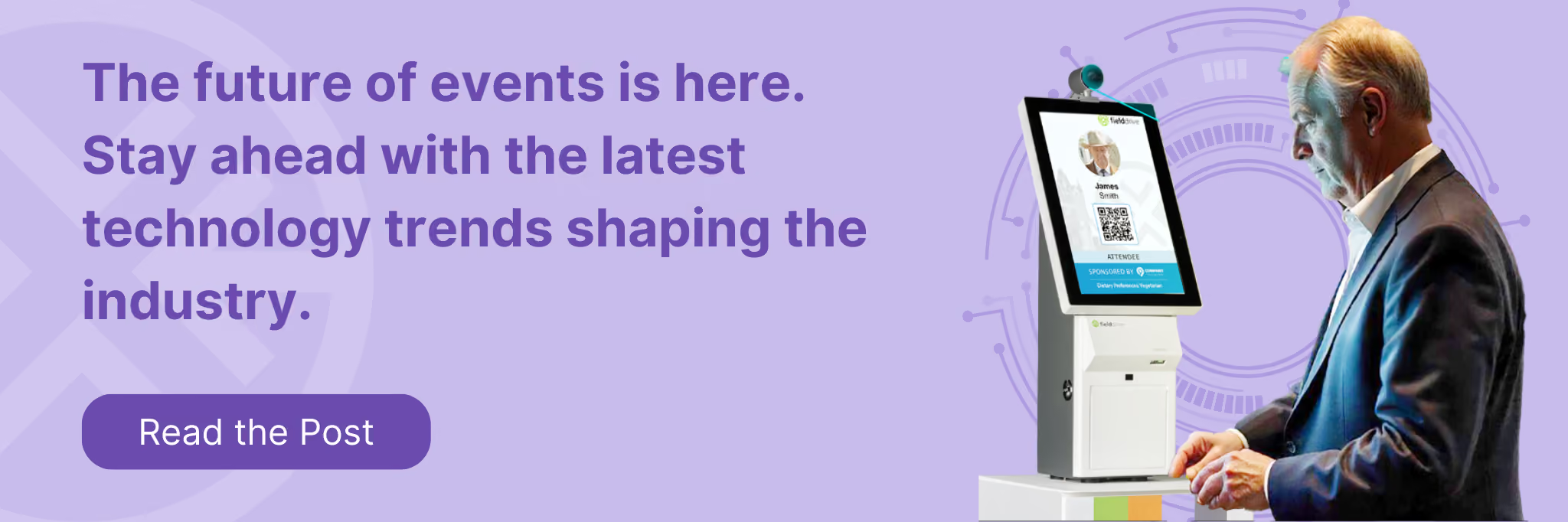
- Self-Service Check-In: fielddrive’s registration kiosks support QR scanning, barcode scanning, facial recognition, and self-service attendee lookup, helping organizers process attendees faster during high-volume arrival periods.
- Live Badge Printing: Badges are printed and updated in real time, allowing organizers to manage walk-in registrations, VIP credential changes, badge corrections, and reprints without relying on large batches of pre-printed inventory.
- Real-Time Operational Analytics: Live attendee and registration data help organizers monitor onsite activity, evaluate session participation, identify operational bottlenecks, and make faster decisions during the event itself.
- fielddrive 2.0 Operational Support: fielddrive combines onsite technology with operational planning support, helping event teams improve attendee workflows, registration setup, and onsite execution across large-scale conferences and exhibitions.
- Easy Badging for Smaller Events: Portable badge printing and simplified check-in workflows help smaller conferences and corporate events reduce manual coordination while maintaining professional onsite registration operations.
fielddrive helps organizers reduce operational friction by replacing fragmented event workflows with integrated, real-time onsite event technology.
Conclusion
As events become larger, more personalized, and increasingly hybrid, event logistics is shifting from reactive coordination to predictive operational management. This shift is accelerating the adoption of integrated event ecosystems where check-in, badge printing, session access, attendee analytics, and operational decision-making function as part of a connected infrastructure rather than isolated workflows.
As operational expectations continue to rise, the future of event logistics will depend on how quickly organizers can adapt to real-time conditions without increasing manual coordination complexity.
fielddrive helps event teams prepare for this transition through integrated onsite event technology designed to support faster check-in, live badge printing, attendee access management, and real-time operational visibility for modern conferences and live events.
FAQs About Event Logistics
1. How far in advance should organizers begin event logistics planning?
Large conferences and exhibitions often begin operational logistics planning several months before the event. This includes infrastructure deployment planning, registration workflow setup, internet and hardware testing, venue access coordination, staffing assignments, and contingency preparation for onsite operational disruptions.
2. What are the biggest hidden costs caused by poor event logistics?
Operational inefficiencies can create unexpected costs through badge reprints, overtime staffing, equipment troubleshooting, delayed session starts, unused printed materials, and attendee-support escalation. Poor logistics can also reduce exhibitor satisfaction and negatively affect sponsor retention for future events.
3. What should organizers test before event day?
Organizers should test internet reliability, printer connectivity, badge templates, attendee synchronization, scanner functionality, session-access workflows, and backup operational procedures before attendees arrive onsite. Infrastructure testing helps reduce operational disruption during live events.
4. How do organizers manage logistics across multi-day conferences?
Multi-day events require continuous operational adjustments based on attendee behavior, session popularity, staffing requirements, and live registration activity. Organizers often rely on real-time operational reporting to optimize workflows throughout the event instead of following static pre-event assumptions.
5. What operational metrics should event teams track during live events?
Important operational metrics include check-in throughput, badge reprint frequency, session attendance rates, room utilization, attendee dwell time, registration processing speed, and access-control activity across different event zones.
.svg)
.svg)
.svg)
Want to learn how fielddrive can help you elevate your events?
Book a call with our experts today


.svg)