

.svg)
.webp)
AI Personalization for Event Attendee Experiences: 2026 Strategy Guide
AI personalization is helping organizers create more relevant attendee journeys across the full event lifecycle. This guide explains how AI can improve pre-event recommendations, onsite engagement, post-event follow-up, attendee analytics, and scalable event operations.
Imagine organizing a conference where the right attendee gets the right session recommendations before arrival, the right access at the door, and the right follow-up after the event ends. That is what AI is starting to make possible. Recent event-industry reporting shows that 80% of event attendees prefer personalized event experiences powered by AI, which is a strong signal that generic event journeys are losing ground.
The real challenge is making it work at scale once thousands of attendees, multiple tracks, live updates, and onsite exceptions start moving at the same time. That is where AI becomes useful: it helps organizers turn attendee data into more relevant pre-event communication, smarter onsite decisions, and better post-event follow-up without adding the same level of manual coordination.
In this article, we will look at how AI is changing the event attendee experience before, during, and after the event, and where it makes personalization practical for organizers.
Key Takeaways
- AI-powered event personalization helps organizers deliver more relevant attendee journeys before, during, and after events by leveraging real-time behavioral data, engagement signals, and operational insights rather than static audience segmentation.
- Pre-event AI personalization improves attendee engagement by delivering personalized agenda recommendations, smarter content discovery, networking suggestions, and frictionless check-in preparation tailored to attendee interests and historical behavior.
- During live events, AI helps organizers create adaptive attendee experiences through smart event assistants, dynamic schedules, real-time crowd management, exhibitor recommendations, and attendee-specific access workflows.
- Post-event AI tools extend personalization beyond the venue by recommending relevant session content, improving lead qualification, analyzing attendee feedback, and supporting long-term community engagement strategies.
- Scaling AI personalization requires more than automation alone, as fragmented attendee data, privacy concerns, synchronization failures, weak onsite infrastructure, and lack of technical staff training can disrupt live event experiences.
- fielddrive supports AI-ready event personalization through touchless check-in kiosks, live badge printing, integrated attendee access management, real-time analytics, and connected onsite event infrastructure designed for scalable live-event operations.
Why AI Is Making Personalized Event Experiences Scalable
Personalization has always been important in events, but delivering truly individualized experiences at scale has traditionally been difficult. Large conferences generate constant attendee movement, session changes, networking activity, and engagement data that are impossible to manage manually in real time.
Traditional personalization methods relied heavily on static audience segmentation, pre-event preferences, or broad attendee categories that rarely adapted once the event began. As attendee expectations evolved, organizers needed a way to make personalization more dynamic, responsive, and operationally scalable.
AI helps solve this challenge by continuously processing attendee behavior, engagement signals, and operational data throughout the live event experience. Instead of offering the same journey to every attendee, organizers can create more adaptive experiences that respond to attendees' interests, activity, and participation in real time.
Pre-Event: AI Improves Personalization Before Attendees Arrive
Traditional pre-event personalization was often limited to segmented email campaigns, basic attendee categories, or manually curated agendas. While these tactics helped organizers create more targeted communication, they rarely adapted well to attendee behavior at scale.
AI is changing this by helping organizers process registration behavior, professional interests, past event activity, and engagement signals much earlier in the attendee journey.
For example, a first-time startup founder attending a SaaS conference may automatically receive recommended investor meetups and early-stage networking sessions; meanwhile, enterprise buyers at the same event may see completely different content journeys, exhibitor recommendations, and meeting opportunities.
This allows large conferences to feel more relevant without relying entirely on manual attendee segmentation. The most common AI-powered personalization use cases before the event include:
- Personalized Agenda Recommendations: AI can recommend sessions, workshops, certifications, and speaker tracks based on attendee role, interests, or historical engagement behavior.
- Smarter Content Discovery: Event platforms can personalize landing pages, speaker highlights, exhibitor suggestions, and email journeys around attendee intent signals.
- AI-Assisted Networking Preparation: Attendees can receive suggested networking matches, investor introductions, exhibitor recommendations, or peer connections before the event begins.
- Improved Speaker and Content Planning: AI tools help organizers analyze speaker submissions, identify trending themes, and build more relevant event agendas around attendee demand.
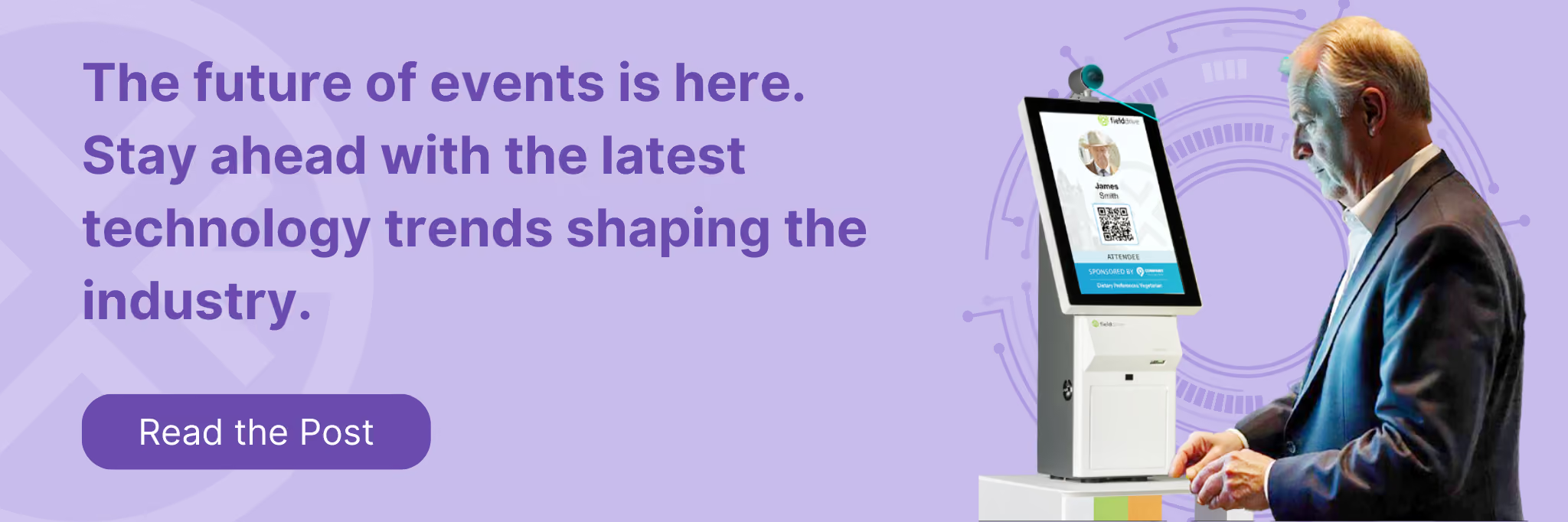
- Frictionless Arrival Preparation: AI-powered check-in systems, QR workflows, and facial recognition tools help reduce arrival friction and simplify onsite entry preparation before attendees reach the venue.
As conferences become larger and more content-heavy, AI helps organizers move beyond static segmentation toward more adaptive pre-event attendee experiences.
During the Event: AI Creates More Adaptive Attendee Experiences
Traditional event personalization often breaks down once attendees enter the venue. Session schedules change, attendee interests evolve, networking priorities shift, and crowd behavior becomes difficult to manage manually in real time.
This is where AI becomes significantly more valuable operationally. Instead of relying on fixed attendee journeys planned weeks earlier, AI-powered event systems can continuously adapt experiences based on live attendee behavior throughout the event itself.
For example, if a workshop reaches capacity, AI-powered event apps may recommend similar nearby sessions with lower wait times. A networking platform may identify high-value attendee matches based on shared business interests and automatically suggest introductions during the event.
This creates event experiences that feel more responsive, personalized, and easier to navigate under live-event conditions.
The most common AI-powered personalization use cases during the event include:
- Smart Event Concierge Experiences: AI chatbots and virtual assistants can help attendees navigate schedules, locate sessions, coordinate meetings, and answer venue questions in real time.
- Adaptive Attendee Journeys: Personalized notifications, dynamic schedules, and attendee-specific access workflows can adjust continuously based on attendee activity during the event.
- Live Operational Personalization: Real-time attendee analytics help organizers identify engagement trends, optimize crowd movement, and respond faster to operational pressure points.
- More Relevant Exhibitor Discovery: AI-driven behavioral analysis can help attendees discover exhibitors, booths, demos, and sponsors aligned with their interests or business objectives.
As attendee expectations continue to rise, AI is increasingly helping organizers transform events from static schedules into adaptive live experiences.
Post-Event: AI Extends Personalized Engagement Beyond the Venue
For many organizers, personalization traditionally ended when attendees left the venue. Post-event engagement was often limited to generic thank-you emails, static surveys, or broad follow-up campaigns sent to the entire attendee database.
Modern event platforms can now analyze attendee behavior across sessions, networking interactions, exhibitor engagement, meeting activity, and content participation to personalize follow-up experiences long after the event concludes.
For example, attendees who spent significant time in cybersecurity sessions may automatically receive related whitepapers, webinar invitations, or sponsor content tied to those interests.
The most common AI-powered personalization use cases after the event include:
- Personalized Follow-Up Content: AI can recommend session recordings, presentations, resources, exhibitors, or educational content aligned with attendee engagement history.
- Behavior-Based Lead Qualification: Engagement signals collected throughout the event help organizers and exhibitors prioritize higher-value leads and follow-up opportunities.
- AI-Assisted Feedback Analysis: AI tools can analyze surveys, chat logs, attendee comments, and engagement activity to identify recurring themes and operational insights.
- Smarter Community Engagement: Personalized post-event communication helps organizers maintain attendee engagement between conferences through targeted content and relevant updates.
- More Actionable Event Analytics: AI-driven reporting helps organizers understand which sessions, networking opportunities, and engagement strategies generated the strongest attendee response.
- Continuous Event Optimization: Behavioral insights from one event can help improve personalization strategies, agenda planning, and attendee experiences for future conferences.
As events become more community-driven and relationship-focused, AI is helping organizers extend personalization beyond the live event itself into a continuous cycle of attendee engagement.
Why AI-Powered Event Personalization Is Difficult to Scale and How Organizers Solve It
AI personalization can make events more adaptive, efficient, and attendee-focused, but implementing these systems introduces operational challenges that many organizers underestimate.
Delivering personalized experiences in real time requires reliable infrastructure, connected attendee data, strong governance processes, and operational flexibility across the full event lifecycle.
1. Fragmented Attendee Data Creates Inconsistent Personalization
Most event data still lives across disconnected systems such as registration platforms, CRMs, event apps, exhibitor tools, and historical attendee databases. When attendee information remains fragmented, AI systems struggle to generate accurate recommendations, networking matches, or engagement insights during the event.
To improve personalization quality, organizers increasingly focus on consolidating attendee data into connected workflows that support real-time synchronization across event systems.
2. Privacy and Consent Management Becomes More Complex
AI-powered event personalization often depends on behavioral tracking, facial recognition, attendee movement analysis, and engagement monitoring. This creates additional pressure around attendee consent, data transparency, and regulatory compliance across different regions and event types.
Many organizers now prioritize transparent opt-in workflows and attendee-controlled privacy settings to balance personalization with attendee trust.
3. Real-Time System Failures Can Disrupt Live Experiences
AI-powered attendee journeys rely heavily on stable communication between event apps, registration systems, onsite hardware, analytics platforms, and access-control workflows. Even small synchronization failures can affect live recommendations, badge printing, networking tools, or attendee access permissions.
As a result, organizers increasingly invest in more integrated event infrastructure and stronger onsite connectivity to reduce operational instability during high-attendance periods.
4. AI Recommendations Still Require Human Oversight
AI systems can process large volumes of attendee data quickly, but they are not always contextually accurate during live-event conditions. Recommendation engines may surface irrelevant sessions, while AI chatbots can occasionally provide incorrect schedules, room locations, or attendee guidance.
Experienced event teams still rely on human oversight to validate AI-driven experiences and intervene when automated workflows create attendee confusion.
5. Event Staff Often Lack Technical AI Troubleshooting Skills
Many onsite event teams and temporary staff members are not trained to manage biometric systems, AI-driven workflows, network failures, or synchronization issues during live operations. When technical problems occur, frontline teams may struggle to resolve issues quickly without dedicated technical support.
To reduce operational disruption, organizers increasingly include AI workflow training and fallback procedures as part of event operations planning.
6. Backup Workflows are Still Necessary for AI-Driven Events
Even highly automated event environments require manual contingency planning. Network outages, software failures, hardware disconnects, or platform instability can disrupt AI-powered attendee experiences without warning.
For this reason, many organizers still maintain backup check-in workflows, offline access procedures, manual help desks, and fallback communication systems during live events.
7. Over-Personalization Can Reduce Attendee Comfort
While personalization can improve attendee relevance, excessive automation can make event experiences feel intrusive. Constant notifications, aggressive matchmaking prompts, and excessive behavioral tracking may overwhelm attendees instead of improving engagement.
Organizers increasingly focus on delivering personalization selectively, using AI to reduce friction and improve relevance without making attendees feel continuously monitored throughout the event.
What to Look for in AI-Powered Event Personalization Technology
Not all event technology platforms are built to support AI-driven personalization at scale. Organizers should evaluate whether their event infrastructure can support real-time attendee intelligence, connected operational workflows, and adaptive experiences throughout the event lifecycle.
Key capabilities to evaluate include:
- Real-time attendee data synchronization.
- Integrated registration, check-in, and access workflows.
- AI-ready attendee analytics and engagement tracking.
- Flexible privacy and consent-management controls.
- Scalable onsite infrastructure and connectivity.
- Reliable offline and fallback operational workflows.
- Live attendee-behavior and engagement insights.
- Seamless integration with existing event systems and platforms.
How fielddrive Helps Organizers Deliver More Personalized Event Experiences
AI-powered personalization depends on fast attendee processing, connected operational workflows, and real-time attendee intelligence throughout the event lifecycle. fielddrive helps organizers support more adaptive attendee experiences by combining intelligent check-in, live badge printing, access control, analytics, and onsite operational support into a connected event ecosystem.
- Touchless Check-In Kiosks: fielddrive’s touchless check-in technology supports multiple attendee verification methods, including QR scanning, barcode scanning, and AI-powered facial recognition. These workflows help organizers reduce entry friction, accelerate attendee processing, and create faster arrival experiences while supporting modern privacy-compliance standards.
- Live Badge Printing Solutions: fielddrive’s badge printing solutions support dynamic attendee experiences through live, on-demand badge production. Organizers can print custom two-sided badges in approximately six seconds, manage last-minute attendee updates, reduce reprint dependency, and avoid the operational limitations of static pre-printed credentials.
- Integrated Session Access and Attendee Scanning: fielddrive connects attendee credentials with session access workflows, helping organizers manage personalized permissions, VIP access, restricted sessions, and attendance tracking more efficiently across the venue.
- Real-Time Data and Attendee Analytics: fielddrive provides live operational dashboards and attendee analytics that help organizers monitor attendee movement, engagement patterns, session participation, and onsite activity throughout the event. These insights support more responsive operational decisions and stronger attendee personalization strategies.
- Connected Registration and Event Infrastructure: The platform integrates with major registration systems and attendee-management workflows, helping organizers maintain synchronized attendee data across registration, check-in, badge printing, access control, and engagement tracking.
FAQs
1. How do organizers measure the success of AI-powered event personalization?
Organizers typically measure AI-driven personalization using engagement, operational, and business metrics throughout the event lifecycle. Common indicators include session participation, networking activity, attendee retention, exhibitor engagement, app usage, lead quality, and attendee satisfaction scores.
Many event teams also evaluate personalized content engagement, meeting conversions, check-in efficiency, and post-event community participation to understand whether personalization improved the attendee experience and overall event ROI.
2. Which AI tools are commonly used for event personalization?
AI-powered event personalization often combines multiple technologies across registration, networking, engagement, and onsite operations.
Commonly used tools include AI-powered event apps, matchmaking platforms, recommendation engines, conversational chatbots, attendee analytics platforms, facial recognition systems, and AI-assisted content-analysis tools.
fielddrive supports personalized attendee experiences through intelligent check-in, attendee analytics, access control, and connected onsite event infrastructure.
3. What parts of the event experience can be personalized with AI?
AI can personalize many stages of the attendee journey before, during, and after the event.
This includes:
- Session and agenda recommendations
- Networking suggestions
- Exhibitor discovery
- Event communications
- Attendee check-in experiences
- Access permissions
- Onsite navigation
- Post-event content recommendations
- Lead follow-up workflows
The goal is to make large events feel more relevant and easier to navigate for different attendee types.
4. What should not be over-personalized at events?
Not every attendee interaction benefits from heavy automation or continuous personalization. Excessive notifications, aggressive matchmaking prompts, or intrusive behavioral tracking can negatively affect attendee comfort and trust.
Organizers should carefully balance personalization, focusing on helpful, context-driven interactions rather than overwhelming attendees with constant AI-driven engagement throughout the event.
5. Can small and mid-sized events use AI personalization effectively?
Yes. AI-powered personalization is no longer limited to large enterprise conferences. Many modern event platforms now offer scalable personalization features that smaller events can use without requiring large operational teams.
Smaller conferences can use AI to improve attendee recommendations, simplify networking, automate follow-up communication, optimize check-in workflows, and gain better visibility into attendee engagement throughout the event lifecycle.
.svg)
.svg)
.svg)
Want to learn how fielddrive can help you elevate your events?
Book a call with our experts today


.svg)