.svg)
.webp)
The Ultimate Guide to the Top Glasgow University Conference Venues
Planning a conference? Explore the best Glasgow university conference venues. Learn what to check for entry flow, badge printing, and session access readiness.
.avif)
Are you planning a conference in Glasgow and looking for a venue that truly delivers at scale? Choosing the right conference venue can make or break your event. It’s about finding a venue that supports smooth check-in, keeps sessions running on time, and delivers a professional experience for every attendee and exhibitor.
In this context, Glasgow’s credentials are hard to ignore. In a recent record-breaking year, the city hosted over 430 conferences and welcomed more than 140,000 delegates, generating £153 million in economic impact. As competition for the best venues increases, organizers like you are under more pressure than ever. You need to select spaces that can handle high volumes, complex agendas, and data-driven event requirements.
But here’s the challenge: choosing a venue that isn’t operationally ready can lead to long queues, overcrowded sessions, and frustrated attendees. In this article, we’ll show you which campuses stand out for large and multi-track events. By the end, you'll also learn how to evaluate them to ensure your event runs smoothly.
At a Glance
- The University of Glasgow, the University of Strathclyde, and Glasgow Caledonian University stand out for handling high delegate volumes, parallel sessions, and structured attendee flow.
- Designed for daily high footfall, campuses naturally support fast movement, predictable transitions, and distributed sessions, reducing congestion.
- Key operational risks to plan for include multiple entrances, open lecture theatres, and badge logistics. These can create queues, overcrowding, and data gaps if not appropriately handled.
- Check-in readiness, badge and branding flexibility, session-level data capture, accessibility, and on-site support matter more than room size alone.
Why Glasgow University Campuses Work Well as Conference Venues
Glasgow’s rise as a conference destination is increasingly reflected in how its university campuses are being used. Major recent/upcoming events include:
- European Group for Public Administration (EGPA) Conference
- British Association for American Studies (BAAS) Annual Conference
- The International Association for Relationship Research (IARR) Conference
All these reinforce the city’s appeal for high-volume, research-driven conferences.
That said, these choices aren’t accidental. Below is a practical breakdown of why university campuses in Glasgow consistently perform well as conference venues when operational efficiency matters.
1. Designed for Large-Scale, High-Turnover Events
Glasgow’s university campuses are built to move thousands of people every day, often on tight schedules. Here's how:
- Lecture changeovers closely mirror conference session transitions.
- Buildings, corridors, and entry points are designed to avoid bottlenecks.
- Crowd movement is predictable and repeatable.
Practical implications for you:
- Faster attendee movement between sessions
- Less need for temporary crowd-control structures
- Easier scaling from 500 to several thousand attendees without reworking layouts
2. Infrastructure That Already Supports Modern Conference Technology
Most university campuses already operate as tech-enabled environments.
What’s typically in place:
- High-capacity Wi-Fi across multiple buildings
- Reliable power access in common areas and lecture halls
- AV-ready rooms designed for presentations and live sessions
Why this directly supports modern events:
- Touchless check-in kiosks can operate without straining the network.
- Live badge printing works consistently throughout the day.
- Session scanning can happen at multiple doors simultaneously.
3. Multi-Building Layouts as a Strategic Advantage
Unlike single-hall venues, campuses give you natural zoning. When planned correctly, this works in your favor:
- Different buildings for different tracks or audiences
- Separate sponsor or exhibitor areas
- Reduced registration congestion at peak times
4. Cost Efficiency Without Sacrificing Professional Experience
University campuses often provide more space at a lower base cost, but they shift where you need to invest.
Where campuses save you money:
- Room hire
- AV infrastructure
- Large breakout spaces
Where you should invest deliberately:
- On-site event technology
- Professional check-in and badge printing
- Clear attendee flow management
5. Ideal Environment for Knowledge-Driven & Hybrid Conferences
Glasgow’s academic venues naturally suit conferences built around learning, research, and professional exchange.
Best-fit event types:
- Academic congresses and symposia
- Industry–academic hybrid events
- Association and membership conferences
Why exhibitors benefit in these environments:
- Structured session schedules drive predictable footfall.
- Attendees engage with exhibitors between sessions.
- Session-linked engagement improves lead relevance.

Also Read: How to Plan a Successful Conference: A Step-by-Step Guide
With that context in mind, let’s look at the Glasgow university conference venues that stand out.
Top Glasgow University Conference Venues To Consider
University campuses across Glasgow are increasingly being selected for conferences that require scale, structure, and operational control. Below is a venue-by-venue breakdown to help you assess which campus best fits your event format, attendee volume, and on-site workflow.
1. University of Glasgow
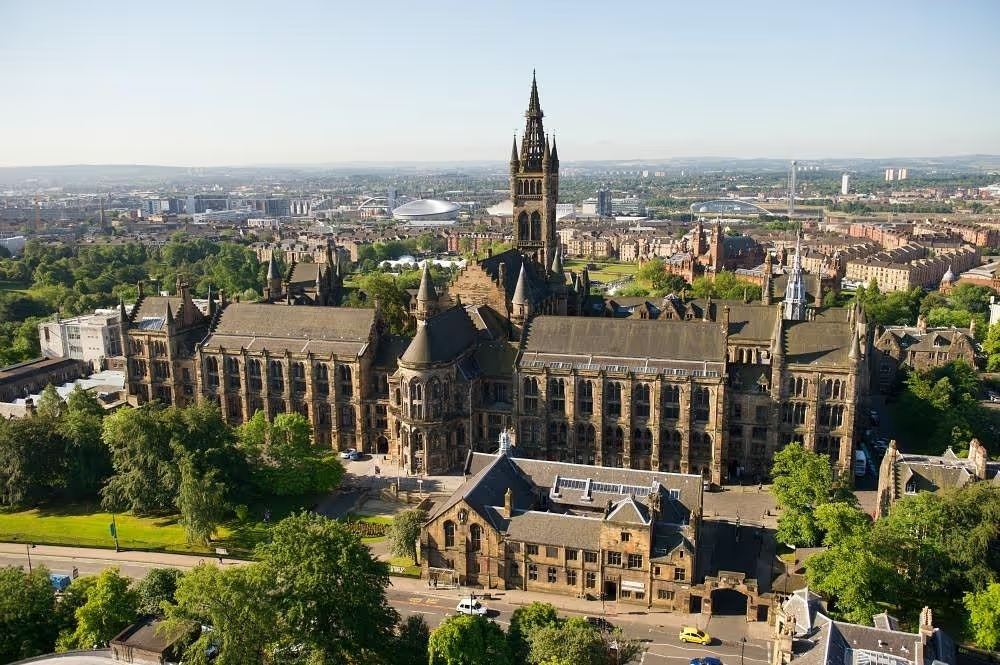
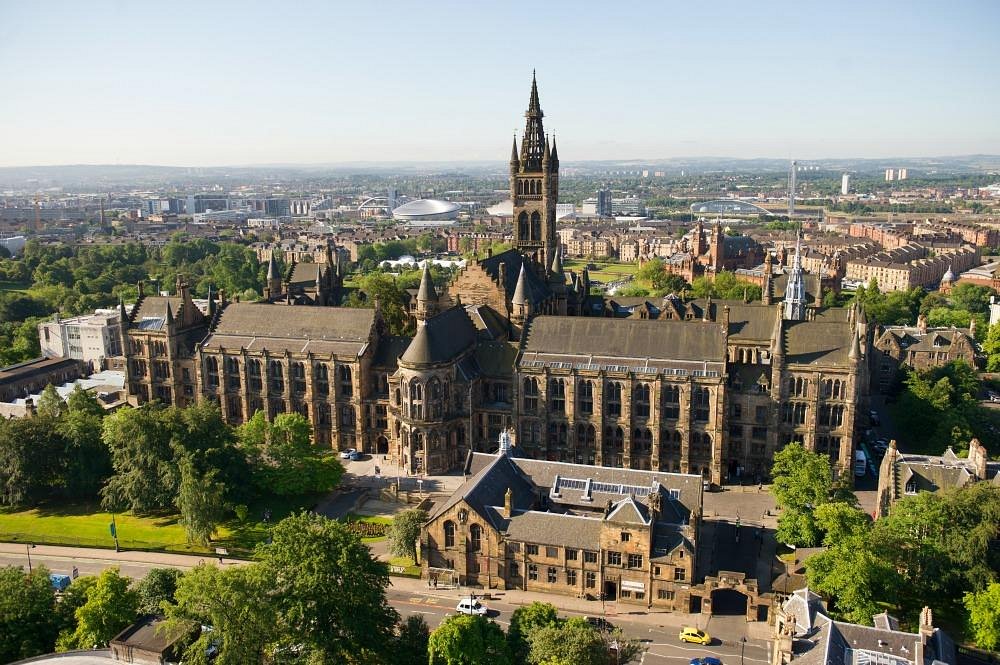
The University of Glasgow offers a rich blend of traditional and contemporary event spaces. That makes it one of Glasgow’s most versatile and prestigious campuses for large-scale academic and international conferences. From ornate Victorian halls to modern lecture theatres, the venue portfolio supports a wide range of event formats.
Location: Glasgow, G12 8QQ, Scotland
Capacity:
- Flexible venues ranging from intimate meeting rooms (10 seats)
- Seminar and workshop spaces for mid-sized groups
- Largest venues accommodating up to 1,100 delegates for plenary sessions
Key Features:
- Multi-building campus layout supports distributed session tracks.
- Wood-panelled meeting rooms for breakout sessions
- Contemporary lecture theatres for panel discussions, workshops, and parallel tracks
- In-house catering service
2. University of Strathclyde
The University of Strathclyde features a compact, city-center campus with modern, flexible event spaces. It's located close to major hotels, transport links, and the Scottish Event Campus (SEC). Situated within the Glasgow City Innovation District, the campus, particularly the Technology & Innovation Centre (TIC), is well-suited for business, engineering, and industry-focused conferences.
Location: 99 George St, Glasgow G1 1RD, United Kingdom
Capacity:
- 450-seat auditorium designed for large sessions
- 150-seat auditorium for keynotes and panel discussions
- 10 adaptable conference rooms for breakouts and workshops
Key Features:
- Large open foyers that support networking, exhibitions, and catering
- Clear internal layouts support fast movement between sessions for attendees.
- Green Meetings Gold Award winner, promoting reduce, reuse, and recycle
- Walking distance from accommodation and transport, simplifying attendee arrivals and transitions
3. Glasgow Caledonian University
Glasgow Caledonian University offers a centralized, modern campus with conference and event spaces. Its venues are designed to support mid-sized conferences, association meetings, and professional events that benefit from a cohesive attendee experience. These include several lecture theatres and classrooms.
Location: Cowcaddens Road, Glasgow G4 0BA, Scotland, UK
Capacity:
- Conference Hall (Annie Lennox Building): up to 495 seats (theatre) or 220 in a cabaret layout
- Lantern Meeting Room: up to 70 delegates (theatre/cabaret) or 35 in boardroom layout
- Break-out Rooms: range from 10 to 120 capacity
- Deeprose Lecture Theatre: up to 200 delegates
- Additional spaces:
- Carnegie Lecture Theatre (approx 500 seats)
- Sir Alex Ferguson Library
Key Features:
- On-site catering facilities and adjacent social spaces
- Leading conference and meeting spaces are all located within easy walking distance, simplifying attendee transitions and backstage logistics.
- The foyer linked to the Conference Hall provides a flexible zone for registration, refreshment breaks, tabletop exhibits, and informal networking.
- Complementary AV systems (projectors, screens, sound) and high-speed campus Wi-Fi
4. Royal Conservatoire of Scotland
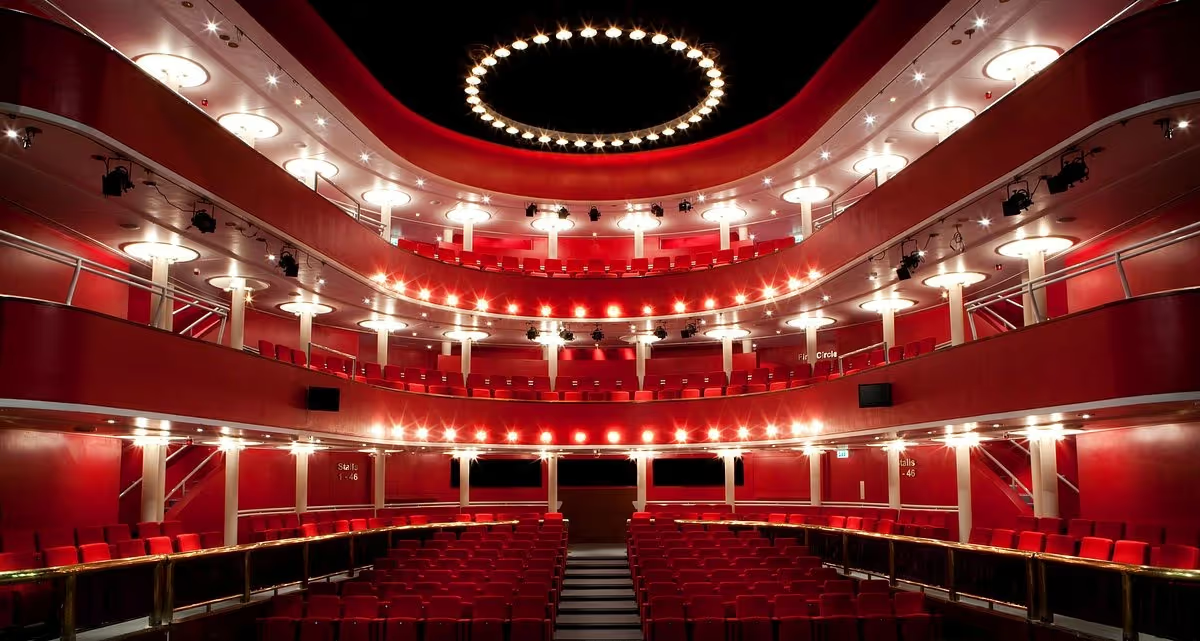
The Royal Conservatoire of Scotland (RCS) offers a diverse range of performance and event spaces for hire, including conference, meeting, and workshop spaces. It is especially suited to creative and hybrid programmes. The campus combines professional performance venues with adaptable studios and recital spaces in central Glasgow.
Location: 100 Renfrew Street, Glasgow G2 3DB
Capacity:
- New Athenaeum Theatre: 344 seats, suitable for large plenary sessions or keynote presentations.
- Stevenson Hall: 355 seats
- Chandler Studio Theatre: 98 seats
- Ledger Recital Room: 108 seats, ideal for smaller sessions, focused workshops, or single-track presentations.
- Alexander Gibson Opera Studio: 154 seats
- Boardroom: Up to 25 people
- The Fyfe Lecture Theatre: Up to 70 people
Key Features:
- Flexible black-box space configurable for intimate talks, panel discussions, or breakout sessions.
- In addition to performance halls, RCS has rehearsals and practice studios available for smaller, focused sessions, workshops, or sponsor meet-ups.
- Comprehensive sound, lighting, and electrical facilities
- Pre-negotiated rates for local accommodation
- Stage and ticket management services
5. City of Glasgow College
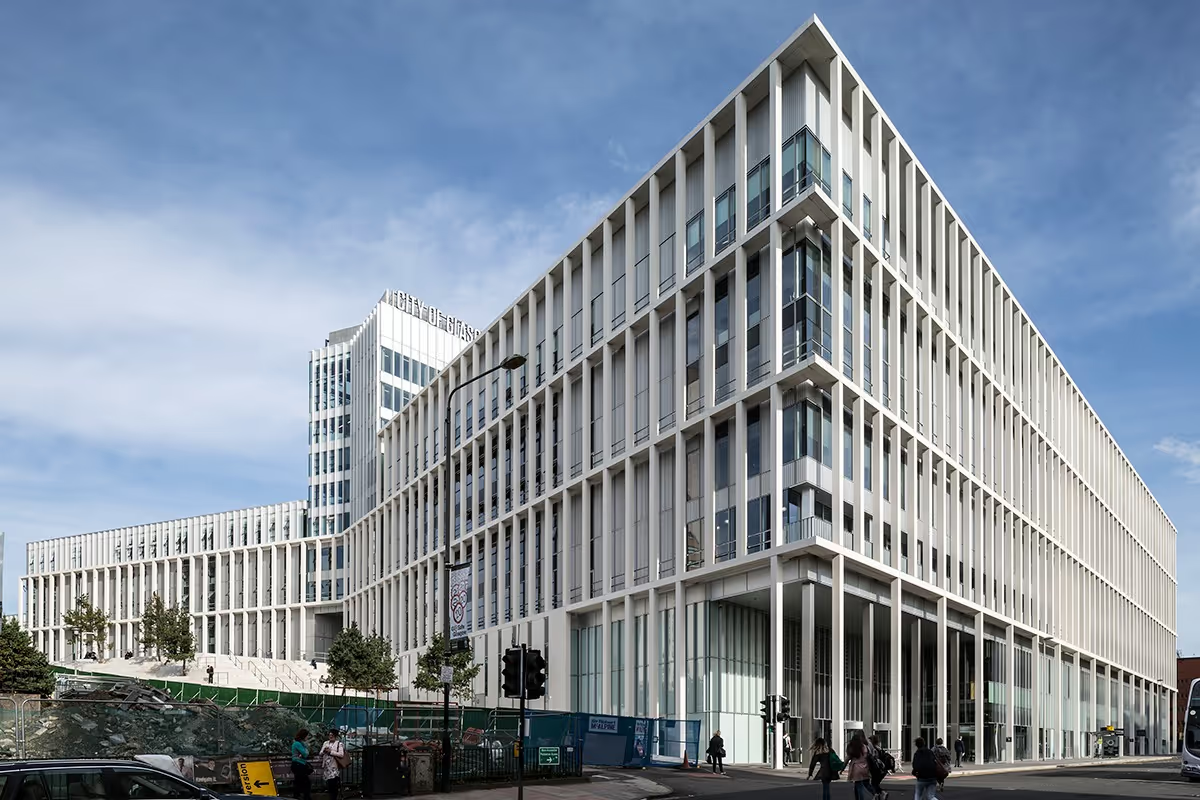
City of Glasgow College offers purpose-built conference rooms and event/meeting rooms in a contemporary academic environment. Its city-centre location and professional teaching spaces make it a strong option for conferences, association meetings, training-led events, and multi-track professional gatherings.
Location:
City Campus, 190 Cathedral Street, G4 0RF
Riverside Campus, 21 Thistle Street, G5 9XB
Capacity: Large lecture theatres suitable for several hundred delegates
Key Features:
- Multiple flexible seminar and teaching rooms for breakouts and workshops
- Teaching-grade AV, projection, and sound systems support presentations, panel discussions, and hybrid delivery
- Car parking spaces
- In-house catering facility
6. Glasgow Clyde College
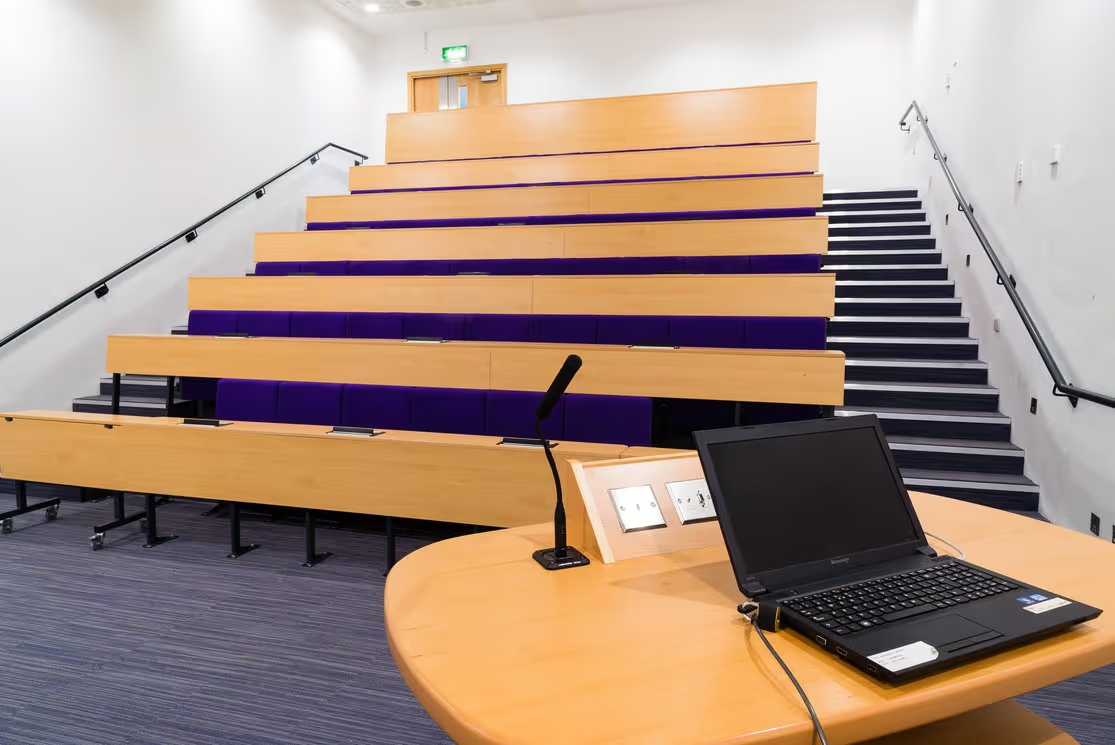
Glasgow Clyde College operates multiple campuses across the city with flexible spaces that support conferences, lecture-style sessions, training events, and large meetings. Their facilities can be adapted to suit professional programs and learning-oriented events.
Location:
Anniesland Campus: 19 Hatfield Drive, Glasgow, G12 0YE
Cardonald Campus: 690 Mosspark Drive, Glasgow, G52 3AY
Langside Campus: 50 Prospecthill Road, Glasgow, G42 9LB
Capacity:
- Lecture theatre available for up to 100 delegates (with AV, projector, and sound)
- Over 25 meeting rooms of various sizes
Key Features:
- Multiple adaptable spaces (halls, rooms) that can be set up for breakout sessions, exhibitor zones, or registration areas.
- Flexible full-day, half-day, or 2-hour slot pricing
- Free on-site parking with EV charging stations
Also Read: Top 10 Conference Venues in London: Find the Best Picks

These venues highlight the range and flexibility Glasgow’s university campuses offer, but selecting the right space is only half the equation. The real test comes when you face specific challenges while managing arrivals, sessions, and attendee flow across complex campus layouts.
The Hidden Operational Challenges of Conferences on University Campuses
University campuses introduce operational complexities that don’t exist in single-building venues. If you’re managing a high-attendance conference across lecture halls, auditoriums, and breakout rooms, these are the challenges that tend to surface on-site.
Managing Multiple Entrances and Buildings
Why single check-in desks fail
- Attendees arrive from different directions and buildings.
- First sessions are often spread across campus.
- Peak arrivals happen in short, staggered windows.
Session Access Control in Academic Settings
Common risks on campuses
- Overcrowded lecture theatres
- Walk-ins to restricted or paid sessions
- Inaccurate attendance reporting post-event
Why it matters
- Access control protects paid content.
- Event directors gain accurate session ROI.
- Helps sponsors understand which sessions drive engagement
Badge Printing at Scale Without Pre-Event Chaos
Why pre-printing breaks down
- Late registrations and last-moment speaker changes
- Reprints across multiple buildings for errors or no-shows
- Higher waste and longer queues
Metrics to track
- Average check-in time: Target: seconds, not minutes.
- Badge reprint rate: due to name changes, role updates, and access fixes
- Peak throughput per entrance: attendees processed per minute per entrance
Also Read: Essential Guide to On-Site Event Management Success
These challenges don’t rule out university campuses. Instead, they raise the bar for operational planning. To avoid on-site friction, you need a straightforward way to assess whether a campus can support your event’s scale and complexity.
How to Evaluate a Glasgow University Campus as a Conference Venue
When you’re choosing a university campus for a conference, the decision shouldn’t be based on room size alone. Campus venues introduce unique operational variables. These include multiple buildings, shared infrastructure, and academic schedules that require a structured evaluation approach.
Use the checklist below to assess whether a campus can support your event operationally, technically, and professionally.
1. Check-In Readiness Framework
- Peak-arrival planning: Calculate check-in capacity based on peak arrival windows, not total registrations.
- Kiosk-to-attendee ratio: Allocate kiosks per building based on expected footfall and first-session locations.
- Power & network validation: Confirm reliable power and Wi-Fi at every intended check-in point, including secondary entrances and heritage buildings.
- Entrance mapping: Identify natural arrival routes from transport links and ensure check-in is available at the points where attendees actually enter.
- Contingency planning: Ensure offline check-in and backup workflows are possible if connectivity drops.
2. Badge & Branding Readiness
- Live badge printing capability: Confirm whether on-site badge printing is supported and where printers can be placed without disrupting flow.
- Sponsor visibility: Identify foyers or pre-function areas suitable for branded check-in, signage, and exhibitor engagement.
3. Data & Reporting Requirements
- Check-in timestamps: Ability to track when and where attendees enter across multiple buildings.
- Session attendance tracking: Accurate capture of attendance per session, especially for paid or restricted content.
- Exhibitor engagement data: Visibility into booth visits, badge scans, and lead activity during the event.
- Post-event analytics: Access to reports on attendee flow and session popularity across campus.
4. Space Flexibility
- Flexible space usage: Ensure rooms can scale up or down for plenaries, workshops, and parallel tracks.
- Multi-format support: Confirm the venue can accommodate keynotes, breakouts, exhibitions, and networking without requiring excessive attendee relocation.
5. Accessibility & Attendee Experience
- Inclusive access: Verify ramps, elevators, step-free routes, and accessible restrooms across all event spaces.
- Wayfinding ease: Evaluate signage, navigation clarity, and walking distances between sessions.
6. On-Site Support & Services
- Dedicated event staff: Confirm availability of on-site coordinators and technical support during the event.
- Operational responsiveness: Assess how quickly venue teams can adapt to last-minute changes or issues.
How fielddrive Transforms Glasgow University Campuses into Enterprise-Grade Conference Venues
Glasgow’s university campuses already offer scale, space, and infrastructure, but operational efficiency separates a capable venue from a high-performing conference environment. This is where fielddrive uplifts university campuses into enterprise-grade conference venues.
- Touchless check-in across distributed campuses: fielddrive’s touchless check-in kiosks are designed for complex campus layouts where attendees arrive at different buildings. Kiosks support QR codes, barcodes, and facial recognition, allowing attendees to verify their identity and check in within seconds.
- Live badge printing: fielddrive enables live badge printing in around six seconds per badge, directly at check-in. That supports last-minute updates without reprints or queue delays, while keeping badge pickup close to session locations rather than centralized bottlenecks.
- Session access control & scanning: These capabilities help you manage who enters specific sessions, workshops, or restricted areas, ensuring access is limited to the right attendees. It also gives you reliable, session-level attendance data you can trust.
- Exhibitor success with fielddrive Leads: University-hosted conferences often blend academic content with exhibitor engagement. This app gives exhibitors immediate access to real-time lead data as attendees visit booths or sessions.
- Real-time analytics dashboards: These provide insight into check-in volumes, peak arrival times, room capacity, and attendee movement across the venue. That eliminates the need for manual reconciliation after the event.
.avif)
Wrapping Up
As conferences continue to scale across university campus event spaces in Glasgow, operational complexity becomes unavoidable. Multiple buildings, parallel sessions, and varied attendee types place real pressure on check-in speed, access control, and on-site coordination. Choosing the right campus is the foundational step. How efficiently you manage attendee movement ultimately determines how smoothly the event runs.
This is where fielddrive supports campus-based conferences with an enterprise-grade operational layer. Built by event professionals, it enables fast, touchless check-in, live badge printing, controlled session access, and real-time visibility across campus locations. The result is fewer bottlenecks, more precise data, and more control during the moments that matter most.
Are you planning a conference on a Glasgow university campus and want to keep entry fast, sessions secure, and operations fully visible in real time? If yes, talk to our experts to discuss your requirements.
FAQs
1. How far in advance should you book a university campus conference venue in Glasgow?
For large or multi-day conferences, booking 9–12 months ahead is common. Demand increases significantly during academic term time, so availability can be limited, particularly for large lecture theatres and centrally located spaces.
2. Do university campuses in Glasgow impose restrictions on external conference organizers?
Yes. Many campuses require advance approval for external events, especially commercial or exhibitor-led conferences. You’ll often need to align with academic calendars, security policies, insurance requirements, and campus-specific data protection or sustainability guidelines.
3. What are common AV or technical limitations on university campuses?
While lecture theatres are AV-equipped, configurations are optimized for teaching, not conferences. Multi-speaker panels, hybrid setups, or exhibitor demos may require additional technical coordination beyond standard in-room equipment.
4. Are university campuses in Glasgow suitable for international delegate-heavy conferences?
They can be, provided transport access and wayfinding are planned carefully. International attendees often need clearer signage, simple arrival instructions, and proximity to accommodation, which varies widely by campus and building cluster.
.svg)
.svg)
.svg)
Want to learn how fielddrive can help you elevate your events?
Book a call with our experts today


.svg)