

.svg)
.webp)
Event Data Mismatch Issues: 8 Steps to Fix and Prevent Errors
Understand event data mismatch issues and discover strategies to prevent them, ensure accurate check-ins, and maintain reliable event reporting. Learn more!

Event data mismatch issues often surface at the worst possible time, when attendees arrive, exhibitors start scanning leads, and operations are under pressure. What appears to be a minor data inconsistency can quickly disrupt check-in, reporting, and stakeholder confidence.
Accurate data is critical, especially considering that over 70% of trade show attendees are involved in purchasing decisions, emphasizing how precise attendee information directly impacts engagement, exhibitor value, and overall event success.
In this blog, you’ll understand why event data mismatch issues occur, how they impact operations and reporting, and what structured steps reduce risk across events.
Key Takeaways
- Data Mismatches Reveal System Gaps: Event data errors point to issues in integration, ownership, and update processes.
- On-site Errors Signal Deeper Issues: Check-in delays and badge mistakes often indicate broader data consistency problems.
- Reporting Depends on Data Integrity: Inaccurate data weakens sponsor reports, ROI measurement, and planning decisions.
- Prevention Requires System Design: Manual fixes increase risk; prevention depends on well-connected data systems.
- Unified Data Lowers Operational Risk: A single source of truth improves execution reliability and decision-making.
What Are Event Data Mismatch Issues?
Event data mismatches occur when the same event information is inconsistent across the systems used to manage an event. This includes discrepancies in attendee records, badge details, access permissions, lead data, or session attendance. When systems such as registration, check-in, badge printing, and lead capture do not stay aligned, inconsistencies surface during live operations.
These issues usually occur when updates made in one system fail to be reflected in others. Even minor mismatches, such as a name change or an access update, can disrupt check-in, exhibitor engagement, and reporting accuracy if not properly synchronized.
To prevent these issues, it is essential to understand where they originate within event workflows.
Where Event Data Mismatches Originate
Event data mismatches develop when multiple tools and teams handle the same information without shared validation or synchronization. As events grow more complex, these gaps become more pronounced.
Below are a few primary sources of event data conflicts:
1. Disconnected or Misconfigured Event Technology Systems
Independent systems or misconfigured fields can create inconsistent data across tools.
- Registration, check-in, badge printing, and lead capture tools may not sync properly.
- Third-party vendor tools can introduce conflicts when not integrated.
- Misconfigured fields or incorrect formats lead to errors even in connected systems.
2. Manual Data Handling and Imports
Human intervention during data transfers often causes errors.
- Spreadsheet uploads, batch imports, and manual edits introduce mistakes.
- Version conflicts occur when multiple teams update the same data.
- Minor errors can cascade across systems, impacting check-in and reporting.
3. Offline Data Collection
Temporary offline records create gaps in the main system.
- Lead capture or check-in done offline may not merge correctly with live systems.
- Missing or duplicate attendee records often result from delayed syncing.
- Offline workflows increase the need for manual reconciliation later.
4. Late or Inaccurate Registrations
Changes or errors in registrations can propagate problems downstream.
- Last-minute registrations, cancellations, or access changes may not be reflected in all systems.
- Initial registration errors, such as incorrect names, emails, or company details, affect operations.
- These mismatches impact badge printing, session access, and lead assignments.
5. Unclear Data Ownership and Governance
Lack of accountability leads to inconsistent data management.
- No single team or individual responsible for records creates gaps.
- Updates may be applied inconsistently or incorrectly across systems.
- Conflicting information reduces confidence in operational and reporting data.
6. System Integration and Mapping Errors
Technical mismatches occur even when systems are connected.
- Incorrect field mapping between systems generates inconsistencies.
- Inconsistent data formats or validation rules lead to errors.
- These issues often appear during live check-in or in post-event reporting.
Also Read: The Role of Event Data Analytics in Corporate Event Strategy Building for 2026
Once these mismatches surface, their first noticeable impact appears in onsite operations. Let’s take a close look.
Operational Consequences of Event Data Mismatch Issues
Operational disruptions are often the first clear indicator that event data is not aligned. These issues become more pronounced during peak arrival times, session transitions, and exhibitor engagement windows, when systems and staff are under maximum pressure.
Here are a few operational consequences event organizers and planners commonly experience:
1. Slower Onsite Check-In
When attendee records do not match across registration and check-in systems, staff must manually verify identities or search for missing profiles. This slows entry flow, creates queues, and frustrates attendees who expect a seamless arrival experience.
2. Increased Badge Reprints
Incorrect or outdated badge information results in frequent reprints. This not only consumes additional materials but also disrupts onsite workflows, primarily when badge printers are operating at full capacity during high-volume periods.
3. Higher Staff Workload and Operational Strain
Data mismatches force event teams to shift focus from attendee assistance to troubleshooting system issues. Staff spend valuable time resolving errors, coordinating across teams, and managing exceptions, which increases stress and reduces overall service quality.
4. Reduced Exhibitor Confidence During Live Engagement
Exhibitors rely on accurate attendee data to engage effectively. When lead information appears incomplete, duplicated, or inconsistent, it interrupts conversations and weakens trust in the event’s data infrastructure, affecting exhibitor satisfaction.
While these issues are most visible on-site, their impact extends beyond event day. The next section examines how data mismatches affect reporting accuracy and financial outcomes.
How Event Data Mismatches Affect Reporting and ROI
Accurate post-event reporting relies on consistent and verifiable data across every event touchpoint. When event data mismatches persist, reports no longer represent actual attendance, engagement, or exhibitor value, making it difficult for decision-makers to rely on insights with confidence.
Below are a few critical ways event data mismatches affect reporting quality and return on investment:
1. Inaccurate Attendance Metrics
When registration, check-in, and session data do not align, attendance numbers vary across reports. This creates uncertainty around event reach and engagement, weakening internal reviews and executive-level performance summaries.
2. Weak Exhibitor Lead Reporting
Exhibitors depend on accurate lead counts and qualification data to measure success. Mismatched or incomplete lead records reduce follow-up effectiveness, lower perceived value, and negatively impact exhibitor retention and renewals.
3. Sponsor Reporting Challenges
Sponsors expect precise metrics, including attendee demographics, session participation, and booth engagement. Inconsistent datasets make it challenging to deliver credible reports, leading to disputes and reduced confidence in sponsorship outcomes.
4. Unreliable Budget Justification and ROI Analysis
When data cannot be validated, quantifying financial outcomes becomes difficult. Decision-makers struggle to justify future budgets, assess performance against objectives, or secure continued investment in events.
Case Study - Routes & fielddrive Partnership
Routes, a global leader in aviation route development events, faced challenges with fragmented attendee data, manual updates, and inefficient backend processes. fielddrive implemented real-time API integration with Salesforce and VisitGES, eco-friendly live badging, and self-check-in kiosks, enabling seamless attendee management across global events. As a result, Routes significantly improved data accuracy, reduced manual workload, and enhanced event sustainability and attendee experience.
Also Read: Event Data Privacy & Security: Protecting Attendee Information in 2025
Next, let’s explore proactive strategies to prevent event data mismatches and ensure your event runs smoothly from registration to post-event reporting.
Proactive Strategies to Prevent Event Data Mismatches
Fixing event data mismatches after they appear often results in delays, manual rework, and operational strain. A more reliable approach is to prevent these issues by designing event data workflows that maintain accuracy throughout planning, execution, and reporting.
Below are structured steps that help reduce data mismatch risks, with clear actions under each area:
1. Centralized Event Data Architecture
A centralized data environment ensures that all event systems use the same dataset, reducing inconsistencies across tools.
- Maintain a single source of truth for attendees, exhibitors, and access data.
- Connect registration, check-in, badge printing, and lead capture to the same database.
- Limit parallel data storage that requires manual reconciliation.
2. Real-Time Data Synchronization
Keeping data synchronized in real time prevents outdated information from surfacing during live operations.
- Apply instant updates for registrations, cancellations, and access changes.
- Ensure badge printing and check-in systems reflect the latest attendee details.
- Allow exhibitors to access up-to-date lead information during the event.
3. Automated Data Validation Controls
Automated checks reduce human error and prevent minor issues from becoming operational problems.
- Detect duplicate attendee records before they appear onsite.
- Enforce required fields for registrations and lead capture.
- Flag inconsistencies in names, company details, or access permissions.
4. Defined Data Ownership and Governance
Clear ownership ensures accountability and prevents uncontrolled data changes.
- Assign responsibility for data accuracy across teams and vendors.
- Define who can create, edit, or approve data updates.
- Establish approval workflows for high-impact changes.
5. Pre-Event Data Audits and Integration Testing
Testing data flows in advance helps identify issues before they affect attendees or exhibitors.
- Validate system integrations between registration, check-in, and reporting tools.
- Test badge printing accuracy using real attendee records.
- Confirm lead capture data syncs correctly with central databases.
6. Standardized Data Entry Practices
Consistency in data input reduces mismatches across systems.
- Use uniform formats for names, job titles, and company details.
- Apply controlled dropdowns instead of free-text fields where possible.
- Train staff and partners on standard data entry guidelines.
7. Live Event Exception Handling Procedures
Prepared workflows allow teams to resolve issues quickly without introducing new errors.
- Document escalation paths for data-related issues.
- Enable controlled correction tools for onsite teams.
- Log changes made during the event for post-event review.
8. Continuous Staff Training and Data Monitoring
Even with robust systems, human interaction with data can introduce errors. Regular training and active monitoring ensure staff follow best practices and detect inconsistencies early.
- Conduct pre-event training sessions on data entry standards and system usage.
- Provide quick-reference guides for common data handling procedures.
- Monitor live data flows during the event to identify and correct anomalies immediately.
- Review post-event data to refine processes and prevent future mismatches.
When these steps are implemented together, event data accuracy becomes predictable and manageable rather than reactive. This approach supports smoother onsite operations, reliable reporting, and greater confidence among all stakeholders.
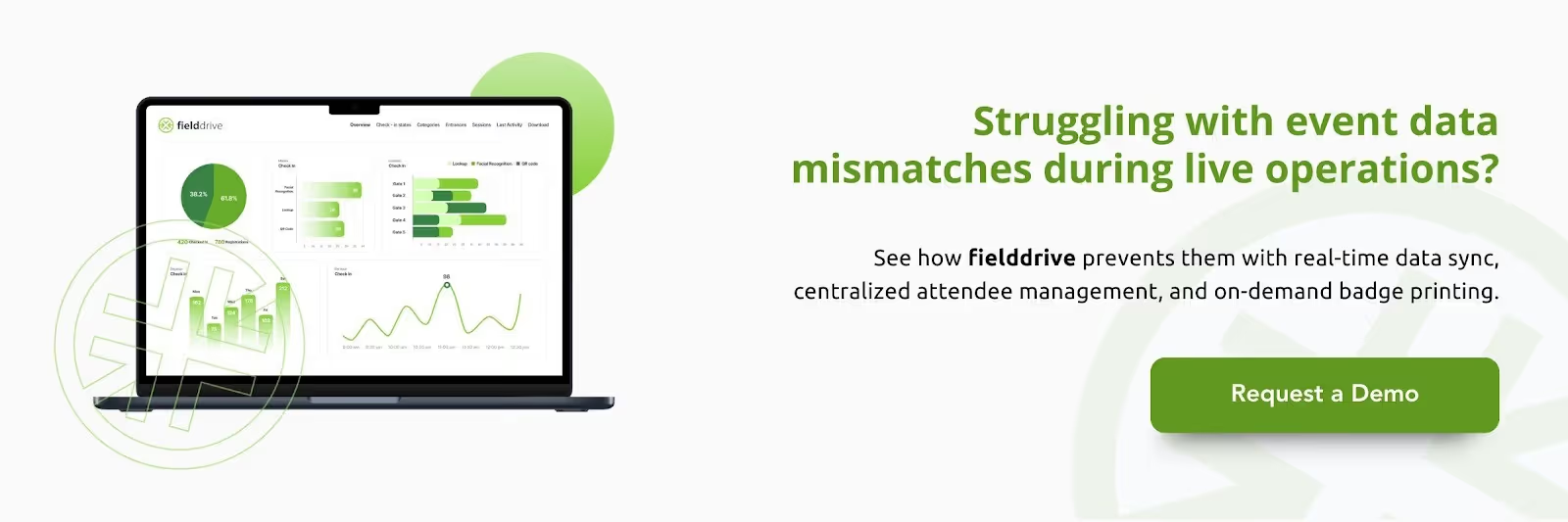
Next, let’s see how fielddrive prevents event data mismatches and ensures all event data remains fully synchronized in real time.
How fielddrive Prevents Event Data Mismatch Issues
After identifying the causes and operational impact of data mismatches, it’s clear that a proactive, integrated approach is essential. fielddrive centralizes event workflows, ensuring registration, check-in, badge printing, and reporting systems stay aligned in real time, reducing errors and duplicate records.
Key Features:
- Instant Badge & Facial Recognition Check-Ins: Contactless validation prevents multiple entries for the same attendee.
- Offline & Real-Time Analytics: Data captured offline automatically syncs with the central database, avoiding duplicate profiles.
- Centralized Record Management: Consolidates registration, check-in, and reporting data to maintain a single source of truth.
- Real-Time Analytics & Reporting: Provides accurate attendance metrics and engagement tracking using a unified data source.
- Secure, Privacy-Compliant Data Handling: Ensures attendee information and biometric data remain safe and GDPR-compliant.
To see these features in action, consider how fielddrive has successfully solved real-world event data challenge:
Case Study: GlobalFoundries Event Check-In Success
Since 2017, GlobalFoundries has run 15 events with fielddrive’s check-in system for 300–500 attendees each. Real-time validation, centralized data, and on-demand badge printing reduced manual errors and prevented duplicate records. The solution improved efficiency, attendee experience, and data integrity across all events.
Final Thoughts
Event data mismatches stem from disconnected systems, manual updates, and unclear data ownership across registration, check-in, badge printing, and lead-capture tools. When these systems fail to stay aligned, even small data changes can cause onsite delays, inaccurate reporting, and friction for attendees, exhibitors, and organizers.
fielddrive addresses these challenges by bringing critical event workflows into a single, real-time platform. By reducing manual handling and ensuring data consistency throughout the event lifecycle, teams gain better operational control, smoother onsite execution, and reliable post-event insights.
Tired of fixing data issues after they disrupt your event? See how fielddrive helps you maintain accurate event data from start to finish. Request a demo today to experience more reliable event operations.
FAQs
1. Why do data mismatches become more visible during peak event hours?
Peak check-in periods combine high attendee volume with frequent last-minute changes. When systems are not synchronized in real time, delays in updates result in outdated or conflicting data being displayed immediately at access points and badge stations.
2. Can data mismatches affect exhibitor contract renewals?
Yes. Incomplete or inaccurate lead data limits follow-up effectiveness and reduces measurable ROI. This directly impacts exhibitor confidence and influences renewal and rebooking decisions.
3. Are smaller events also at risk of data mismatches?
Yes. Event size does not reduce risk. Any event using disconnected tools or manual data updates can experience inconsistencies, especially during onsite operations and reporting.
4. How early should data validation begin?
Data validation should start during initial system setup and continue throughout registration. Waiting until onsite increases the likelihood that unresolved errors will affect live operations.
5. Do data mismatches affect compliance reporting?
Yes. Inaccurate attendance logs, access permissions, and session data complicate audits, create reporting gaps, and increase compliance risk for regulated or enterprise events.
.svg)
.svg)
.svg)
Want to learn how fielddrive can help you elevate your events?
Book a call with our experts today


.svg)