

.svg)
.webp)

Choosing a historic UK venue for your conference can be a powerful differentiator. Iconic museums, guildhalls, castles, and listed buildings offer a level of prestige and atmosphere that modern venues can’t replicate. That holds true especially when you’re hosting senior leaders, international delegates, or high-value sponsors.
And the opportunity is significant. According to the UK Events Report, the UK events industry generates over £61.5 billion annually, with conferences accounting for a substantial share. As this demand grows, so do expectations. Attendees, exhibitors, and other stakeholders now expect fast entry, secure access, and reliable data, not just an impressive setting.
That’s where the challenge begins. Historic venues weren’t designed for high-volume check-in, live badge printing, or real-time analytics. Yet you’re still expected to deliver the efficiency of modern conference centers, effectively turning these spaces into high-tech heritage venues without compromising their character.
In this article, you’ll see which historic UK venues are built to host modern conferences. You’ll also understand what to check before choosing a heritage venue, so your event runs smoothly, securely, and without long queues.
Quick Snapshot
- High-tech heritage venues in the UK combine prestige with operational control, supporting agenda-driven conferences without compromising flow, security, or delegate experience.
- Not all heritage venues are equal from an operations standpoint. Layouts, access points, and room adjacencies directly affect check-in speed, session transitions, and exhibitor engagement.
- Some venues consistently deliver at scale. Examples include The Guildhall (London), Blenheim Palace, and Banqueting House, which have hosted structured, multi-track conferences.
- Technology fit matters more than technology features. Solutions must deploy without permanent installations, handle peak arrivals, and work reliably in protected, connectivity-challenged environments.
- Data visibility is no longer optional. Real-time insights into arrivals, sessions, and engagement are essential for managing the event live and proving ROI to exhibitors and stakeholders.
Why Historic UK Venues Are In Demand for Modern Conferences
Historic UK venues are no longer niche or symbolic choices. You’re seeing them deliberately selected for conferences where credibility, attendee quality, and brand perception matter as much as agenda depth. The demand is being driven by clear, practical reasons, not nostalgia alone.
1. Heritage Venues Add Immediate Brand Weight
When you host a conference in a recognized historic venue, the venue itself does part of the storytelling for you. It signals seriousness, stability, and long-term relevance. These are qualities that matter for associations, policy-driven events, and senior-level corporate audiences.
You can see this clearly in recent event choices:
- Blenheim Palace in Oxfordshire hosted the European Political Community Summit (2024), welcoming leaders from 40+ European countries. The venue choice reinforced diplomatic gravitas while supporting a tightly scheduled, modern summit format.
- The Guildhall, City of London, continues to host the London Real Estate Forum, which brings together leaders across investment, trade, and development. The historic civic setting reinforces authority and trust in a sector driven by long-term capital decisions.
2. They Attract Senior, High-Intent Attendees
Apart from looking impressive, historic venues influence who shows up. Audiences are more likely to commit time and budget when the setting feels purposeful and exclusive.
Example: The Natural History Museum in London hosts specialist conferences such as the British & Irish Botanical Conference.
This is especially relevant if your success is measured by who attends, not just how many.
3. Attendee Expectations Have Shifted
Your attendees expect more than compelling content. They expect:
- A strong first impression on arrival
- Smooth entry without visible friction
- A conference experience that feels curated, not improvised

Historic venues help meet the emotional side of that expectation, while pushing you to think carefully about the operational side. That’s why the conversation is no longer “Can historic venues host modern conferences?” but “Which ones are prepared to do it well?”
Iconic Historic UK Venues Hosting Modern Conferences
When you look beyond aesthetics, a small number of historic UK venues consistently deliver for modern conferences. The spaces mentioned below have been used for agenda-driven events where control, flow, and credibility are non-negotiable.
1. The Guildhall, London

Source Link: https://www.thecityofldn.com/wp-content/uploads/2023/05/guildhall-great-hall-exterior-visitthecity2.jpg
The Guildhall is a Grade I-listed civic landmark and historic centre of government in the City of London. Organizers choose it for international conferences, association meetings, and corporate functions that benefit from both gravitas and versatile space options spread across a single complex.
Location: Gresham Street, London EC2V 7HH
Capacity:
- Great Hall – up to 900 guests
- Old Library & Print Room – up to 620 guests
- East & West Crypts – up to 500 guests
- Guildhall Art Gallery – up to 330 guests
- Livery Hall – up to 300 guests
- Roman Amphitheatre & Undercroft Gallery – up to 280 guests
- Basinghall Suite – up to 100 guests
- Approx. 1,500 total across venue spaces
Key Features:
- Eleven versatile spaces ranging from grand medieval halls to atmospheric crypts and intimate meeting rooms. That allows you to mix plenaries, breakouts, and receptions in one location.
- Longstanding civic heritage with architectural features (e.g., Gothic windows, high arched ceilings) that enhance delegate perception without sacrificing functional flexibility.
- Central City location with excellent access to transport links and nearby accommodations, supporting international delegates and multi-day conferences.
- Multiple spaces enable staged transitions, supporting session scanning and discrete access-control flows across concurrent conference tracks.
2. Blenheim Palace, Oxfordshire
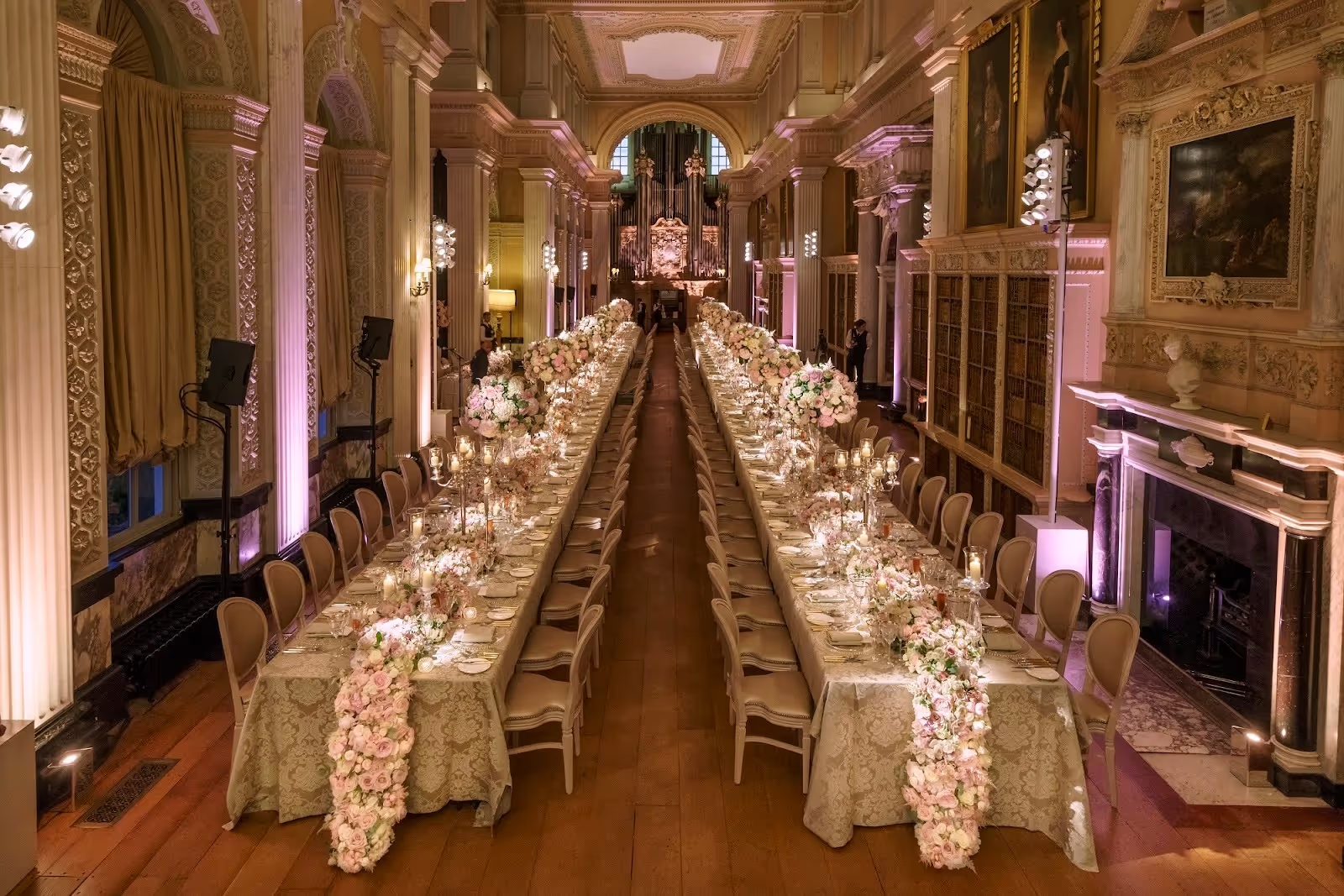
Source Link: https://assets.venuecrew.com/wp-content/uploads/2022/11/01225942/long-library-low-res-weddings.jpg
Blenheim Palace is a UNESCO World Heritage Site and one of the UK’s most prestigious settings for corporate meetings and bespoke conferences. With a range of historic rooms and spaces, it serves well for structured corporate agendas and meetings where heritage and executive appeal matter.
Location: Woodstock, Oxfordshire OX20 1UL
Capacity:
- Marlborough Room: up to 120 theatre-style (42 cabaret, 35 boardroom, 26 U-shaped)
- Spencer-Churchill Room: up to 70 theatre-style (28 boardroom)
- Oudenarde Room: up to 30 theatre-style (18 boardroom)
- Malplaquet Room: up to 30 theatre-style (18 boardroom)
- Combined spaces allow a variety of configurations for meetings, workshops, and breakout sessions, accommodating up to 1000 delegates, depending on layout.
Key Features:
- Historic interior meeting spaces with natural light and character, suitable for plenary sessions, leadership meetings, and executive workshops.
- Flexible room combinations enable smaller syndicate rooms or more formal theatre layouts as needed.
- A dedicated events team works with organizers to customize agendas, catering, and logistics to match corporate and conference requirements.
- Parkland and grounds offer optional outdoor elements (e.g., reception areas or marquees) for networking or off-agenda programming.
- Proven track record for high-profile showcases and launches. Examples include Dior’s S/S17 Cruise Fashion Show, VIP hospitality for Salon Privé on the South Lawn, and The Bank of England’s Churchill-inspired five-pound note launch.
3. Asia House, London
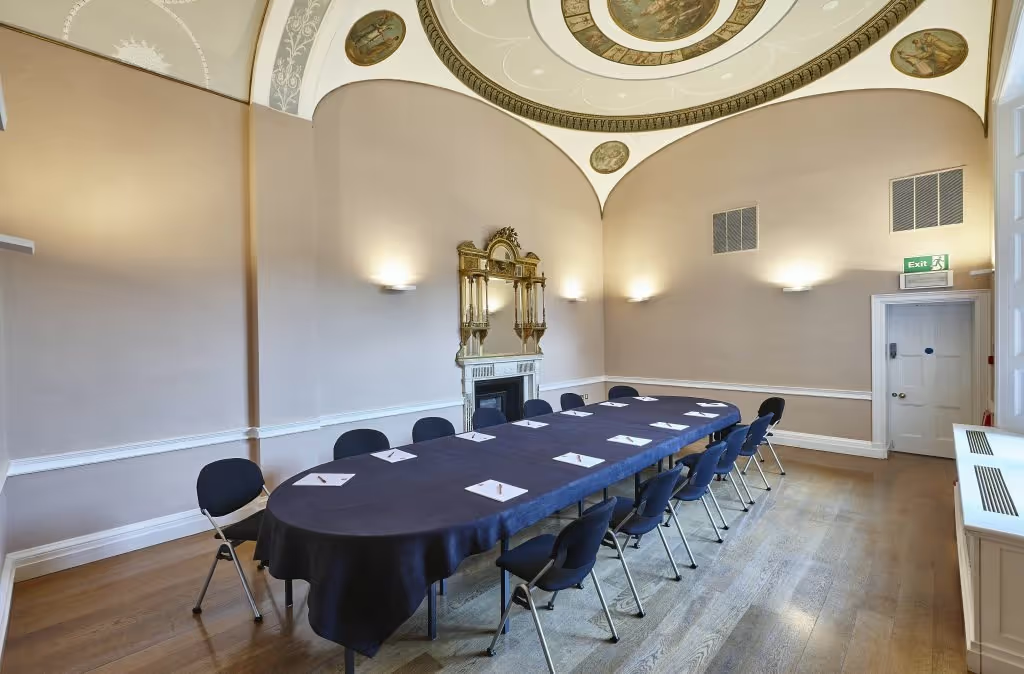
Source Link: https://assets.venuecrew.com/wp-content/uploads/2020/11/12183525/Asia-House-Fine-Room-3.jpg
Asia House is a Grade II listed Georgian townhouse in central London, chosen for conferences and business events that require a formal setting. Its restored period interiors and purpose-built gallery make it well suited to structured, agenda-led gatherings rather than high-volume exhibitions.
Location: 63 New Cavendish Street, London W1G 7LP
Capacity:
- Conferences, AGMs, and presentations for up to 150 people
Key Features:
- Fine Rooms with natural light and flexible layouts, suitable for conferences, workshops, and roundtable discussions
- The Library and Hutchison Room are designed for smaller meetings, private discussions, or breakout spaces during larger events.
- Purpose-built art gallery providing a contemporary environment for product launches, press events, and presentations
- Full AV and catering packages available, supported by an in-house team with extensive conference production experience
4. Hampton Court Palace, Surrey
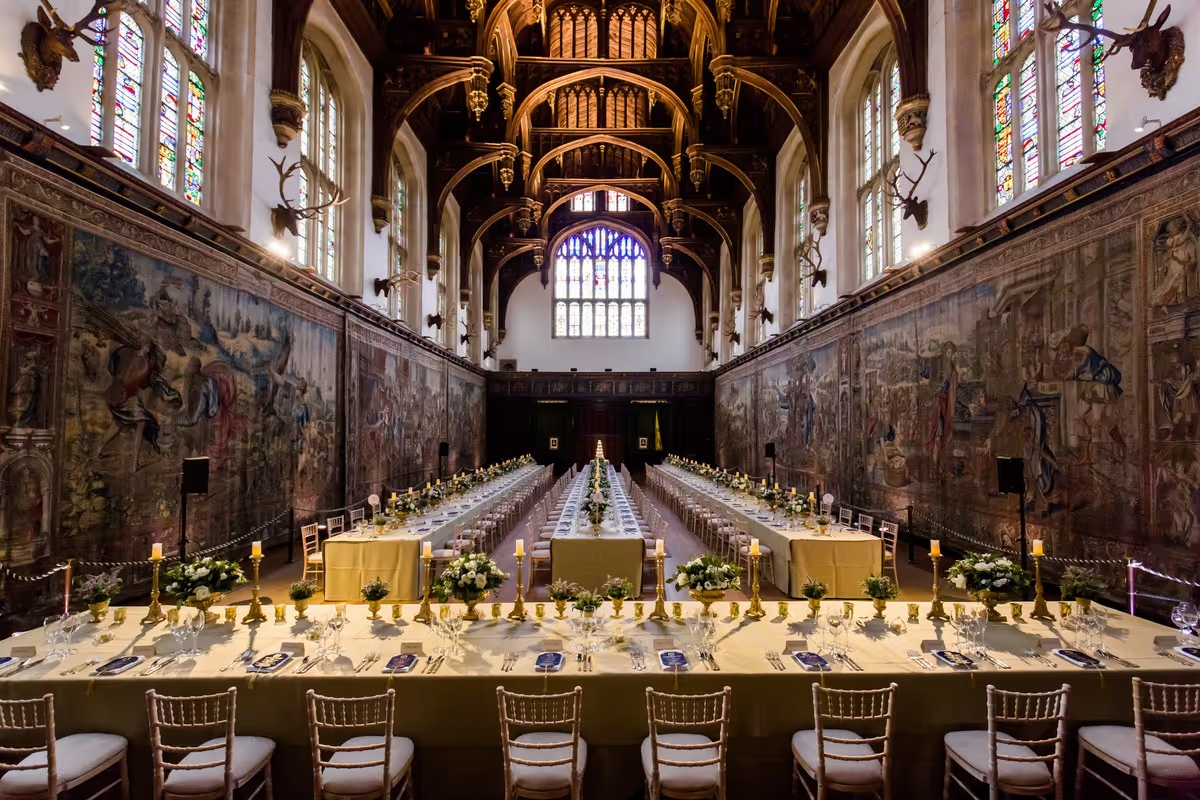
Source Link: https://storiedcollection.com/wp-content/uploads/2022/11/Hampton-Court-Palace-9.jpg
Hampton Court Palace is a historic royal residence used for conferences, away days, and corporate events without sacrificing structure or professionalism. Its dedicated event spaces combine period architecture with modern amenities, making it suitable for agenda-driven business events in a landmark setting.
Location: Hampton Court Palace, East Molesey, Surrey KT8
Capacity:
- The Garden Room:
- Up to 180 guests (banqueting or theatre style)
- Up to 120 guests (cabaret style)
- The Cartoon Gallery:
- Up to 200 guests for dining
- Up to 300 guests for drinks receptions
Key Features:
- The Garden Room offers a bright, airy environment with access to a private walled garden, suitable for conferences, corporate parties, and away days.
- Modern audio-visual technology and strong Wi-Fi, supporting sophisticated presentations within a historic setting
- Hire includes access to the wider palace, allowing delegates to explore independently or with guided tours.
- Outdoor team-building opportunities in the private garden, including activities such as archery and football
- The Cartoon Gallery, one of the largest Georgian Rooms, overlooking Fountain Court, is suitable for daytime conferences.
- A network of approved suppliers, including caterers, florists, entertainers, and production specialists, simplifies planning while maintaining quality standards.
5. Banqueting House, London
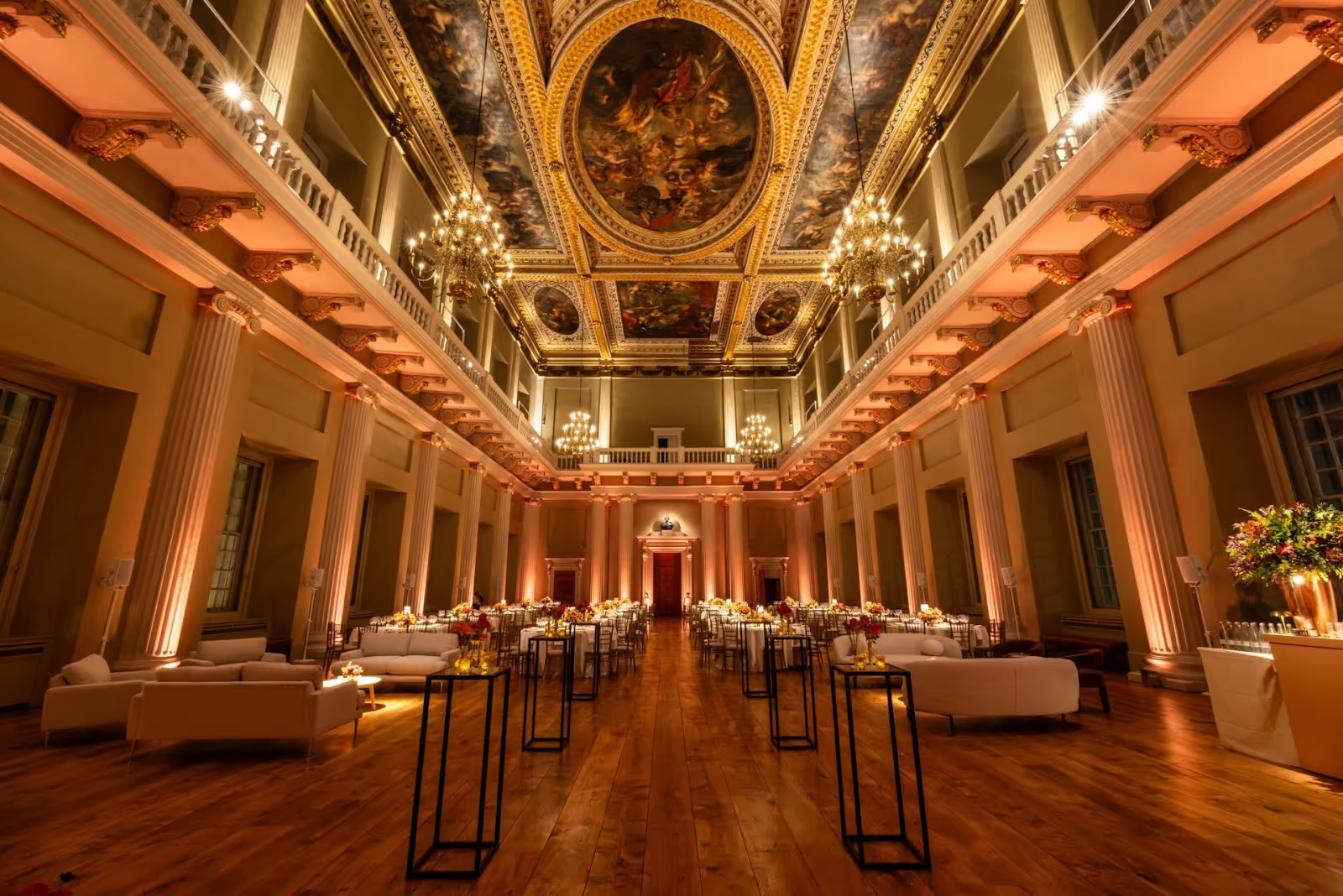
Source Link: https://www.movingvenue.com/wp-content/uploads/2025/10/twobytwo_Banqueting_House_90-1920x1281.jpg
Banqueting House is purpose-built for multi-day, agenda-driven events that need continuity and cultural impact. Its architecture and service model support conferences, leadership summits, AGMs, and brand experiences that unfold over consecutive days without forcing resets between sessions.
Location: Whitehall, London, SW1A 2ER
Capacity:
- Main Hall: up to 400 theatre-style or 280 cabaret-style
- Undercroft: up to 350 standing for drinks receptions
Key Features:
- Two versatile spaces (Main Hall and Undercroft) enable clean separation between plenary sessions, breakouts, and hospitality flow across multiple days.
- Consecutive-day access with support for large-scale builds and late finishes up to 01:00, ideal for conferences with evening programming
- Landmark setting featuring soaring Ionic columns and the Rubens ceiling, creating an intense arrival moment and lasting delegate impression
- Step-free access and a well-briefed host team to ensure smooth arrivals for diverse audiences
- Moments from Westminster Underground and Charing Cross, with Q-Park Leicester Square nearby for delegates arriving by car
- Behind-the-scenes flexibility, including provision for quiet rooms, green rooms, presenter preparation areas, and secure storage
6. Hillsborough Castle and Gardens, Northern Ireland
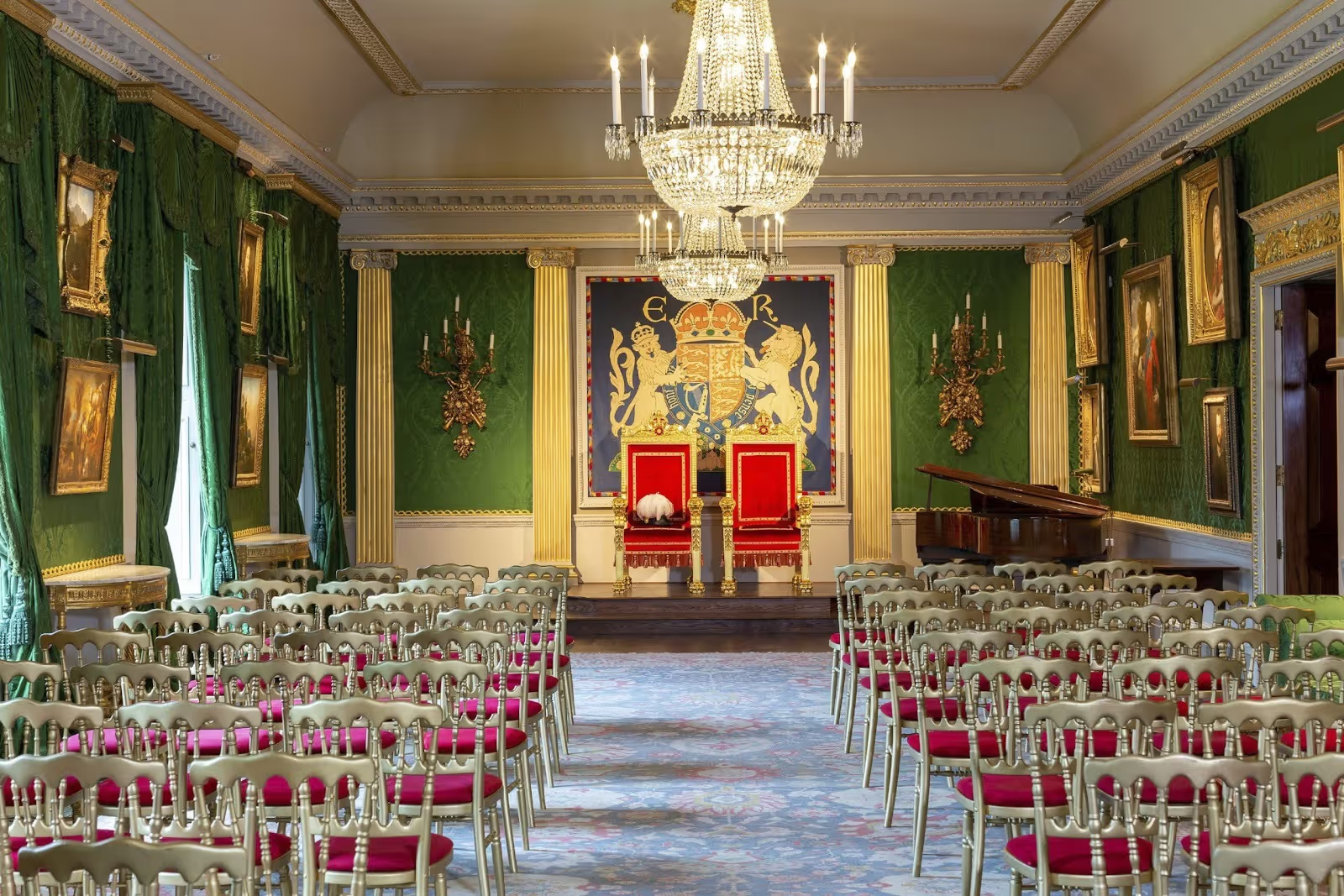
Source Link: https://nervous-wolf.transforms.svdcdn.com/production/uploads/hillsborough-castle-and-gardens/52947_High-Res.jpg?
w=2560&h=1707&q=85&auto=format&fit=min&dm=1649153326&s=
27987f9ea935f1e5dfc708490b95e5ba
Hillsborough Castle and Gardens offers a refined setting for conferences, meetings, and formal business gatherings, where heritage and calm surroundings shape the event's tone. The venue is suited to organizers seeking to combine structured agendas with a sense of occasion, without the scale or intensity of large convention centres.
Location: 301-303 Hillsborough Road, Hillsborough BT26 6TH
Capacity:
- Throne Room: up to 120 guests for receptions and conferences
- The West Terrace: up to 200 guests
- The State Rooms: up to 200 guests
- Privy Council Chamber: up to 18 guests, suitable for board meetings and private discussions
- Garden marquee locations: up to 350 guests, supporting larger conferences, ceremonies, or receptions
Key Features:
- A selection of historic interior rooms offering discreet spaces for meetings, presentations, and breakout discussions
- Landscaped gardens and lawns that can accommodate marquee-based events, providing flexibility for conference-style setups in a controlled, outdoor environment
- Use of an approved supplier network for catering and production, helping maintain consistency with the venue’s standards
Also Read: 10 Eco-Friendly Exhibition Centres Across the UK: Sustainable Venue Insights
These venues demonstrate what’s possible when heritage and modern conferencing come together. However, even the most capable historic spaces introduce operational realities that you must carefully plan for.
The Organizer’s Hidden Challenges Inside Historic Venues
UK historic venues create impact, but once planning moves from inspiration to execution, you start dealing with constraints that don’t exist in purpose-built conference centers. These aren’t obvious during site visits, but they surface quickly once registrations open and agendas go live.
Below are the operational pressure points that matter most to you as an organizer, especially when considering historic UK venues for modern conferences.
Registration Bottlenecks in Architecturally Restricted Spaces
Most historic venues were designed for ceremony, not crowd throughput. For instance:
- Limited entrances and narrow foyers are common in venues such as guildhalls, museums, and listed estates.
- Arrival peaks tend to be compressed (8:00–9:30 a.m.), leaving little room for error.
- Temporary desks quickly become visual clutter and slow movement.
Why desk-based check-in fails at scale:
- Bottlenecks form immediately, even with moderate attendance (500–800 delegates).
- Queues spill into public or protected areas, creating a poor first impression.
For you, this directly affects attendee satisfaction in the first 10 minutes, perceived professionalism of the event, and your ability to start sessions on time.
Badge Printing Without Disrupting Heritage Spaces
Badge printing is often underestimated in historic settings. Key constraints you deal with:
- No drilling, taping, or permanent fixtures allowed
- Limited power access in protected rooms
- Strict rules on equipment placement and branding
Where problems arise:
- Pre-printed badges lead to waste when VIPs arrive late, change names, or cancel.
- Replacement badges take time and create visible friction.
- Bulky print setups clash with the venue’s visual standards.
Security, Session Access & Crowd Flow
Historic venues often host conferences across multiple rooms, wings, or floors, each with different access rules. Common scenarios you manage include:
- Paid workshops alongside free plenaries
- VIP-only briefings inside public-access buildings
- Sponsored sessions with capped attendance
Where it gets complex:
- Manual door checks don’t scale and frustrate attendees.
- Staff struggle to distinguish access levels during peak movement.
Data & Exhibitor ROI Blind Spots
Many historic venues excel at atmosphere but offer limited native insight into what’s actually happening during your event. The following typical gaps pop up:
- No real-time view of who has arrived
- No accurate session attendance tracking
- No clear visibility into attendee movement
For exhibitor-driven events, this creates friction:
- Exhibitors can’t tell which conversations mattered.
- Lead follow-up is delayed or incomplete.
- ROI discussions become subjective instead of data-backed.
Also Read: Top 10 Conference Venues in London: Find the Best Picks

If your event includes sponsors or exhibitors, these blind spots directly affect retention and rebooking. However, these challenges don’t mean historic venues are the wrong choice. They mean you need to evaluate them differently.
Evaluating Event Technology for Historic UK Venues: A Practical Checklist
Once you’ve shortlisted a historic venue, the next decision is just as critical: which event technology will actually work in that space. This is about choosing technology that adapts to heritage constraints while still delivering modern conference performance. Use the checklist below to evaluate event technology.
1. Can the Technology Operate Without Permanent Installations?
If a solution needs mounting, cabling, or structural changes, it’s not built for historic venues. Your technology must arrive, deploy, and leave without leaving a trace. You need to check the following aspects:
- Mobile check-in kiosks and badge printers that don’t require drilling, mounting, or cabling
- Compact footprints that fit into foyers, cloisters, or reception rooms
- Clean setups that don’t clash with protected interiors
Pro Tip: Ask your tech partner to show photos of deployments in listed or heritage buildings. If they’ve only worked in convention centers, expect friction.
2. Does It Handle Peak-Time Arrival Without Queues?
The first 30–45 minutes of arrival will determine how your event is perceived. In historic venues with limited entry points, technology must move people fast without adding staff or clutter.
What you need:
- Touchless check-in kiosks that move attendees through in seconds
- Facial recognition check-in for VIPs, speakers, or high-volume arrivals
- Support for multiple check-in methods (QR, barcode, face) without extra staff
3. Is Live Badge Printing Fast, Flexible, and Sustainable?
Badge printing should solve last-minute changes, not create new ones. In heritage spaces, speed, compact setups, and waste reduction matter just as much as design quality.
Evaluate:
- Live badge printing speed (seconds, not minutes)
- Ability to reprint badges instantly for VIP changes or late registrations
- Support for premium designs, double-sided layouts, and sponsor branding
- Eco-friendly materials to reduce waste
Note: Pre-printing looks safer on paper, but in historic venues it often creates more waste and last-minute chaos, especially for invite-only or senior-audience events.
4. Can It Secure Sessions and Control Access?
Session access needs to feel invisible to attendees but fully controlled for you. Historic layouts demand flexible access rules that don’t interrupt movement or atmosphere.
Make sure the technology supports:
- Session scanning for paid, private, or capacity-limited sessions
- Mobile scanners that don’t block doorways or disrupt movement
- Flexible rules that adapt to complex layouts without physical barriers
This is especially important if your event mixes public areas with restricted sessions, common in museums, colleges, and civic buildings.
5. Does It Deliver Real-Time Data for You and Your Exhibitors?
If you can’t see what’s happening during the event, you’re already behind. Real-time data is essential for decision-making, exhibitor satisfaction, and proving event ROI.
Look for:
- Real-time analytics dashboards showing who has arrived and when
- Session attendance visibility during, not after the event
- Lead retrieval tools like fielddrive Leads, which allow exhibitors to:
- Scan badges instantly
- Add custom qualifiers
- Follow up while conversations are still fresh
Also Read: Conference Lead Retrieval: Turn Attendees into Leads
Best Practices for Historic Venue Deployments
Successful events in historic venues are planned, tested, and rehearsed. Execution discipline, along with technology, determines whether heritage and high-tech work together. Here's what experienced organizers do:
- Conduct pre-event walkthroughs with both the venue and tech partner.
- Run queue simulations based on real arrival data.
- Plan offline scanning workflows for thick walls or connectivity dead zones.
- Train staff on exception handling, not just “happy paths.”
- Align facial recognition usage with GDPR/UK data privacy standards from day one.

Wrapping Up
Historic UK venues offer a decisive advantage for conferences: prestige, memorability, and strong audience appeal. But running a modern event in these spaces requires careful planning. Protected layouts, limited access points, and rising expectations around speed and data mean success depends on how well your operations adapt to the venue. Not the other way around.
fielddrive helps you bridge that gap. With touchless check-in kiosks, six-second live badge printing, and secure session access, you can manage arrivals, access, and movement efficiently, even in complex heritage settings. Real-time analytics and exhibitor insights give you visibility throughout the event, while fielddrive’s UK and global delivery experience ensures reliable execution in historic venues.
Evaluating historic UK venues for your next conference? Reach out today to understand how our modern event technology can support heritage spaces, before you lock in your venue.

FAQs
1. How do you assess whether a historic UK venue can technically support high-volume arrivals?
Historic venues often have limited access points and legacy infrastructure, so you should request load-testing data or arrival simulations from technology partners. These show whether your check-in setup has been proven to handle compression during peak arrival windows without congestion.
2. How can you measure session engagement in venues that lack built-in digital infrastructure?
If the venue doesn’t offer native Wi-Fi or attendance sensors, you can still capture session data through mobile session scanning and offline sync tools. These record attendance and sync later, ensuring you have accurate engagement metrics even in thick-walled heritage buildings.
3. Can historic venues integrate with registration and CRM systems?
Yes, but it’s not automatic. Ensure your tech partner offers pre-event integration with your registration platform and CRM so that attendee lists, badges, and qualification fields sync smoothly. Confirm integration support early to avoid last-minute mismatches.
4. Are there limitations on digital signage or branding in heritage spaces?
Many historic venues restrict hanging signs or floor markers to protect surfaces or aesthetics. Plan for portable digital signage, tablets, or kiosks that don’t require wall mounting, and confirm venue signage rules early in your RFP process.
5. How should you budget for technology in a heritage venue compared to a convention center?
The per-unit cost of check-in and scanning tech may be similar. But you should budget more time and planning fees for setup, walk-throughs, and load tests due to venue restrictions. Factor in additional logistics costs while planning for traditional venue tech integration in the UK.
.svg)
.svg)
.svg)
Want to learn how fielddrive can help you elevate your events?
Book a call with our experts today


.svg)