

.svg)
.webp)
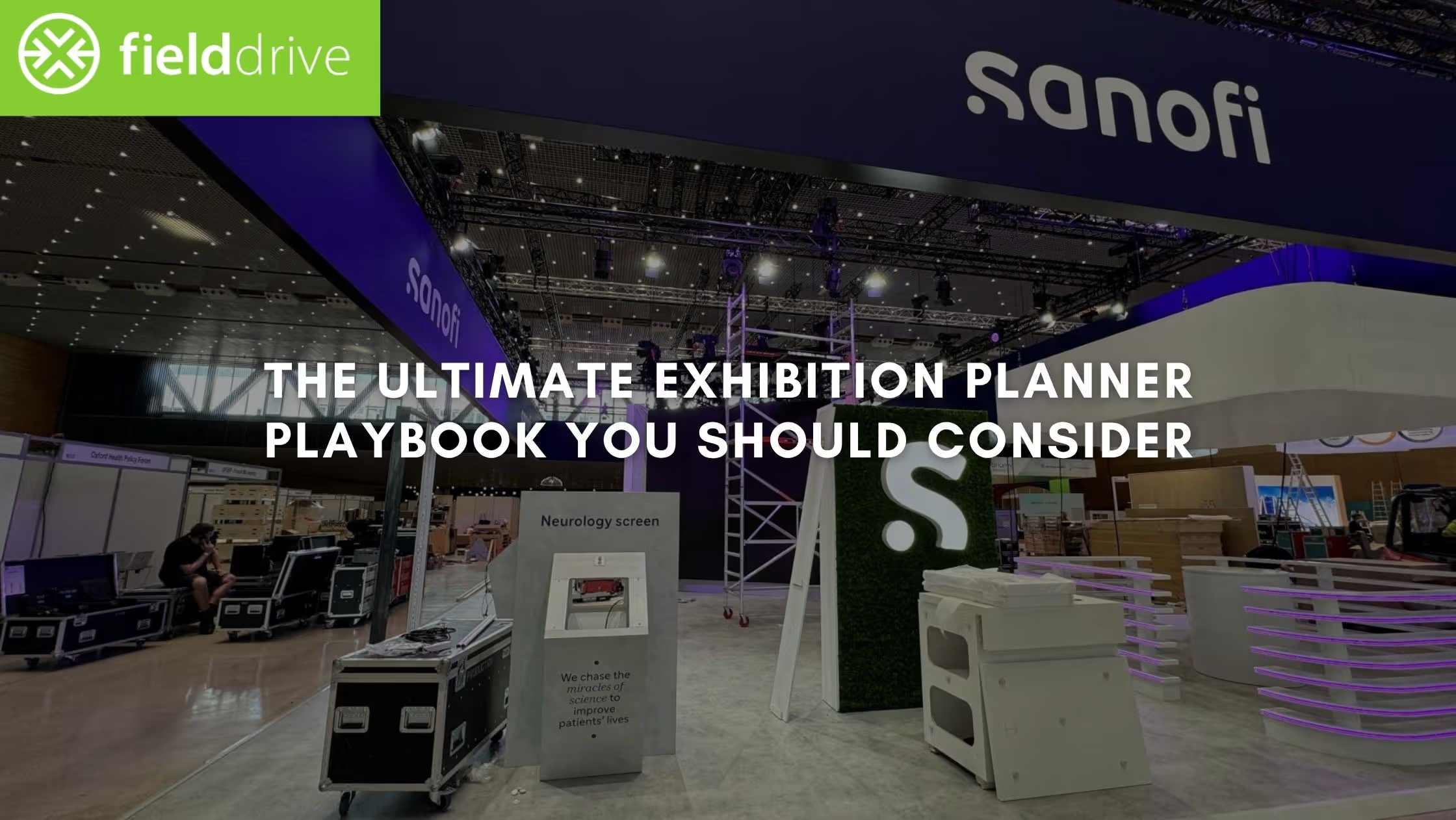
As a corporate event planner, you know the pressure starts long before doors open, when branding, registration, staffing, and exhibitor expectations all need to align. If the arrival flow is weak or badge pickup slows, the exhibition can feel disjointed before the first meaningful conversation. That matters even more as the exhibition market reached $70.64 billion in 2025 and is projected to reach $92.7 billion by 2030.
That said, a useful planning guide should help you make better operational decisions early, not just keep deadlines, floor plans, and vendor lists organized. You need a structure for attendee flow, registration workflows, staff handoffs, exhibitor lead capture, and post-event follow-up well before show day.
In this article, you’ll get a practical exhibition planning checklist. And that will help you make better decisions early, avoid common on-site gaps, and deliver a smoother experience for attendees, exhibitors, and internal teams.
In a Nutshell
Exhibition planning matters because it shapes how the event actually runs on-site, from attendee flow and lead capture to exhibitor value and post-event follow-up.
- Planning scope: A strong exhibition planner covers more than timelines and vendors because it connects goals, audience, logistics, and workflows to real event-day performance.
- Audience fit: Defining the right audience early improves event selection, messaging, stand activity, and lead capture, which helps the exhibition feel more relevant and commercially useful.
- Space decisions: Stand position and layout affect visibility, movement, and dwell time, so booking early gives you more control over traffic quality and engagement.
- Lead strategy: Lead capture works better when the process is planned ahead of show day, as cleaner data and stronger qualification improve exhibitor follow-up and ROI.
- Operational details: Pre-registration, staffing, technical readiness, and accessibility checks reduce avoidable friction, which helps the exhibition feel more polished from arrival onward.
- Live execution: During the event, registration support, booth coordination, guest services, and session delivery require active oversight, as small gaps quickly affect flow and perception.
- Post-event value: Feedback, performance data, and timely follow-up turn the exhibition into a measurable business activity rather than a one-off event.
Why Exhibition Planning Shapes Lead Capture, Attendee Flow, and Event-Day Performance
Exhibition planning is the process of deciding how your event will actually work on-site, not just how it looks on a timeline or floor plan. It defines how attendees arrive and move, how registration and badge pickup are handled, and how exhibitors capture and use leads. It also must include how your team supports everything without confusion or delays.
For an event planner, this is where the real pressure sits. You are responsible for delivering a polished, professional experience while balancing branding, stakeholders, exhibitors, and operations. If the plan does not account for attendee flow, registration workflows, or exhibitor follow-up, those gaps show up immediately on show day.
Strong exhibition planning matters because it directly impacts outcomes that leadership and exhibitors care about. For instance:
- Lead generation and follow-up: Exhibitors rely on clean, structured lead capture and fast follow-up. Without a clear plan, leads get lost, delayed, or lack context.
- Product visibility and launches: Exhibitions are often where new offerings are introduced. If traffic is uneven or access is poorly managed, key moments lose impact.
- Brand presence and professionalism: Your event reflects the company. Slow check-in, inconsistent badging, or unclear movement can quickly weaken that perception.
- Networking and engagement: Attendees come to connect and discover. Poor flow, congestion, or missed sessions reduce meaningful interactions across the floor.
Pre-Event Stage: What To Plan Before The Exhibition Opens
Strong pre-event planning sets the tone for everything that follows on-site. It helps you move from broad ideas to clear operational decisions. That includes audience fit, budget control, exhibitor value, attendee flow, and the practical details that shape event-day execution.
At this stage, the goal is not to finalize every minor detail at once. Rather, it is to make the right decisions early enough to avoid expensive changes later. When pre-event planning is weak, teams usually feel it through slow registration, unclear stand logistics, poor traffic flow, and inconsistent lead follow-up.
1. Define Clear Goals And Success Metrics
Every exhibition plan should begin with a clear reason for participating or hosting. That sounds obvious, but many teams jump straight into stand design, promotion, or vendor outreach. That usually creates activity without a useful framework for decision-making.
Your objectives should guide the strategy, budget, staffing, and measurement plan. They should also reflect the action you want visitors to take after engaging with your brand.
Focus your goals on KPIs/outcomes such as:
- Lead generation
- Meeting volume
- Pipeline contribution
- Product launch visibility
- Brand awareness
- Customer retention
- Partner engagement
Why It Matters: Without clear objectives, exhibition planning becomes reactive. Teams make choices based on preference, not business impact. That often leads to mismatched budgets, weak follow-up, and vague success reporting.
Example: An event planner running a partner showcase at an annual customer event may set goals around qualified meetings, sponsor visibility, and product demo attendance. That creates a much stronger planning framework than a general goal like “make the event successful.”
2. Identify The Right Audience Early
A well-planned exhibition starts with a clear view of who should attend and why. That affects everything from event selection to messaging, floor layout, activations, staffing, and follow-up.
Your audience may include:
- Decision-makers ready to buy
- Prospects who need education
- Existing customers
- Partners and sponsors
- Industry influencers
- Media contacts
Remember that different audiences need different experiences. A buyer-focused event may need stronger meeting workflows and clearer product positioning. A relationship-driven event may need better networking spaces and more guided attendee movement.
3. Choose The Right Exhibition And Venue Fit
Not every exhibition is worth the investment. A strong event may still be a poor fit if the audience quality, location, or format does not match your goals.
Before committing, assess the exhibition through a practical lens. Look at audience quality, decision-maker presence, past performance, venue accessibility, and exhibitor value. Speak with peers, sponsors, or industry contacts who have attended before. First-hand feedback often reveals details that event prospectuses leave out.
Once you commit, review the exhibitor manual carefully. It usually contains critical operational details, deadlines, restrictions, and technical requirements that affect planning later.
Quick Evaluation Checklist:
4. Book Space Early And Plan The Floor Position
Stand location affects visibility, traffic quality, and how naturally people engage. High-traffic areas near entrances, coffee points, major sessions, or central walkways often perform better. However, visibility alone is not enough. The stand type and surrounding flow also matter. For example, a corner booth creates different traffic opportunities than an island position. The space you secure will shape your layout, visitor interaction zones, demo visibility, and staffing plan.
Booking early gives you more choice and fewer rush fees. It also gives your team more time to align design, logistics, and promotion around the actual space.
Pro tip: Do not evaluate stand space in isolation. Look at nearby attractions, bottlenecks, food areas, and likely footfall patterns before making the final call.
5. Build A Budget That Reflects Real Event Needs
A pre-event budget should cover more than just the obvious line items. It should account for direct costs, hidden operational costs, and a small contingency for unexpected changes.
Your budget may include:
- Exhibition space
- Stand design and build
- Transport and installation
- Furniture and flooring
- Lighting and AV equipment
- Power and internet
- Signage and print
- Pre-event promotion
- Travel and accommodation
- Branded giveaways
- Lead capture technology
- Additional staffing
- Insurance and safety requirements
Why it matters: Budget discipline improves decision quality. It prevents you from reviewing options that will never fit commercially. That way, it also reduces the risk of cutting important operational items later, such as staffing, signage, or lead capture tools.
6. Secure Sponsorships That Add Value, Not Just Budget
Sponsorship planning should start early, especially if sponsors help fund activations, attendee experiences, or added services. A good sponsorship strategy can reduce event costs, but it should also make the exhibition more useful and engaging for attendees.
The best partnerships usually do one of two things. They either improve the event experience directly or strengthen the exhibition's overall commercial value.
That may include:
- Funding key event elements
- Supporting networking areas or activations
- Enhancing hospitality or comfort
- Adding relevant products or services
- Extending brand reach through co-promotion
- Creating more value for exhibitors and attendees
Partnerships with complementary brands can be especially useful. They can improve the attendee experience while helping the event feel more complete and commercially relevant.
Example: You may secure a sponsor for a networking lounge, coffee point, or content zone. That reduces cost pressure while also improving dwell time, comfort, and brand visibility across the exhibition floor.
7. Design A Stand That Supports Engagement
Stand design should support how people move, pause, engage, and remember your brand. The design should reflect what you want visitors to do. That might include stopping for a demo, joining a conversation, watching a short presentation, or speaking with the team. Visuals, screens, lighting, product zones, and conversation areas should support that behavior naturally.
This matters because the stand often becomes the physical expression of the event brand. If it feels confusing, cramped, or disconnected from the audience's needs, the experience weakens quickly.
A strong stand usually includes:
- Clear branding using brand fonts and colors
- Visible messaging
- Logical product or demo zones
- Open access points
- Space for conversations
- Simple navigation cues
- Interactive elements such as LED video walls (where relevant)
8. Plan the Build and Installation, and Reuse Early
Stand build and installation need early coordination, especially when several suppliers are involved. That includes construction timelines, access windows, transport, setup sequencing, dismantling, and storage after the event.
Some teams use modular stands for flexibility and reuse. Others rely on full-service stand partners who handle installation and dismantling. Either route can work, but both need planning well in advance. It is also worth thinking beyond the immediate event. If the stand can be reused, adapted, or stored efficiently, the long-term return improves.
Pro tip: Treat build and breakdown as part of the event strategy, not just vendor admin. They affect cost, timing, sustainability, and staff workload.
9. Prepare Marketing Materials And Pre-Event Promotion Together
Marketing materials and event promotion should work together as one system. The promotional campaign builds interest before the event. The on-site materials help convert that interest into meaningful interaction.
Your material plan may include:
- Graphics and signage (give people a practical reason to stop by)
- Brochures or one-pagers (concise yet well-packed)
- Business cards
- Promo videos (to explain complex services or showcase customer success)
- Demo assets
- Website updates (clarify why attendees should visit)
- Email invites (drive booked meetings or planned booth visits)
- Social media teasers (build visibility and create momentum)
- Press outreach (extend reach beyond your existing audience)
- Event directory listings
Note: Keep messaging consistent across all touchpoints. If the event promise and the on-site experience do not match, trust drops quickly.
Also Read: Proven Exhibition Marketing Strategies You Can't Afford to Miss (2026)
10. Plan Giveaways And On-Stand Activities With Purpose
Giveaways and booth activities should support engagement, not distract from it. The best branded items are useful, relevant, and easy to associate with your brand after the event. The best activities create a clear reason to interact and remember the experience.
Useful options may include:
- Practical branded items, such as coffee, water bottles, snacks, etc.
- Live demos
- Product showcases
- Competitions, spin-to-spin wheels
- Interactive challenges
- Short educational moments
Takeaway: The key is relevance. A giveaway should support recall. An activity should support conversation, discovery, or dwell time.
11. Implement Online Pre-Registration Early
Pre-registration should be part of the pre-event plan, not a last-minute admin task. It helps both exhibitors and attendees move through the event more efficiently. It also gives your team cleaner data, better forecasting, and fewer surprises on-site.
A strong pre-registration system should make it easy to:
- Collect attendee and exhibitor details
- Confirm badge information in advance
- Reduce on-site data entry
- Support faster check-in
- Improve arrival planning
- Communicate important event information before show day
12. Build A Lead Capture Strategy Before Show Day
Lead capture should never be treated as a last-minute add-on. If the process is unclear, teams collect incomplete details, exhibitors lose context, and follow-up becomes slow or generic.
A better approach is to define the capture method, qualification logic, consent process, and handoff expectations before the event opens.
Your strategy may include:
- Lead scanners
- Digital forms
- Qualifier fields
- Meeting notes
- Content sharing workflows
- Consent language
- Post-event routing rules
This is also where data protection matters. Contact collection should be secure, intentional, and compliant with applicable privacy requirements.
Why it matters: Exhibitor ROI often depends less on booth traffic alone and more on whether leads are captured cleanly and followed up quickly.
13. Confirm Logistics, Connectivity, And Technical Requirements
Many pre-event issues come from overlooked technical details. Power, Wi-Fi, lighting, AV equipment, catering access, furniture, storage, and cleaning support all affect how polished the exhibition feels.
You also need to think about how goods and equipment will arrive. Large items, booth structures, screens, and staging all depend on practical logistics access, setup timing, and vendor coordination.
Event Planning Checklist For Technical Readiness:
- Power supply
- Internet access
- Audio-visual equipment
- Lighting
- Furniture
- Storage
- Catering access
- Bins and waste support
- Meeting space requirements
- Floor coverings
- Production support
Pro tip: Confirm what the venue already provides before ordering outside services. Existing venue capabilities may save time and budget.
14. Prioritize Accessibility, Safety, And Risk Planning
Accessibility and risk planning should be built into the exhibition from the start. They affect how usable, safe, and inclusive the event feels for every attendee, exhibitor, and on-site staff member.
This means looking beyond basic compliance. You need to assess how people will move through the venue, how they will understand what is happening around them, and whether the space supports a wide range of physical and sensory needs.
Accessibility checks should include:
- Wheelchair and mobility aid users: Check for ramps at entrances, lift access, and enough space across the floor plan for comfortable movement.
- Deaf or hard-of-hearing attendees: Review hearing loop availability, written signs and maps, and whether safety alerts include visual signals as well as sound.
- Blind or visually impaired attendees: Check for braille signage, permanent maps, guide dog access, and enough room for mobility cane use.
- Attendees with neurodiverse or additional needs: Assess whether the venue can offer quieter spaces, softer lighting, or audio settings, and clear signage in readable fonts.
Accessibility planning should sit alongside health, safety, and insurance planning. That includes risk assessments for cables, electrics, demo areas, trip hazards, equipment, and any stand features that could affect visitors or staff.
Pro Tip: Review accessibility across the full attendee journey, not just at the venue entrance. The real test is whether people can arrive, move, participate, and leave comfortably.
15. Prepare Staff, Scheduling, And Internal Communication
Your team will shape how the exhibition feels in practice. That means pre-event planning should include role clarity, messaging, staffing coverage, shift planning, and escalation paths.
Staff preparation should cover:
- Product knowledge
- Key messaging
- Knowledge about the lead capture process
- Dress and presentation
- Stand etiquette
- Visitor approach
- Daily briefings
A visual schedule can help here. It should show milestones, owners, staff shifts, key deadlines, and on-site responsibilities in one clear format.
16. Plan Travel, Accommodation, And Team Wellbeing
Travel and accommodation planning often gets pushed down the list. That is a mistake. Long commutes, poor timing, and weak break planning quickly drain team energy.
Book early to keep the team close to the venue where possible. Sort flights, trains, parking, and local transport before prices rise. Build a break roster and refreshment plan, so the team can stay sharp without leaving the stand uncovered.
During Event Stage: How To Maintain Control And Keep The Exhibition Moving
Once the exhibition is live, the focus shifts from planning to consistent execution. This means keeping operations stable while maintaining a strong attendee and exhibitor experience throughout the day. Small gaps in coordination can quickly affect flow, engagement, and overall perception.
1. Manage Booth Operations And On-site Coordination
Booth allocation and setup should already be defined, but they still need active oversight during the event. You need to ensure every exhibitor space functions as expected from opening to breakdown.
Focus on:
- Correct booth allocation and readiness
- Smooth setup and breakdown coordination
- Availability of required equipment and services
- Clear communication with exhibitors and vendors
This helps exhibitors stay focused on engagement rather than on resolving operational issues.
2. Provide Efficient Registration And Information Services
Registration and information points remain critical during the event, even after the initial entry rush. Attendees and exhibitors will rely on these services throughout the day.
Your team should be able to:
- Handle registration queries quickly
- Provide clear directions and event information
- Resolve issues without delays
- Guide attendees to sessions, booths, or activities
3. Encourage Networking And Interaction
Exhibitions are built around connections. Your role is to support and encourage interaction between attendees and exhibitors throughout the event.
You can do this by:
- Creating opportunities for conversations
- Encouraging visitors to explore different areas
- Supporting informal networking moments
- Ensuring the environment feels open and accessible
The easier it is for people to connect, the more valuable the event becomes.
4. Deliver Sessions, Workshops, And Demonstrations As Planned
Planned activities such as sessions, workshops, and product demonstrations should run according to schedule. Any delay or confusion can disrupt attendees' plans and reduce participation.
Monitor:
- Session timing and flow
- Audience movement between activities and interest levels
- Clarity around schedules and locations
If needed, adjust activities, guide traffic, or reinforce communication to improve balance across the floor.
5. Use Social Media To Extend Reach And Engagement
Social media can amplify what is happening on-site and draw more attention to the event in real time. It also helps keep attendees engaged beyond the physical space.
Use it to:
- Share live updates, photos, and videos.
- Highlight key moments and activities.
- Engage with attendees through comments and tags.
- Participate in event hashtags and conversations.
This creates additional visibility and helps build momentum throughout the event.
Also Read: Exhibition Event Management Solutions and Strategies
Post-Event Stage: How To Measure Results And Improve The Next Exhibition
Once the exhibition ends, the focus shifts to evaluation, follow-up, and learning. This stage determines whether the effort translates into measurable business value. It is where earlier decisions are tested against real outcomes.
The priority is to capture insights while they are still fresh, analyze performance against goals, and turn those learnings into a clearer strategy for the next event.
1. Evaluate Performance Against Goals And Outcomes
Start by reviewing how the exhibition performed against the objectives set during the planning stage. This includes both qualitative feedback and measurable results.
Gather insights from:
- Internal team members
- Exhibitors and partners
- Attendees who interacted with your stand or event
Ask practical questions. What worked as expected? What created friction? What needs to change next time?
Why it matters: Early feedback is more accurate. It helps you capture operational details that are often forgotten later.
2. Collect Feedback From Attendees And Exhibitors
Feedback should come from multiple sources to give a balanced view of the event experience. Use structured formats, so insights are easier to compare and act on.
You can collect feedback through:
- Surveys and questionnaires
- Short interviews or direct conversations
- Post-event feedback forms
Encourage honest responses by keeping the process simple and relevant.
Pro tip: Offer a small incentive, such as early access or discounts for future events, to improve response rates and gather more useful insights.
3. Analyze Data And Key Metrics
Data helps you move beyond opinions and understand what actually happened during the exhibition. It also helps identify patterns that may not be obvious during the event itself.
Focus on metrics such as:
- Number of leads and their sources
- Booth traffic and peak times
- Popular activities or interactions
- Number of visitors, leads, and conversions
Compare these results against your original goals to understand performance gaps or strengths.
4. Follow Up With Attendees And Exhibitors
Post-event communication should happen quickly while the experience is still fresh. Timely follow-up helps maintain momentum and strengthens relationships.
Key actions include:
- Sending thank-you emails to attendees and exhibitors
- Sharing highlights, key takeaways, or event summaries
- Providing relevant content or next steps where applicable
This keeps your brand top of mind and supports ongoing engagement.
Also Read: Top Event Planning Tools for Seamless Event Execution (2026)

Where fielddrive Fits In The Exhibition Planning Process
Exhibition planning is stronger when on-site delivery is considered early rather than treated as a final logistics task. That means connecting the event plan to the moments that shape execution most directly. These include arrival, badge pickup, exhibitor lead capture, session access, and post-event reporting.
This is where fielddrive fits. Rather than stepping in at the last minute, it supports the planning process with a more structured approach to workflows, implementation decisions, and post-event review. That helps you make earlier, better-informed choices about how the exhibition should run in practice.
How fielddrive helps:
- Supports workflow design earlier in the process: It lets you map key on-site workflows before the exhibition goes live, enabling clearer operational decisions.
- Adds planning support: It supports advisory planning, implementation thinking, and post-event debriefs. This is useful for teams that need more than basic event-day support.
- Improves arrival planning with touchless check-in kiosks: For exhibitions with busy entry periods, touchless check-in kiosks help you support faster arrival and reduce pressure on staffed check-in areas.
- Strengthens exhibitor follow-up with fielddrive Leads app: It helps support structured lead capture and cleaner handoff, which makes exhibitor follow-up faster and more useful after the event.
- Improves visibility with data analytics: fielddrive helps you review attendance, participation, and event activity with more clarity during and after the exhibition ends.
If you want to pressure-test your attendee flow, check-in setup, or lead capture approach, it helps to review these early. fielddrive can support you in structuring the on-site plan so execution feels more controlled from arrival to follow-up. Consider reaching out if you're planning an upcoming exhibition.
FAQs
1. How early should you start exhibition planning?
You should start exhibition planning as early as possible, ideally before space, suppliers, and promotional opportunities become limited. Early planning gives you more control over budget, stand position, logistics, staffing, and promotion. It also reduces rushed decisions that often create avoidable pressure closer to show day.
2. Do smaller exhibitions need the same level of on-site setup?
No, smaller exhibitions do not need the same level of complexity, but they still need clear workflows. Smaller events can often use simpler check-in and badging setups, while larger exhibitions require more detailed planning around flow, staffing, and access control.
3. What is the biggest mistake planners make before an exhibition?
The biggest mistake is treating planning as just activities instead of a decision framework. When teams focus only on tasks, they miss how attendee flow, staffing, and lead capture connect. This often leads to fragmented execution, where individual elements work, but the overall experience feels inconsistent.
4. How do you decide the right stand size and layout?
You decide stand size and layout based on expected traffic, interaction type, and engagement goals. A space that looks impressive but restricts movement or conversations will underperform. Hence, you should design layouts that support natural flow, clear entry points, and space for both demos and discussions.
5. How do you decide what technology is actually needed for an exhibition?
You decide what technology is needed by focusing on workflow gaps rather than features. If registration, lead capture, or session access creates friction, those areas need support. Tools like check-in kiosks, badge printing, or lead apps should be chosen based on operational needs, not trends or preferences.
.svg)
.svg)
.svg)
Want to learn how fielddrive can help you elevate your events?
Book a call with our experts today


.svg)