

.svg)
.webp)
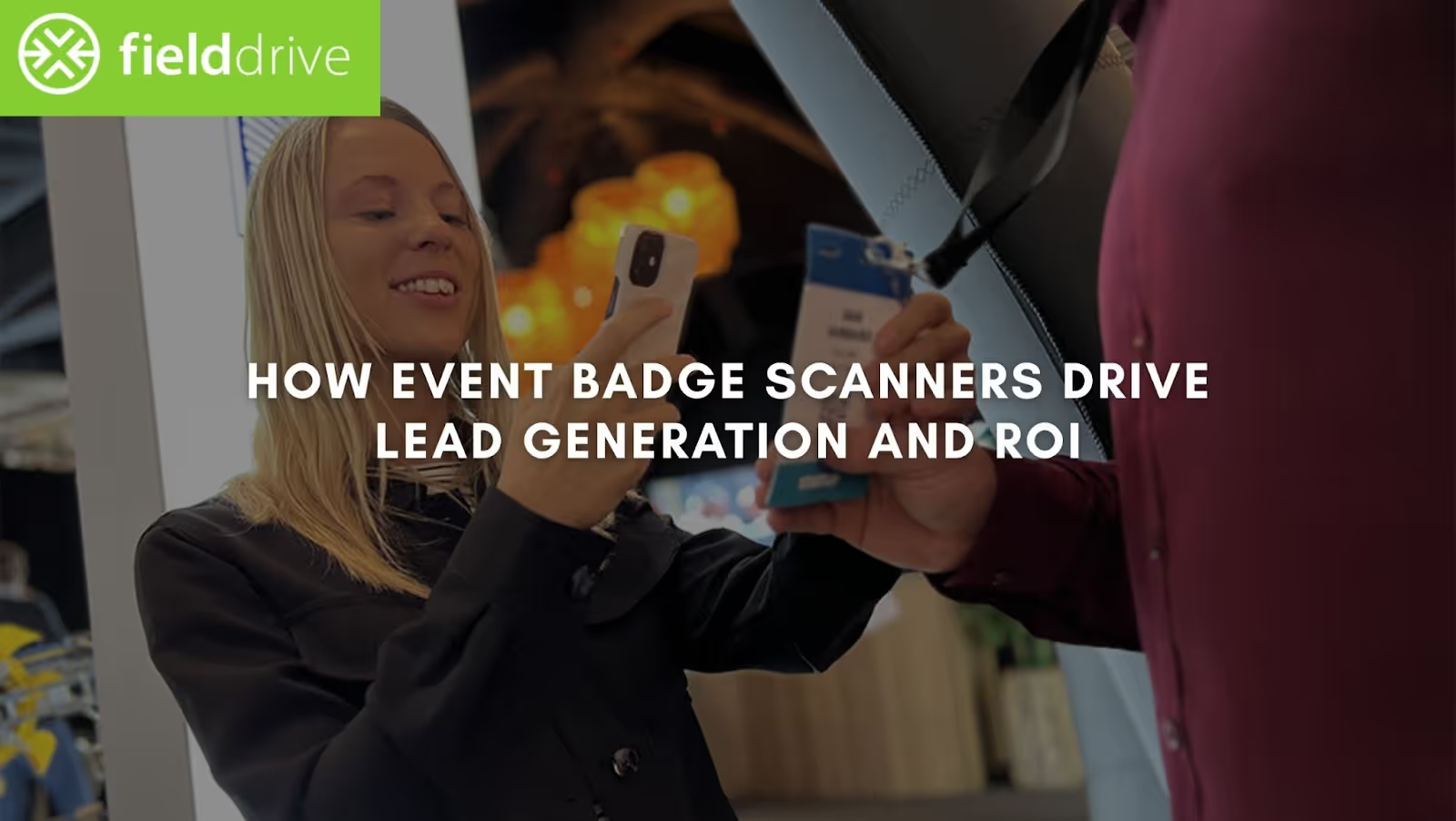
Long check-in lines, missed lead data, and scattered attendee insights can quietly reduce the value of your event. If you rely on manual processes or disconnected tools, you risk losing both time and opportunities during the most critical moments onsite.
Badge scanning solves this by turning every attendee interaction into structured data. In the 2025 Enterprise Occupancy Tracking Report, more than 76% of respondents reported using badge scanning to track occupancy. This reflects a broader shift toward data-driven event operations, where every scan contributes to better decisions and measurable outcomes.
In this article, you’ll learn what an event badge scanner is, how it works, how it supports lead generation and ROI, key benefits and use cases, what features to look for, best practices, and how to choose the right solution for your event.
Key Takeaways:
- Quick data capture: Every scan records attendee activity instantly, reducing missed or incomplete data
- Better lead tracking: Exhibitors collect structured lead data instead of scattered contacts
- Clear event visibility: You can see attendance, session activity, and engagement as it happens
- Stronger ROI proof: Scan data helps link event activity to pipeline and justify future spend
- Connected event flow: Badge scanning supports check-in, sessions, and lead capture in one system
What Is an Event Badge Scanner + How It Works
An event badge scanner is a tool that captures attendee information by scanning a QR code, barcode, or RFID tag printed on an event badge. It connects each scan to a participant profile, allowing you to track attendance, manage access, and collect lead data in real time. You’ll typically see badge scanners used at entry points, session rooms, and exhibitor booths.
At a basic level, the system links three elements. First, the attendee data is collected during registration. Second, a scannable code is assigned to each attendee. Third, a scanning device or mobile app that reads the code and logs the interaction. Once scanned, the data is instantly recorded and synced with your event platform or CRM.
Here’s how it works step by step:
- Registration and badge creation: Attendees register for your event, and their details are stored in your event system. A unique QR code or barcode is generated for each attendee and added to their badge.
- Badge distribution: Badges are either printed in advance or generated onsite. Each badge acts as a digital identity tied to the attendee's profile.
- On-site scanning: At check-in, session entrances, or exhibitor booths, staff or exhibitors scan the badge using a handheld device or mobile app. The scan takes seconds and requires minimal input.
- Data capture and syncing: Every scan records key information such as time, location, and interaction type. This data is automatically synced to your event dashboard or integrated systems.
- Access control and tracking: You can control who enters specific sessions or zones based on their registration type. At the same time, you gain visibility into attendee movement and engagement.
- Post-event insights: After the event, scan data is used to analyze attendance patterns, session popularity, and lead activity. This helps you measure outcomes and improve future events.
Now that you know how badge scanning functions, it’s important to examine how it supports revenue generation and overall event performance.
How Event Badge Scanners Turn Traffic into Leads
Capturing leads at events often depends on speed, accuracy, and follow-up timing. When this process relies on manual entry or business cards, data gets lost, delayed, or incomplete. Badge scanners replace that friction with instant data capture and structured lead tracking, giving you clearer visibility into what your event delivers.
Here’s how badge scanners contribute directly to lead generation and event ROI:
- Instant lead capture: Every scan records attendee details within seconds, removing the need for manual entry and reducing data gaps.
- Accurate attendee data: Information comes directly from registration profiles, which reduces errors and gives sales teams cleaner data to work with.
- Faster follow-ups: Leads can be synced to your CRM during or right after the event, helping teams reach out while interest is still high.
- On-the-spot prospect scoring: Exhibitors can add notes, scores, or custom responses during scans, making it easier to prioritize high-value prospects.
- Clear attribution of event performance: You can track how many leads were generated, where they came from, and which sessions or booths drove engagement.
- Stronger justification for booth investment: When you can show exactly how many qualified leads came from a booth, it becomes easier to justify the cost of that space and secure budget for future events.
- Data-backed ROI measurement: With complete scan records, you can connect event activity to pipeline impact and revenue potential, giving stakeholders a clearer view of return.
Beyond lead capture and revenue impact, badge scanning also supports broader operational control and improves how your event runs onsite.
Key Benefits of Event Badge Scanners
Beyond lead capture, badge scanners support better control, visibility, and decision-making across your entire event. When used correctly, they help you manage both attendee experience and onsite operations with more clarity.
Here are the key benefits:
- Shorter check-in times: Attendees move through entry points faster, which reduces queues and prevents delays at the start of the event.
- Better session management: You can monitor session attendance in real time and avoid overcrowding or underutilized rooms.
- Improved access control: Restrict entry to specific areas based on ticket type, role, or permissions without manual verification.
- Clear visibility into attendee movement: You can track where attendees spend time, which sessions they attend, and how they move across the venue.
- Stronger event planning insights: Post-event data helps you understand which sessions, zones, or time slots performed best, guiding future event decisions.
- Reduced reliance on manual processes: Staff spend less time checking lists or managing paper-based systems, which lowers the risk of errors during peak hours.
- Consistent attendee experience: From entry to sessions to exhibitor interactions, every touchpoint follows a structured system rather than ad hoc processes.
To better understand how these benefits apply in practice, it helps to look at specific scenarios where badge scanning is used across different event formats.
Common Use Cases of Event Badge Scanners
Badge scanners are used across different event formats, but their impact depends on how and where they are applied. Each use case supports a specific operational or business goal.
Here’s where they add the most value:
- Conferences: At entry points and session rooms, badge scanners track attendance and help manage room capacity. You get a clear view of which sessions attract the most interest and where adjustments may be needed.
- Trade shows and exhibitions: Exhibitors scan attendee badges at booths to capture contact details and interaction data. This replaces manual lead collection and gives exhibitors structured data for follow-up.
- Exhibitor booths: Beyond basic lead capture, booth staff can qualify visitors during conversations by adding notes or tags. This helps sales teams focus on high-intent prospects after the event.
- Corporate events: For internal meetings, product launches, or partner events, badge scanners control access to restricted areas and track participation across sessions or activities.
- VIP and restricted access zones: You can limit entry to specific groups such as VIPs, speakers, or sponsors. This avoids manual checks and keeps access control consistent.
- Session tracking and certification: In events where attendance matters for credits or certifications, badge scans provide a reliable record of participation without manual sign-ins.
Once you understand where badge scanning is used, the next step is choosing a solution that fits your event’s scale and requirements.
What to Look for in an Event Badge Scanner (Features + Buying Guide)
Choosing the right badge scanner depends on how your event operates and how much control you need over attendee flow, badging, and data visibility. The right setup should support both onsite execution and post-event analysis without adding complexity for your team.
Here are the key features and factors to consider:
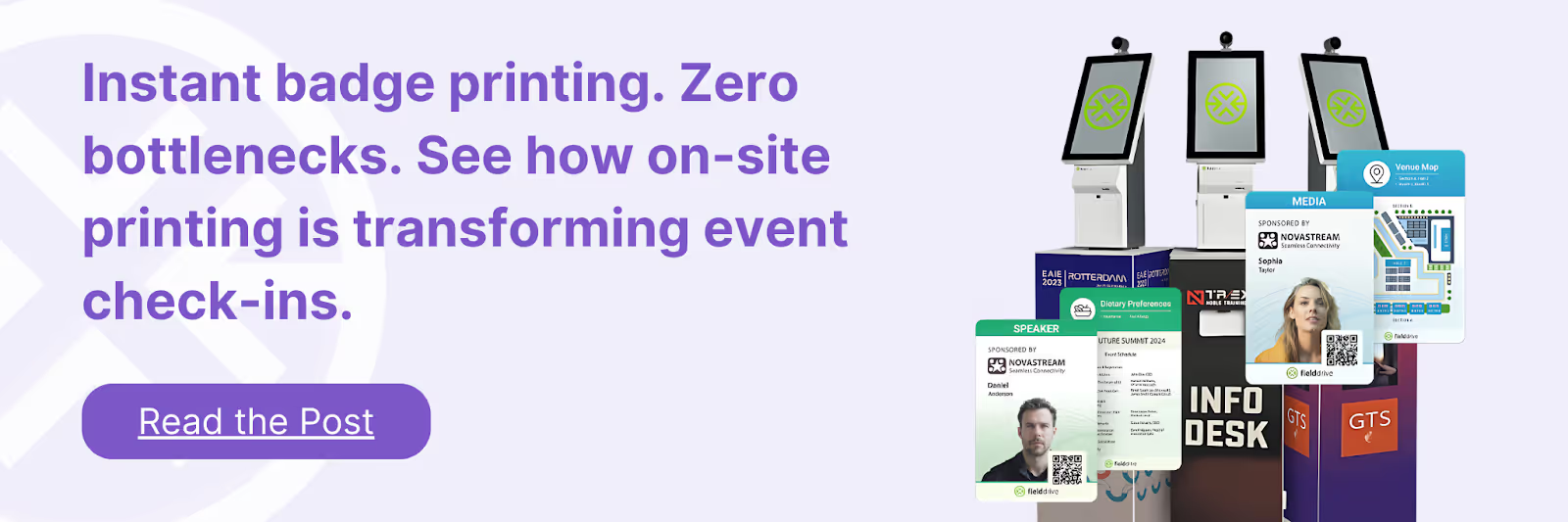
- Fast badge printing at check-in: Look for systems that print badges within seconds at entry points. This reduces congestion and keeps attendee flow moving from the start. Some solutions print a badge in around six seconds, which makes a clear difference during peak arrival times.
- Offline capability for uninterrupted operations: Internet issues can disrupt check-in and badge printing. A system that continues scanning and printing without connectivity helps avoid delays and data loss.
- Custom badge design and on-the-spot edits: You should be able to customize badge layouts based on branding, attendee type, or sponsor requirements. The ability to make last-minute changes onsite adds flexibility when attendee data changes.
- Support for QR codes and barcode scanning: Your scanner should work across standard formats used in event registration systems, so attendees and exhibitors can scan badges without compatibility issues.
- Real-time data capture and analytics access: Every scan should feed into a central dashboard where you can monitor check-ins, session attendance, and engagement as the event progresses.
- Lead capture and qualification capabilities: For exhibitions and trade shows, the system should allow exhibitors to scan badges, capture lead data, and add notes or qualifiers during interactions.
- Compatibility with existing event systems: Your badge scanning setup should connect with your registration platform and other tools so data flows without manual work.
- Onsite support and setup assistance: For high-attendance events, having a team available for setup and troubleshooting reduces risk and keeps operations stable throughout the event.
Even with the right features in place, how you prepare and manage the system onsite will directly impact your event outcomes.
Best Practices for Using Badge Scanners at Events
Even with the right setup, poor execution can lead to delays, missed data, or attendee frustration. A few practical steps before and during the event can help you avoid these issues and keep operations under control.
Here are the key practices to follow:
- Test the full setup before the event: Run end-to-end checks, including badge printing, scanning, and data syncing. Simulate peak conditions to catch issues early.
- Train staff and exhibitors in advance: Make sure everyone handling scanners understands how to scan badges, handle errors, and guide attendees when needed.
- Set up dedicated check-in zones: Separate entry points based on attendee type or registration status to avoid congestion and confusion during arrival.
- Prepare for offline scenarios: Confirm that your system can continue scanning and printing without internet access, and verify how data syncs once connectivity is restored.
- Standardize badge formats and print quality: Poorly printed or inconsistent codes can slow down scanning. Use clear formats and test readability across devices.
- Monitor activity during the event: Keep an eye on check-in flow, session attendance, and scan activity so you can adjust staffing or entry points if needed.
- Have onsite support ready: Technical issues can happen under pressure. Having support available helps resolve problems quickly without disrupting attendee flow.
- Review data immediately after the event: Check scan data for gaps or inconsistencies while details are still fresh, so you can act on insights and improve future events.
To see how these practices work in action, let’s look at how a global event organization applied badge scanning in a live event environment.
Case Study: How ICCA Improved Event Operations with Badge Scanning
A global association like ICCA runs large-scale events with thousands of attendees across multiple regions. Managing check-ins, badge printing, and attendee data at that scale requires more than manual processes. Their goal was to improve attendee flow, reduce operational effort, and gain better visibility into event performance.
To achieve this, ICCA partnered with fielddrive to support onsite badging, scanning, and data tracking across its global events.
Here’s how badge scanning and onsite badging supported that shift:
Results:
- Faster check-ins: Attendees moved through entry points quickly, even at high volumes
- Improved attendee experience: Personalized badges and quick entry created a smoother start
- Better data visibility: Clear insights into attendance and engagement
- Reduced operational effort: No need for pre-printing or manual distribution
- Lower waste: On-demand printing reduced unused badges
This example shows that badge scanning works best when connected with other systems that support data capture and event operations.
How an Event Badge Scanner Fits into Your Event Tech Stack
An event badge scanner does more than capture attendee data. Its value comes from how it connects with other onsite systems that rely on the same badge. When these systems work together, every scan becomes part of a larger flow of attendee tracking, access control, and data collection.
Here’s how badge scanning supports and connects with other event technologies:
- Event Badge Printing Solution: The badge scanner depends on accurate badge generation. With onsite printing, badges are created in real time and immediately ready for scanning across check-in, sessions, and exhibitor interactions.
- Touchless Check-in Kiosks: Badge scanners are used at kiosks where attendees scan their codes to check in. This creates the first data point and sets the foundation for tracking the attendee journey.
- Facial Recognition Check-in: In setups where facial recognition is used, the system still links back to the attendee profile tied to the badge. This allows you to track check-ins even without scanning a code.
- Lead Retrieval App: At exhibitor booths, the same badge scanner is used through a Lead Retrieval App to capture attendee data. This connects booth interactions directly to the attendee profile created at registration.
- Session Scanning Solution: Badge scanners placed at session entrances track attendance and control access. Each scan adds another layer of data to the attendee’s activity record.
- Analytics Platform: Every badge scan feeds into a central Analytics Platform. This gives you a complete view of check-ins, session participation, and engagement across the event.
- Third-party Integrations: Badge scanning systems connect with registration platforms and other tools, so attendee data stays consistent across systems without manual updates.
When badge scanning is connected across these systems, it becomes the backbone of your event data. Instead of isolated interactions, you get a continuous record of attendee activity from entry to post-event analysis.
Conclusion
An event badge scanner plays a central role in how your event operates, from managing entry to tracking attendee activity across sessions and exhibitor interactions. When used correctly, it gives you clear visibility into what’s happening onsite, helps you maintain control during high-traffic moments, and provides the data needed to evaluate performance after the event.
fielddrive brings this together by combining badge scanning with onsite badge printing, check-in systems, lead capture, and analytics into one connected setup. With early-stage planning through its advisory approach and continued support through post-event insights, you get more than just tools; you get a structured way to run and measure your event.
If you want to see how this works for your event setup, you can book a demo with fielddrive to explore how badge scanning and onsite systems can support your next event.
FAQs
1. What is the difference between a badge scanner and a lead retrieval app?
A badge scanner is the core tool that reads attendee codes and records interactions. A lead retrieval app builds on this by allowing exhibitors to capture, store, and manage those interactions as leads. While the scanner handles the data capture, the app adds context such as notes, qualifiers, and follow-up actions.
In many setups, both are part of the same system, accessed through mobile devices. For event organizers, the distinction matters because it affects how data flows from the event floor to sales teams. Choosing a setup that combines both can reduce gaps between scanning and follow-up.
2. Can badge scanners work across multiple entry points at large events?
Yes, badge scanners can be deployed across multiple entrances, zones, and session areas at the same time. Each scan is recorded centrally, which means you can track attendee movement across different locations without duplication. This is useful for large venues where attendees enter through different gates or move between halls.
It also helps with crowd management since you can monitor entry patterns and adjust staffing if needed. The key is having a system that syncs data consistently across all devices. This keeps records accurate even when scans happen simultaneously in different areas.
3. How do badge scanners handle last-minute registrations or changes?
Badge scanning systems are designed to reflect updates made close to or during the event. When a new attendee registers or an existing profile is updated, the system can generate or update the associated badge code. This allows staff to print or edit badges onsite without disrupting check-in.
Changes such as name corrections or access permissions can also be applied in real time. This flexibility is important for events where attendee lists are not fixed until the last moment. It reduces the risk of errors and keeps data consistent across all touchpoints.
4. Are event badge scanners secure for handling attendee data?
Badge scanners handle personal and event data, so security depends on how the system is set up and managed. Most platforms control access through user permissions, which limits who can view or edit attendee information.
Data is typically stored in centralized systems rather than on individual devices, reducing the risk of loss. Organizers can also define what data is captured during scans to avoid collecting unnecessary information. For events with strict requirements, compliance with regulations like GDPR may also be relevant. Reviewing these controls before the event helps maintain data integrity.
5. Do badge scanners work for smaller events or only large conferences?
Badge scanners are not limited to large conferences and can be used for smaller events as well. For events with fewer attendees, the focus may be on quick check-in and simple tracking rather than complex data collection. Portable setups and compact kiosks make it possible to deploy scanning without large infrastructure.
Even at a smaller scale, having structured attendee data can improve reporting and follow-up. The main difference lies in the level of detail and number of touchpoints used. Selecting a setup that matches the event size helps avoid unnecessary complexity while still capturing useful data.
.svg)
.svg)
.svg)
Want to learn how fielddrive can help you elevate your events?
Book a call with our experts today


.svg)