

.svg)
.webp)
If you’ve ever planned an event and felt that quiet worry that your sessions might not land the way you hope, you’re not alone. Many organizers feel the same pressure. You want your audience to stay engaged, learn something meaningful, and walk away feeling like their time was well spent.
One thing is clear from recent research that attendees are more engaged when events include hands-on learning. People no longer want to sit passively and absorb information. They want to interact, build, test, talk, and experience.
The challenge is that creating those moments takes intention. It takes the right workshop idea at the right time. When you get it right, the energy in the room shifts. People open up. They collaborate more naturally. They remember what they learned because they lived it, not just heard it.
This guide will help you get there. Inside, you’ll find 40+ workshop ideas for 2026, each with clear steps and expected outcomes. Use them as-is or adapt them to your audience. Either way, you’ll have everything you need to run workshops that feel fresh, practical, and genuinely impactful.
Key Takeaways
- Workshops engage participants more actively, leading to higher knowledge retention than passive sessions.
- Hands-on activities foster stronger team bonds, cross-functional understanding, and meaningful networking opportunities.
- Attendees leave with actionable skills, frameworks, or strategies they can apply immediately in their work.
- From creativity and innovation to leadership, DEI, sustainability, wellness, and high-energy fun, there’s a workshop for every organizational goal.
- Tools like fielddrive simplify logistics, track attendance, manage access, and provide analytics, ensuring seamless and professional workshops.
What Makes Workshops a High-Impact Addition to Events
Workshops change the game for event organizers who want to deliver real value. Unlike traditional sessions where attendees sit and listen, workshops put them in the driver's seat of their own learning journey.
The magic happens when people roll up their sleeves and dive into hands-on activities. Active participation creates memorable experiences that stick with attendees long after your event ends. Your audience doesn't just hear about concepts; they practice them, make mistakes in a safe space, and walk away with tangible skills.
Here's why workshops deliver outsized impact at events:
- Boost Engagement and Retention: Active participation helps attendees retain knowledge far better than traditional lectures.
- Foster Collaboration and Networking: Working on challenges together builds meaningful connections across teams.
- Provide Practical, Measurable Skills: Attendees leave with actionable tools and insights they can apply immediately.
- Support Diverse Learning Styles: Hands-on exercises, discussions, and observations ensure everyone benefits, regardless of how they learn best.
Workshops leave a lasting impact by combining hands-on learning with real-world skills. To bring this effect to life, exploring different innovative formats is the key.
40+ Creative Workshop Ideas for 2026
Attendees are looking for workshops that feel fresh, useful, and aligned with what’s changing in the world of work. These 45 ideas are practical, easy to customize, and designed to deliver clear takeaways.
Explore them across nine categories that highlight the most relevant themes for 2026.
Creative and Innovation Workshops
Innovation separates leading organizations from followers. These workshops help your team think differently, challenge assumptions, and develop breakthrough solutions to complex problems.
1. Design Thinking Sprint
Design thinking brings human-centered problem-solving to any challenge. This workshop teaches participants to empathize with users, define problems clearly, ideate solutions, prototype quickly, and test iteratively.
What to do:
- Guide teams through the five-stage design thinking process.
- Assign a real business challenge to solve during the session.
- Facilitate rapid sketching and prototyping activities.
- Conduct quick user testing with other participants.
- Have teams present their final solutions.
Outcome:
- Participants learn a repeatable framework for innovation.
- Teams develop prototype solutions to actual business problems.
- Attendees gain confidence in creative problem-solving.
2. Rapid Prototyping Workshop
A Rapid Prototyping workshop helps people turn rough ideas into reality quickly. Instead of getting stuck in lengthy discussions, participants build simple mockups and test them on the spot. The pace keeps everyone focused on progress, not perfection, which is why teams enjoy this format.
What to do
- Teach a few basic prototyping methods.
- Share challenge prompts or let teams pick their own.
- Set short building rounds with check-in points.
- Run peer testing sessions between groups.
- Capture learnings and photos of each prototype.
Outcome
- Teams walk away with testable versions of their ideas.
- Participants get comfortable with iterating rather than overthinking.
- You spot promising concepts worth developing further.
3. Creative Problem Solving Breakout
This structured approach to tackling obstacles helps teams break through mental blocks. Participants learn multiple ideation techniques and apply them to real challenges.
What to do:
- Present a variety of creative thinking techniques.
- Break into small groups with assigned challenges.
- Rotate through different ideation methods every 15 minutes.
- Combine the best ideas from each technique.
- Vote on the most promising solutions to develop further.
Outcome:
- Participants expand their creative toolkit.
- Teams generate dozens of potential solutions.
- Attendees discover which techniques work best for them.
Things needed:
- List of proven ideation techniques (SCAMPER, random word, reverse thinking)
- Challenge statements.
- Idea capture templates.
- Voting materials (stickers or digital poll).
4. Innovation Pitch-Off
Channel your inner startup accelerator with this high-energy competition. Teams develop and pitch innovative ideas, getting feedback from judges and peers.
What to do:
- Set a theme or challenge area for innovation.
- Give teams time to develop the concept and pitch.
- Provide a pitch deck template and coaching.
- Have teams present to judges and the audience.
- Award prizes for best pitch, most innovative, and most practical.
Outcome:
- Participants practice articulating ideas persuasively.
- Teams develop presentation and storytelling skills.
5. Brainwriting Session
This alternative to silent brainstorming prevents dominant voices from overshadowing quieter team members. Everyone contributes equally through written idea generation.
What to do:
- Present the challenge or question to address.
- Have participants write ideas silently for five minutes.
- Rotate papers to the next person who builds on existing ideas.
- Continue for several rounds until papers return to the originators.
- Discuss and cluster related ideas as a group.
Outcome:
- Every voice gets heard equally.
- Introverts contribute without pressure to speak.
- Ideas build on each other organically.
Team Building and Engagement Workshops
Strong teams don't happen by accident. These workshops strengthen relationships, improve communication, and create the psychological safety that high-performing teams need.
6. Office Escape Challenge
An Office Escape Challenge brings a fun, puzzle-driven experience into the workplace. In this workshop, participants will solve clues, decode messages, and work against the clock. The pressure reveals real communication patterns and gives people a shared win to connect over.
What to do:
- Create or rent portable escape room puzzles.
- Brief teams on the scenario and objectives.
- Monitor progress and provide hints as needed.
- Debrief about communication patterns and decision-making.
- Connect experience to workplace collaboration.
Outcome:
- Teams practice communication under pressure.
- Participants identify their natural roles in group problem-solving.
- You observe team dynamics in action.
7. Scavenger Hunt Challenge
Get people moving while building team connections. This active workshop sends teams on missions that require collaboration, creativity, and interaction with their environment.
What to do:
- Design challenges that mix physical tasks with mental puzzles.
- Include activities that require different skills and roles.
- Incorporate venue exploration and networking with other attendees.
- Track progress through the mobile app or check-in stations.
- Celebrate the winning team and highlight memorable moments.
Outcome:
- Participants explore the venue and meet new people.
- Teams learn to leverage diverse strengths.
- Physical activity boosts energy and engagement.
8. Cross-Functional Collaboration Drill
Teams often work side by side without truly understanding how other departments think, prioritize, or make decisions. This idea brings those groups together and creates a setting where different perspectives actually interact.
What to do:
- Form groups with diverse functional representation.
- Present a challenge that requires multiple perspectives.
- Teach collaborative frameworks such as RACI and decision matrices.
- Have groups solve problems using new frameworks.
- Share solutions and discuss cross-functional insights gained.
Outcome:
- Participants understand other departments better.
- Teams build relationships across silos.
- You identify collaboration barriers to address.
- Attendees learn practical tools for cross-functional work.
9. Team Roles Deep-Dive
Every team carries a mix of strengths that often goes unnoticed until you map them out. This idea helps people see the patterns behind how they contribute, what energizes them, and where they naturally fit. Once these roles become clear, collaboration becomes easier because everyone knows what they bring to the table and what others rely on them for.
What to do:
- Administer the team role assessment before the workshop.
- Present the framework and have people find their type.
- Group participants by similar roles to discuss strengths.
- Reform into diverse teams to tackle challenges together.
- Debrief on how different roles complemented each other.
Outcome:
- Participants gain self-awareness about work preferences.
- Teams see the value of diverse working styles.
- You create shared language for discussing collaboration.
- Attendees learn to appreciate differences rather than resist them.
Things needed:
- Team role assessment (Belbin, DiSC, or similar).
- Results interpretation guide.
- Visual displays of team composition.
- Action planning template for ongoing application.
10. Communication Lab
Poor communication derails more projects than bad strategy. This practical workshop teaches specific techniques for clearer, more effective workplace communication.
What to do:
- Demonstrate common communication breakdowns through examples.
- Teach frameworks like SBI (Situation-Behavior-Impact).
- Practice difficult conversations through role-play scenarios.
- Give and receive feedback using new techniques.
- Create a personal communication improvement plan.
Outcome:
- Participants learn structured approaches to tough conversations.
- Teams practice giving constructive feedback.
- You normalize discussing communication challenges.
- Attendees leave with scripts for everyday difficult situations.
Leadership and Professional Development Workshops
Developing leaders at all levels strengthens your entire organization. These workshop ideas will help you build the skills people need to lead effectively in modern workplaces.
11. Strategic Thinking Bootcamp
Many teams get pulled into daily tasks and lose sight of long-term direction. This idea helps people step back and think about the bigger picture. It gives them space to study patterns, question assumptions, and understand how decisions made today shape what the business becomes tomorrow. If your team needs to sharpen how they evaluate opportunities and risks, this format provides a structured way to practice those skills.
What to do
- Introduce strategic analysis tools like SWOT and Porter’s Five Forces.
- Present case studies requiring strategic decisions.
- Have participants analyze and present strategic recommendations.
- Discuss how to balance strategic thinking with operational demands.
- Create a personal strategic thinking practice plan.
Outcome
- Participants develop a systematic approach to strategy.
- Teams practice analyzing complex business situations.
- You identify strategic thinkers in your organization.
- Attendees gain confidence tackling ambiguous challenges.
12. Conflict Resolution Lab
Every workplace has moments where opinions clash or conversations feel tense. Instead of avoiding those situations, this idea gives people a safe way to understand what drives conflict and how to approach it with clarity. It shows them how to stay grounded in difficult moments and how to turn disagreements into helpful conversations rather than bottlenecks.
What to do
- Teach conflict resolution models and communication techniques.
- Present realistic workplace conflict scenarios.
- Role-play conversations using new skills.
- Facilitate discussions about underlying conflict sources.
- Practice difficult conversations with coaching support.
Outcome
- Participants lose fear of addressing conflict.
- Teams learn to separate people from problems.
- You create a culture that welcomes healthy disagreement.
- Attendees develop emotional regulation skills.
13. First-Time Manager Clinic
Stepping into a manager role changes how people work, communicate, and prioritize. This idea gives new leaders a clear starting point, helping them understand what the role actually demands. It walks them through the realities of managing people, handling pressure, and making decisions that affect more than their own workload. It’s a practical way to help them build confidence early on.
What to do
- Cover core management responsibilities and common pitfalls.
- Teach the basics of delegation, feedback, and coaching.
- Practice difficult management conversations.
- Create a support network among fellow new managers.
- Develop a 90-day management action plan.
Outcome
- New managers feel prepared rather than overwhelmed.
- Participants learn to leverage available resources.
- You reduce the new manager failure rate.
- Attendees build a peer support system.
14. Decision-Making Simulation
Every team faces situations where the information isn’t perfect, but action can’t wait. This workshop recreates those moments so your team can see how they evaluate choices, where bias shows up, and how their process holds under pressure.
What to do:
- Present decision-making models and common cognitive biases.
- Run a simulation requiring rapid decisions with incomplete information.
- Reveal outcomes and debrief decision quality.
- Teach tools like decision matrices and pre-mortems.
- Practice applying frameworks to real pending decisions.
Outcome:
- Participants recognize their decision-making patterns.
- Teams learn to make the implicit explicit.
- You improve organizational decision velocity.
- Attendees gain confidence in ambiguous situations.
Also Read: AI-Powered Personalization with Event AI Tools: The Next Frontier in Event Marketing
15. Personal Productivity Masterclass
Most people already work hard; they just need better systems to stay focused. This workshop helps your team understand how they spend their time and gives them simple structures to manage priorities, energy, and daily flow.
What to do:
- Audit current productivity patterns and time thieves.
- Introduce proven systems such as GTD or time blocking.
- Practice prioritization frameworks, such as the Eisenhower Matrix.
- Set up a personal productivity system during the workshop.
- Create accountability partnerships for implementation.
Outcome:
- Participants gain clarity on where time actually goes.
- Teams reduce meeting overload through better practices.
- You boost overall organizational productivity.
- Attendees leave with a functioning productivity system.
DEI, Culture, and Workplace Experience Workshops
Creating inclusive, psychologically safe workplaces requires intentional effort. These workshops build awareness and practical skills for fostering belonging.
16. Inclusive Communication Workshop
Inclusive language influences how safe and respected people feel around you. In this session, you guide participants to examine everyday communication choices and understand how small shifts can make conversations more welcoming.
What to do:
- Explain the impact of language on inclusion.
- Review common exclusionary phrases and better alternatives.
- Practice inclusive meeting facilitation techniques.
- Role-play navigating microaggressions and correction.
- Create team communication agreements.
Outcome:
- Participants recognize unconscious language patterns.
- Teams develop shared standards for inclusive communication.
- You create a safer space for diverse voices.
- Attendees learn to speak up when they notice exclusion.
17. Cultural Appreciation Lab
When teams come from different cultural backgrounds, even simple interactions can be misunderstood. This session helps people see how culture shapes behavior so they can work with more empathy and fewer assumptions.
What to do:
- Explore key cultural dimensions through activities.
- Share personal cultural backgrounds and experiences.
- Discuss how cultural differences show up at work.
- Practice adapting communication for cultural contexts.
- Create strategies for specific cross-cultural situations.
Outcome:
- Participants develop empathy for different perspectives.
- Teams reduce misunderstandings from cultural differences.
- You strengthen global or diverse team effectiveness.
- Attendees gain confidence working across cultures.
18. Bias Awareness Session
People often make quick decisions without realizing the mental shortcuts they use. This session encourages participants to slow down, notice those patterns, and build habits that keep bias out of their day-to-day decisions.
What to do:
- Explain how unconscious bias develops and operates.
- Take implicit association tests and discuss results
- Identify where bias shows up in your workplace.
- Make them learn bias interruption techniques and practice it.
- Commit to specific bias reduction behaviors.
Outcome:
- Participants acknowledge bias without shame.
- Teams implement bias checks in key processes.
- You improve fairness in hiring, promotion, and assignments.
- Attendees become allies in interrupting bias.
19. Psychological Safety Circle
Teams open up, share ideas, and take risks when they feel protected from judgment. In this session, you help them understand what safety feels like and what behaviors strengthen trust inside the group.
What to do:
- Explain psychological safety research and its importance.
- Assess current team safety levels anonymously.
- Facilitate structured vulnerability building activities.
- Discuss team norms that enhance or damage safety.
- Create a team agreement for maintaining psychological safety.
Outcome:
- Participants understand what safety feels like.
- Teams identify specific safety-building behaviors.
- You create a foundation for innovation and learning.
- Attendees commit to protecting each other's safety.
20. Allyship in Action Workshop
Many people want to support their colleagues but aren’t sure what real allyship looks like. This session provides practical ways for them to stand with marginalized teammates and take action with confidence.
What to do:
- Define allyship and contrast it with performative actions.
- Share stories of effective allyship and impact.
- Teach specific ally behaviors and practice them.
- Discuss common mistakes and how to recover.
- Create a personal allyship action plan.
Outcome:
- Participants move from awareness to behavior change.
- Teams develop a culture of active support.
- You amplify the voices that are typically overlooked.
- Attendees gain confidence in taking ally actions.
Sustainability and Green Tech Workshops
Environmental responsibility increasingly matters to employees and customers. These workshops help teams integrate sustainability into operations and innovation.
21. Office Carbon Footprint Audit
Most teams talk about sustainability without knowing the numbers behind their choices. When people see the actual impact of daily operations, the conversation changes. This session gives them a clear baseline so they can make smarter, measurable decisions.
What to do:
- Teach carbon footprint calculation basics.
- Audit specific operational or event-related aspects.
- Quantify emissions from different sources.
- Brainstorm reduction strategies for major contributors.
- Create an action plan with measurable targets.
Outcome:
- Participants understand their environmental impact.
- Teams identify specific reduction opportunities.
- You establish a baseline for tracking progress.
- Attendees gain motivation from seeing the potential for improvement.
22. Upcycling Challenge
When people look at discarded materials with fresh eyes, creativity kicks in almost instantly. This session invites your team to rethink waste as a usable resource and unlock ideas that rarely emerge in their regular workday.
What to do:
- Provide a collection of materials headed for disposal.
- Challenge teams to create useful items.
- Teach basic upcycling techniques and safety.
- Give teams time to design and build projects.
- Showcase creations and vote on categories.
Outcome:
- Participants shift their mindset about waste.
- Teams develop creative problem-solving skills.
- You generate ideas for organizational upcycling programs.
- Attendees create tangible items to take home.
23. Green Innovation Workshop
Environmental issues often feel too broad to tackle, but focused innovation breaks that mental block. In this session, your team works through structured ideation to uncover solutions that carry both environmental and business value.
What to do:
- Present key environmental challenges to address.
- Teach green innovation principles and examples.
- Run rapid ideation sessions on specific challenges.
- Develop the most promising ideas into concepts.
- Present concepts and identify ideas to pursue.
Outcome:
- Participants generate actionable sustainability initiatives.
- Teams integrate environmental thinking into innovation.
- You identify green opportunities with business benefits.
- Attendees become sustainability champions.
Also Read: Using Mobile Event Apps for Ultimate Experience
24. Sustainable Habits Workshop
Sustainability sticks when people see how small, consistent choices add up. This session helps your team turn good intentions into daily habits they can sustain without friction or overwhelm.
What to do:
- Present the environmental impact of daily choices.
- Teach habit formation science and techniques.
- Have participants choose specific habits to adopt.
- Create implementation plans and accountability systems.
- Share resources for sustaining new behaviors.
Outcome:
- Participants commit to specific behavior changes.
- Teams support each other's sustainability goals.
- You reduce the organizational environmental footprint.
25. Eco-Friendly Tech Demo
Green tech evolves fast, and most teams aren’t aware of the solutions already available to them. This session gives your audience a clear view of the tools shaping the next wave of sustainable business practices.
What to do:
- Show real examples of green technologies, e.g., energy-efficient devices, carbon-tracking tools, or smart sensors.
- Demonstrate how each tool works by walking attendees through features, dashboards, or live use cases.
- Explain adoption factors such as cost, setup requirements, scalability, and potential ROI.
- Invite vendors or experts to give short demos or Q&A sessions to help attendees gain practical insights.
- Facilitate a brainstorming session in which participants map how these tools could be applied in their own organizations or workflows.
Outcome:
- Participants discover practical green tech solutions.
- Teams understand implementation feasibility.
- You identify technologies worth piloting.
Wellness and Lifestyle Workshops
Healthy employees perform better and stay longer. These workshops support holistic wellbeing across physical, mental, and emotional dimensions.
26. Mindfulness and Stress Reset Session
Stress accumulates quietly and affects focus, mood, and energy. This session offers a calm space to reset and learn mindfulness techniques that can be applied anytime, anywhere, for immediate relief.
What to do:
- Explain stress physiology and mindfulness benefits.
- Guide basic mindfulness meditation practice.
- Teach breathing techniques for acute stress.
- Practice mindful awareness of the body and thoughts.
Outcome:
- Participants experience immediate stress reduction.
- Teams learn simple techniques for daily practice.
- You normalize mental health and self-care.
- Attendees gain tools they can use immediately.
27. Nutrition for Busy Professionals
Eating habits often suffer when schedules are full. This session gives practical strategies for making better food choices and building sustainable habits that improve energy and overall well-being.
What to do:
- Explain nutrition basics and common deficiencies.
- Share quick, healthy meal and snack ideas.
- Teach meal prep strategies for busy weeks.
- Discuss navigating travel and eating out.
- Make them create a personal nutrition improvement plan.
Outcome:
- Participants understand the nutritional impact on performance.
- Teams share healthy eating strategies.
- You support participants' health and energy.
- Attendees leave with specific meal plans.
28. Desk Yoga and Movement Break
Sitting or staying still for long periods creates tension and drains energy. This session introduces stretches and movements that anyone can do at their workspace or home to keep mobile and energized.
What to do:
- Explain the health risks of prolonged sitting.
- Demonstrate desk-friendly stretches and poses.
- Practice movement sequences together.
- Teach posture optimization for workstations.
- Create a movement reminder system for daily practice.
Outcome:
- Participants reduce physical discomfort.
- Teams incorporate movement into work routines.
- You prevent repetitive strain injuries.
- Attendees gain an energy boost from the activity.
29. Sleep Optimization Workshop
Poor sleep undermines focus, mood, and performance. In this science-based workshop, participants can make small changes to their habits and environment to improve sleep quality, leaving them more rested and alert.
What to do:
- Explain sleep science and health consequences.
- Assess current sleep patterns and issues.
- Teach evidence-based sleep improvement strategies.
- Address common sleep barriers and solutions.
- Create a personalized sleep improvement plan.
Outcome:
- Participants understand the importance of sleep.
- Teams respect boundaries around rest.
- You improve employee health and performance.
- Attendees implement changes leading to better sleep.
30. Digital Detox Challenge
Constant device use fragments attention and drains energy. This session helps people identify tech habits, set boundaries, and reclaim focus and presence in daily life.
What to do:
- Discuss the impacts of digital overload on well-being.
- Audit current technology habits and triggers.
- Teach boundary-setting techniques and tools.
- Have participants commit to specific detox practices.
- Create an accountability system for the challenge period.
Outcome:
- Participants recognize technology habits.
- Teams respect communication boundaries.
- You reduce after-hours burnout.
- Attendees experience the benefits of intentional disconnection.
Fun and High-Energy Workshops
Sometimes you just need a break from the serious stuff. When people move around, laugh a little, and stop overthinking, they usually open up in ways they don’t during regular sessions. These workshops give your group a burst of energy. They also help people loosen up and connect with each other without forcing it.
31. Improv Games for Confidence
If you want a workshop that wakes people up, improv is the way to go. You don’t need anyone to be funny. You just need them to show up with an open mind. Improv helps people think on their feet, trust their teammates, and get more comfortable being seen.
What to do:
- Warm up with simple exercises.
- Progress to more complex scenes and games.
- Debrief lessons applicable to work situations.
- Practice listening and building on ideas.
- Celebrate bold attempts regardless of outcome.
Outcome:
- Participants overcome the fear of looking foolish.
- Teams practice acceptance and support.
- You boost creative confidence.
- Attendees discover playfulness in collaboration.
32. Office Olympics
If you want something playful that brings out everyone’s competitive side, Office Olympics is always a hit. It turns ordinary office supplies into mini challenges and gives people a chance to cheer each other on.
What to do:
- Design mini-games using office supplies.
- Create teams and a bracket or a round-robin format.
- Run a tournament with energetic hosting.
- Keep score and provide commentary.
- Award medals or trophies to winners.
Outcome:
- Participants bond through shared laughter.
- Teams develop friendly rivalries.
- You create highly shareable moments.
- Attendees release stress through play.
33. Trivia Battle
Trivia works well when you want something lively but not too physical. It gets people talking, guessing, and cheering without putting anyone on the spot. You can mix general knowledge questions with company or industry themes to make it feel personal.
What to do:
- Build a set of questions that range from easy to challenging.
- Mix in a few surprise or bonus rounds to keep the pace fun.
- Put people into small teams so no one plays alone.
- Use a host to guide the game and keep energy up.
- Wrap up with a final lightning round for extra excitement.
Outcome:
- Teams collaborate naturally.
- You get a room full of friendly competition.
- People learn new things about each other and the organization.
- Everyone stays engaged without feeling overwhelmed.
34. Art Jam Session
An art jam works well when you want people to unwind and express themselves without any pressure. You don't need trained artists for this. You just need a space where people can pick up a brush or marker and let their minds wander. It’s a great reset for any group that needs a mental breather.
What to do:
- Set up tables with paints, markers, pastels, or whatever you have on hand.
- Give everyone a simple prompt or let them create freely.
- Play music to help people get into the flow.
- Encourage sharing at the end, but keep it optional.
- Take photos of the final pieces for a fun recap.
Outcome:
- People relax and tap into the creativity they usually hide.
- Teams bond through casual conversation.
- You help reduce stress without making it feel like a structured session.
- Everyone walks away with something they made.
35. DIY Craft Corner
A craft corner gives people something hands-on and satisfying to work on. It’s simple, low-pressure, and surprisingly calming. When people create something useful or cute, it gives them a small sense of accomplishment that sticks with them.
What to do:
- Set up stations with different craft options, such as tote bag stamping, keychain making, or simple embroidery.
- Offer quick instructions so people can jump right in.
- Let participants move at their own pace.
- Encourage them to personalize their creations.
- Have a spot where they can display or photograph their finished craft.
Outcome:
- Participants enjoy a small creative break.
- People feel proud of what they have made.
- You create an easy-going environment where conversations happen naturally.
- Teams connect through shared tasks.
Educational and Skills Workshops
36. AI Basics for Non-Tech Teams
AI can feel confusing if you don’t live in the tech world, so this workshop breaks it down in a way that actually makes sense. People get a simple, clear picture of how AI fits into everyday tasks without feeling overwhelmed.
What to do:
- Break down AI concepts in simple language.
- Walk through real examples from your industry.
- Let people test a few AI tools.
- Do small group activities that show practical use.
- Leave time for questions so everyone feels grounded.
Outcome:
- People stop feeling intimidated by AI.
- Teams learn where AI can support their daily tasks.
- You encourage smarter, more confident workflows.
- Everyone walks away with a basic foundation they can use.
Things needed:
- Slides or visuals that simplify concepts.
- Access to easy AI tools.
- Wi-Fi and devices.
37. Financial Literacy Clinic
Money talk doesn’t have to feel intimidating. This clinic-inspired workshop provides people with the basics in a friendly, practical way so they can finally feel more in control of their finances.
What to do:
- Break down the basics of budgeting, saving, and debt.
- Walk through real-life scenarios.
- Offer simple worksheets or templates.
- Let people ask money questions anonymously.
- Share resources for continued learning.
Outcome:
- Participants feel more in control of their finances.
- You help reduce the stress around money.
- People leave with clear steps they can take immediately.
- Teams appreciate support that actually impacts their lives.
38. Mastermind Learning Circle
A mastermind circle workshop will function as a support system, where everyone shows up with challenges and leaves with new ideas. It creates a collaborative environment where every voice has value.
What to do:
- Form small groups.
- Give each person time to share a challenge.
- Let the group offer ideas and experiences.
- Rotate roles like timekeeper or note-taker.
- Wrap up with personal commitments.
Outcome:
- People learn from each other instead of from a lecture.
39. Problem-Solving Lab
Some problems need a space where people can roll up their sleeves and work through them together. This workshop turns challenges into something structured, manageable, and surprisingly energizing.
What to do:
- Choose a specific problem as a group.
- Map the problem and root causes.
- Brainstorm solutions without judging ideas.
- Narrow ideas into a realistic plan.
- Share takeaways and next steps.
Outcome:
- Teams practice structured problem-solving.
- People learn to listen and build on ideas.
- You get actionable solutions, not just discussion.
- Participants feel capable and empowered.
Marketing, Business, and Growth Workshops
40. Copywriting Bootcamp
Good writing makes everything clearer, and this bootcamp helps your team tighten their messages with simple techniques they can use right away.
What to do:
- Break down what makes copy effective.
- Show quick before-and-after examples.
- Practice rewriting real company messages.
- Run short-term writing challenges.
- Review work as a group with friendly feedback.
41. Sales Pitch Workshop
A solid pitch doesn’t rely on flashiness. It’s about clarity, structure, and confidence. This workshop helps people shape their ideas into something that resonates with any audience.
What to do:
- Break down the elements of a strong pitch.
- Create a simple pitch structure.
- Have participants practice in pairs.
- Record short practice runs.
- Give quick, actionable feedback.
Outcome:
- Teams present ideas with more confidence.
- People learn how to respond to questions calmly.
42. Social Media Strategy Workshop
Social media gets much easier when you know what you’re trying to say and who you’re saying it to. This workshop helps your team create focused, intentional content rather than relying on guesswork.
What to do:
- Break down each platform’s audience and style.
- Review examples of high-performing content.
- Map your brand’s content pillars.
- Build a simple content calendar.
- Brainstorm post ideas as a group.
Outcome:
- Teams understand how to plan content.
- You get a clearer direction for your social presence.
- People stop posting randomly.
- Everyone feels more confident managing social tasks.
Things needed:
- Calendar templates.
- Brand guidelines.
- Basic analytics snapshots.
43. Business Planning Session
Every team works better with a shared direction. This session helps everyone get aligned on what needs to happen next and how to break big goals into realistic steps.
What to do:
- Review current performance or progress.
- Set clear goals for the next period.
- Break big goals into smaller action steps.
- Assign responsibilities.
- Create a simple roadmap.
Outcome:
- Teams understand priorities.
- You build alignment across roles.
- People know exactly where to focus.
- Plans feel actionable and achievable.
44. Brand-Building Workshop
A strong brand feels consistent, recognizable, and genuine. This workshop helps your team understand what the brand stands for and how to express it in a way that connects with your audience.
What to do:
- Talk through brand values and personality.
- Review examples of strong brand messaging.
- Run short tone and message exercises.
- Define do’s and don’ts together.
- Create sample brand messages as a group.
Outcome:
- Teams understand the brand more deeply.
- Messaging becomes more consistent.
- People feel confident speaking on behalf of the brand.
- Creative ideas flow naturally.
Steps to Host a Trending and Successful Workshop?
Running a workshop that people actually enjoy and remember takes more than just showing up and talking. You want your participants to feel engaged, leave with something useful, and maybe even talk about it afterward. Getting there means planning each step with purpose.
Step 1: Identify Audience Intent
- Figure out who is attending and what they want to get out of the session. Are they there to learn, solve a problem, or brainstorm?
- Consider their background, experience, and comfort level. This helps you pitch content at the right depth.
- Ask yourself what challenges or questions they might have. The more you know, the more relevant your workshop will feel.
- Use these insights to tailor activities, examples, and discussion prompts that actually resonate.
Step 2: Choose a Clear Outcome
- Pick one main result you want participants to leave with. This becomes the anchor for everything else.
- Make it measurable. For example, do you want them to generate ideas, learn a skill, or plan next steps?
- Announce the outcome at the start so people know what they are working toward.
- Keep checking your plan against this goal. If an activity doesn’t help reach it, it’s okay to skip or adjust.
Step 3: Build an Engaging Flow
- Break your agenda into short, digestible segments that mix instruction, activity, and reflection.
- Include a variety of engagement methods, such as group exercises, brainstorming sessions, and small breakout discussions.
- Add buffer time for spontaneous conversations or extra questions.
- Watch the room and stay flexible. Some groups need guidance; others thrive with more freedom.

Step 4: Select Tech That Supports Interaction
- Choose tools that make participation simple: polls, collaborative boards, shared documents, or chat apps.
- Test all tools beforehand to avoid technical glitches during the workshop.
- Use real-time feedback mechanisms to keep participants involved and gauge understanding.
- Only use tech that fits the goals and flow. Don’t complicate the session with unnecessary platforms.
Step 5: Track Attendance and Feedback
- Keep a record of attendees to follow up and maintain engagement.
- Collect feedback through surveys, polls, or quick notes to understand what worked and what didn’t.
- Review responses carefully to improve future sessions.
- Share a summary with participants, so they leave with a clear sense of what they learned and the next steps.
How fielddrive Can Help Make Your Workshop a Successful One?
When you're running a workshop, minor logistical annoyances can derail the experience even before it really begins. Long lines, manual check-ins, or missing attendance data can weaken the impact. fielddrive helps you run your workshop with professional polish and behind-the-scenes efficiency. Their tech isn’t just for big conferences; it’s ideal for any workshop that cares about engagement, smooth operations, and learning insights.
Here’s how fielddrive’s tools support you every step of the way:
Touchless Check‑In Kiosks
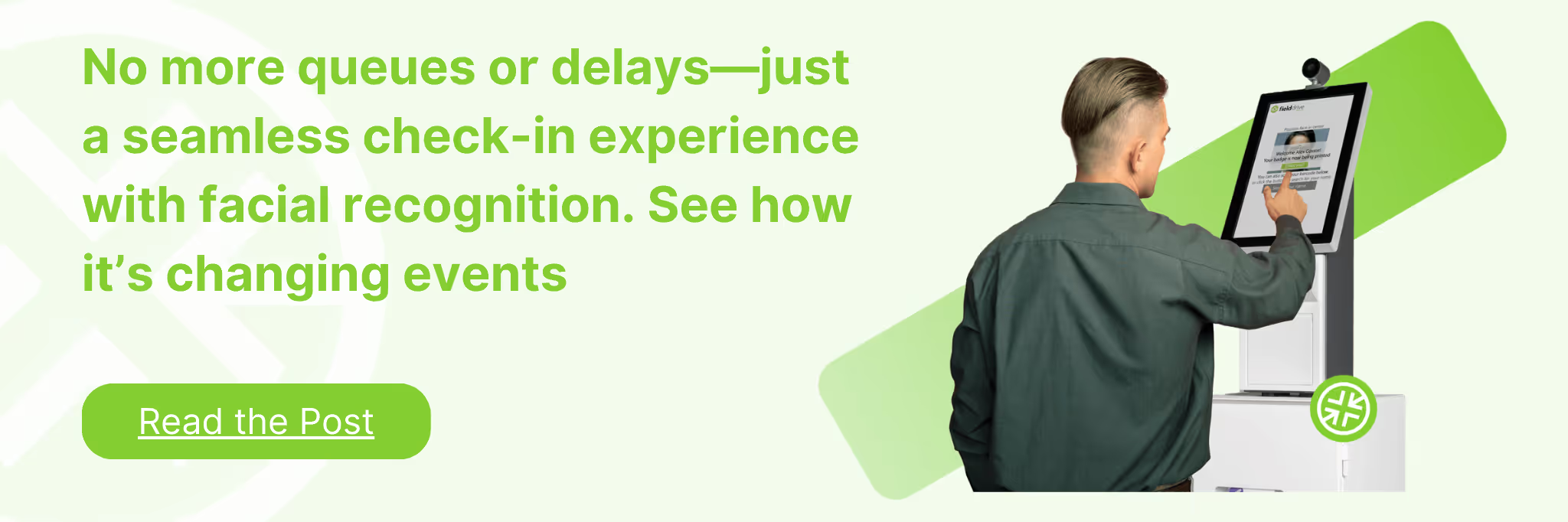
fielddrive’s check-in kiosks are built for speed and flexibility. Whether someone scans a QR code or uses facial recognition, the entry process becomes seamless.
How It Makes Your Workshop Better
- You eliminate long queues so attendees breeze in, giving your first session a calm start.
- Check-in feels modern and frictionless, making a strong first impression
- With branded kiosks, you can align the check-in setup with your workshop’s aesthetics
- The data syncs in real time, so you instantly know who’s in, helping you plan for session sizes and materials.
Sustainable Live Badge Printing
No more pre-printed name tags, no waste, no mix-ups. fielddrive’s badge printing is fast and highly customizable.
How It Makes Your Workshop Better
- Attendees print their badge when they check in, so personalization happens on the spot.
- You can include names, session schedules, or personalized tracks on badges.
- Eco-friendly badge options make your workshop greener.
- Reduces waste and cost from pre-printing, and you don’t run out of badges or misprint.
Session Access & Attendance Control
With fielddrive’s access control, you can manage who can enter which parts of your event, which is especially useful for breakout sessions or special workshops.
How It Makes Your Workshop Better
- You track who attends each session, helping you understand which parts are most popular.
- Prevents overcrowding or unauthorized access to restricted sessions.
- Helps you plan room capacity and staffing for breakout activities.
- Gives attendees a more controlled and professional experience, making your workshop feel well-run.
Lead Retrieval / Engagement App
Even in workshops, valuable connections can be made. With fielddrive Leads, you capture participant data, track interest, and follow up in real time.
How It Makes Your Workshop Better
- Scan attendee badges to get their info instantly, no manual business card exchange.
- Customize lead forms so you capture the most valuable data.
- Let participants receive digital resources on the spot, such as slide decks, handouts, or follow-up materials.
- Data collected syncs to your backend so your post-workshop outreach is faster and more targeted.
Real-Time Analytics & Session Monitoring
fielddrive’s analytics platform captures key data points during your event, including check-ins, session attendance, and engagement, and presents them in dashboards.
How It Makes Your Workshop Better
- You get live visibility into how many people have checked in and which sessions are filling up.
- Understand drop-off or engagement trends as they happen.
- Generate post-event reports easily to assess what worked and what didn’t.
- Use data to improve future workshops: you know which topics resonated, which sessions were full, and where to focus your follow-up.
fielddrive makes hosting a workshop smoother, more engaging, and more insightful by handling logistics, engagement, and data so you can focus on what matters most: your content and your participants.
Conclusion
Workshops are one of the most effective ways to turn an event into an experience attendees actually remember. When participants get the chance to think, build, share, and practice, the learning sticks. However, the impact of a great workshop doesn’t just come from the content. Smooth check-ins, accurate attendance tracking, organized sessions, and valuable data all contribute to a professional and engaging experience.
Tools like fielddrive make this easier. Their check-in systems, live badge printing, access control, and real-time analytics let you focus on running the workshop while they handle the logistics behind the scenes.
Now it’s your turn. Pick the workshops that align with your goals, tailor them to your audience, and create an event that leaves people inspired and ready to act, for a polished experience from start to finish.
Ready to elevate your next event? Connect with fielddrive and request a demo to see how new-age technology can boost attendee engagement.
FAQ’s
1. How to make a workshop more interesting?
Incorporate hands-on exercises, real-world examples, collaborative challenges, and visual aids. Encourage participation, vary activities, and allow space for discussion and reflection to keep attendees engaged throughout.
2. What are some interactive theme activities?
Team problem-solving challenges, role-playing scenarios, creative brainstorming sessions, gamified exercises, scavenger hunts, simulations, and hands-on projects help participants connect with the theme and actively practice new skills.
3. What is a successful workshop?
A successful workshop delivers clear outcomes, keeps participants engaged, encourages collaboration, provides practical takeaways, and leaves attendees confident in applying new skills or insights immediately in their work or projects.
4. What is the best topic for a workshop?
The best topic aligns with participant needs, addresses current challenges, provides practical value, and encourages engagement, whether focusing on skills development, innovation, leadership, wellness, or organizational growth.
5. What are the golden rules of a workshop?
Define clear objectives, engage participants actively, mix instruction with practice, provide actionable takeaways, foster collaboration, maintain a flexible flow, and ensure the environment supports learning and open communication.
.svg)
.svg)
.svg)
Want to learn how fielddrive can help you elevate your events?
Book a call with our experts today


.svg)