

.svg)
.webp)
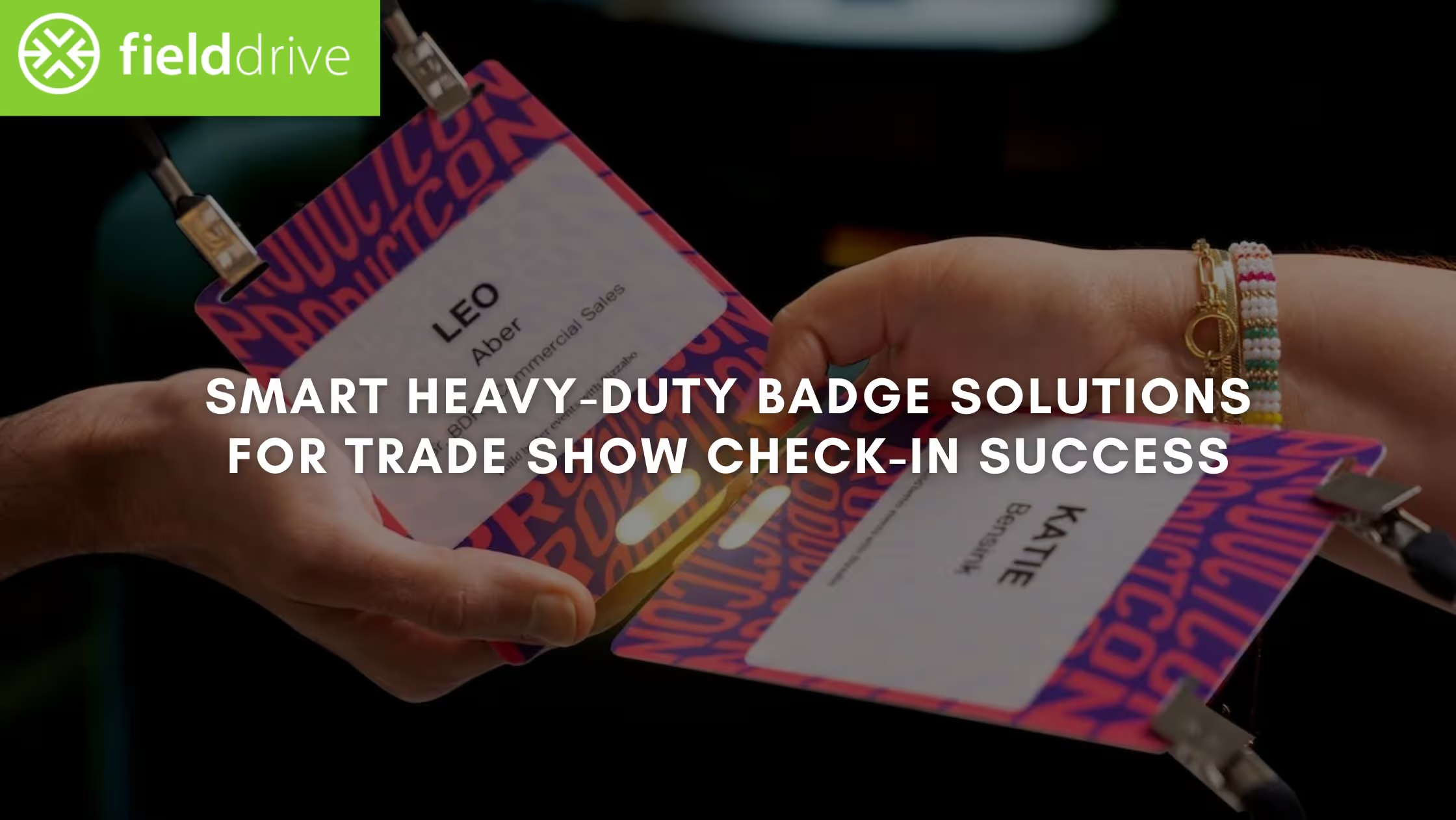
Trade show doors open and hundreds arrive at once. The badge line begins to stretch. Exhibitors look over at the entrance, waiting for the crowd to move inside. Attendees pull out phones, search for QR codes, and sigh when the line barely moves. Can your current check-in survive a surge like that?
The strain is real. In a 2025 study on smart queue management systems, reallocating capacity and using digital ticketing cut waiting times by up to 45% and sharply reduced queue lengths during peak loads. When check-in systems are built for scale, lines move. When they are not, everything backs up.
This is why organizers look for smart heavy-duty badge solutions. The answer is simple. A system built for speed, accuracy, and peak-hour strain. Not a basic printer. Not a volunteer-driven setup. A solution that performs under pressure. Does your check-in manage walk-ins or does it stall when it matters most?
This guide explains what makes a badge system truly heavy duty. It shows how each component works together to keep check-in stable.
Quick Insights for Faster Trade Show Check-In Success
- Heavy-duty badge systems succeed when hardware, software, connectivity, and staffing operate as one unified stack built for peak minutes, not average flow.
- A system qualifies as heavy duty when it maintains accuracy and pace even when several hundred attendees arrive with walk-ins mixed into the line.
- Your queue length reflects your infrastructure. Stable templates, strong printers, and live data sync prevent slowdowns and manual corrections.
- Onsite printing, facial recognition, and controlled access zones create predictable movement and reduce early-hour congestion for exhibitors and sponsors.
- A reliable solution includes real-time visibility, privacy protections, and onsite technical leadership so your team focuses on running the show, not fixing check-in.
What Heavy-Duty Badge Solutions for Trade Show Check-In Actually Involve
Heavy-duty badge systems are built to hold their ground when your trade show hits peak entry traffic. Printing speed alone does not define them. You need stability, accuracy, and a setup that does not collapse when several hundred people arrive at once. This is where the true meaning of heavy-duty begins.
A system qualifies as heavy duty when it consistently handles pressure without slowing down. You can evaluate this by looking at the elements below.
Key Components of Heavy-Duty Badge Solutions for Trade Show Performance
Here are the factors that define a heavy-duty setup:
- Consistent throughput: The system prints badges at a steady rate even during peak entry. Slower printers or limited stations lead to long queues.
- Accurate personalization: Badge templates must pull the correct attendee data every time. This prevents manual edits or handwritten fixes at the desk.
- Reliable template logic: Role-based layouts help exhibitors, speakers, VIPs, and attendees receive the right badge without extra steps.
- Queue flow design: Station layout, signage, and guided lines reduce crowding and prevent backups.
- Stable infrastructure: Backup internet, tested power sources, and monitored hardware prevent last-minute breakdowns.
Trade shows experience unpredictable rush periods. Corporate, business, and sports events also see pressure, but trade show entry peaks tend to be more volatile.
fielddrive delivers these elements through enterprise-grade hardware, integration logic, and onsite expertise designed for crowded and unpredictable trade show entry windows.
fielddrive supports high-volume trade show entry with touchless check-in kiosks, live badge printing, real-time dashboards, and onsite teams that keep check-in running smoothly under peak pressure.
Signs You Need Heavy-Duty Badge Solutions for Trade Show Growth
Most organizers only recognize the limits of their current badge setup when things break during check-in. You may not see the problem until a line forms, a printer jams, or walk-ins begin to stack up. If these situations feel familiar, your setup is no longer keeping up with your event.
Below are the signals to watch for:
- Lines lasting longer than 10 to 15 minutes
- Staff manually searching through pre-printed badges
- Frequent errors, reprints, or handwritten corrections
- Walk-ins slowing down the entire line
- Volunteers unable to manage peak entry traffic
- Exhibitors and sponsors questioning low footfall in the first hour
Heavy-duty badge solutions prevent these situations before they happen.
You now know what separates a dependable badge system from one that collapses under pressure. Let’s break open the engine and see what actually powers a heavy-duty setup.
Core Components of Smart Heavy-Duty Badge Solutions for Trade Show Check-In
A strong badge system depends on how well your hardware, software, connectivity, and staff work together. You cannot rely on a single strong tool when peak check-in involves hundreds arriving within minutes. You need a stack where every layer supports the others without slowing down. This structure is what determines whether your check-in holds steady or collapses under pressure.
To evaluate your heavy-duty setup, break it down into the components below.
The Components That Form a Heavy-Duty Badge Stack
Each element plays a direct role in check-in flow and badge accuracy.
- Hardware: Industrial printers, stable scanners, self-service kiosks, and badge stock built for high-traffic use.
- Software: Live registration sync, template logic, facial recognition options, and reprint workflows.
- Connectivity: Reliable connections at each station, plus backup lines and local failover options.
- Staff Roles: Queue handlers, support staff, and an onsite technical lead who keeps the system operational during peak arrival.
When these elements work together, you create a stable entry experience. When a single layer fails, queues grow and attendees fall behind schedule. fielddrive combines hardware, software, analytics, and onsite technical management into one managed workflow. This approach removes gaps between tools and ensures every component is configured for the highest-stress moments of trade show entry.
Hardware and Media Requirements for Heavy-Duty Badge Solutions for Trade Show Events
Hardware problems during peak check-in affect every attendee waiting in line. A stalled printer or slow kiosk can delay the entire show. You need hardware built to operate at full load without interruptions.
Key Hardware and Media Requirements
Use the points below as a benchmark:
- Industrial printers that support high volumes per hour with instant warm-up cycles
- Consistent print quality without streaking or banding
- Sturdy badge media such as PVC, rigid card, or eco-card stock
- Space on each badge for sponsor logos, access markers, color-coded roles, and attendee data.
fielddrive sizes the hardware for your highest expected arrival spike, not your average traffic.
Software, Kiosks, and Staff Roles in Heavy-Duty Badge Solutions for Trade Show Check-In
Your software determines whether each badge is printed correctly. Your staffing and kiosk design determine how quickly attendees pass through check-in. Together, these factors shape the flow of your entire event.
Operational Elements That Support High-Volume Check-In
The setup should include:
- Live data sync with your registration platform to prevent errors or mismatched records
- Automatic template logic that assigns layouts for VIPs, exhibitors, speakers, and general attendees
- Self-service kiosks for confident users and staffed counters for attendees who need support
- A technical lead who handles exceptions, monitors equipment health, and keeps the line moving
You’ve seen what a strong badge stack looks like. Let’s talk about choosing a system that won’t panic when your attendees arrive all at once.
How to Choose Heavy-Duty Badge Solutions for Trade Show Success
Choosing the right badge system shapes the first impression of your trade show. You are responsible for keeping lines short, moving attendees into the hall quickly, and giving sponsors the visibility they expect. A reliable setup removes uncertainty during peak arrival and keeps your team focused on the event instead of troubleshooting. Use the criteria below to judge whether a solution can support the scale and pressure of your show.
Key Criteria for Selecting Heavy-Duty Badge Solutions for Trade Show Operations
Evaluate each point against the needs of your venue, audience, and schedule:
- Throughput during peak arrival: Can the system process several hundred attendees within minutes without slowing down.
- Integration with your registration platform: Live data sync prevents mismatched records or manual searches.
- Facial recognition and onsite badge printing: Faster check-in for attendees and less strain on staff.
- Flexible badge templates: Support for sponsor spaces, color coding, role tags, and personalized fields.
- Real-time analytics: Insights into entry flow, crowd movement, and session draw.
- Data privacy protections: Encryption and compliance with GDPR or relevant regulations.
- Onsite technical leadership: A dedicated expert who manages exceptions, equipment health, and line stability.
fielddrive meets all these requirements, making it a dependable choice for high-stakes trade shows. Picking the right solution is one thing. Watching a system prove itself under real trade show pressure is where fielddrive steps in.
How fielddrive Delivers Smart Heavy-Duty Badge Solutions for Trade Show Check-In
Once you understand what heavy-duty systems require, the next step is seeing how they work in a real event environment. fielddrive supports corporate events, business expos, and sports events, but its workflow is built to withstand the pressure of trade shows. You deal with queues, access restrictions, exhibitor expectations, and operational load. A system that stabilizes these moving parts gives you control over the most stressful moments of your event.
Below are the pillars that shape fielddrive’s approach.
Facial Recognition for Heavy-Duty Badge Solutions for Trade Show Entry
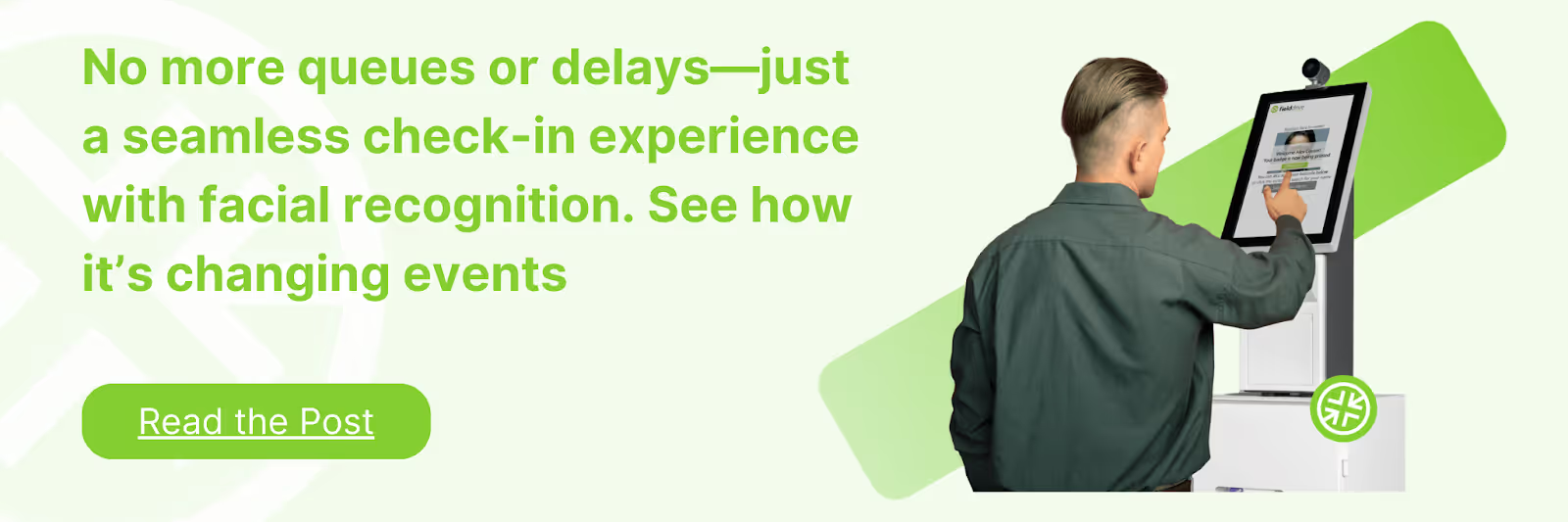
Attendees should not struggle with phones, QR codes, or paper confirmations. They should walk up, get recognized, and enter. Facial recognition gives you a clear path toward faster entry without extra steps for the attendee.
How fielddrive Facial Recognition Supports Heavy-Duty Entry Conditions:
- Contactless identification that recognizes attendees within seconds
- Automatic badge printing triggered by successful check-in
- Shorter lines at doors-open because each attendee moves through quickly
- Suitable for corporate gatherings, trade show halls, product expos, and sports events with restricted zones
- Data encryption and compliance with US, UK, and EU privacy standards
On-Site Printing, Access Control, and Tracking Within
Fast entry means nothing if attendees cannot move through the venue smoothly. When check-in, printing, and access control operate together, you create a predictable flow for your visitors and your staff. You also gain visibility into movement across the show floor.
Here are the operational layers included:
- Onsite badge printing linked directly to each successful check-in
- Controlled entry for VIP zones, speaker areas, meeting rooms, and backstage spaces
- Real-time tracking that shows density and movement in each area
- Dashboards that help you adjust staff placement, open alternate lanes, or slow entry where needed
Make your next trade show faster, smoother, and queue-proof. Explore fielddrive’s Facial Recognition Check-In Solution.
Conclusion
Heavy-duty badge solutions matter because they protect your event from delays, errors, and crowd buildup. Your check-in determines whether attendees enter relaxed or frustrated. With the right system, you gain faster entry, accurate badges, stable access control, and improved attendee flow.
fielddrive brings these elements together through facial recognition, onsite printing, secure access control, tracking tools, analytics, and strong compliance standards. You treat check-in as an experience that sets the tone for the rest of your show. A stable entry environment also supports exhibitors, sponsors, and operational teams who rely on predictable footfall and accurate data.
Your trade show deserves an entry system built for pressure, speed, and scale.
Ready to see how fielddrive powers heavy-duty badge solutions for trade show check-in? Request a demo and build a check-in flow designed for your event.
FAQs
Q: How can I estimate whether my trade show needs scalable badge infrastructure before finalizing vendors?
A: Track your attendee arrival patterns from past editions and compare them with your venue’s entry capacity. Use those numbers to project peak pressure. This helps you decide if your check-in can support higher attendance next year.
Q: What should I test during a pre-event badge systems rehearsal to avoid check-in failures onsite?
A: Test badge output speed, data accuracy, and kiosk responsiveness with simulated attendee loads. Check how the system handles rapid scans. Document any slowdown patterns so you can adjust staffing or station layout.
Q: How do I prevent sponsor complaints related to low early footfall when using badge systems?
A: Monitor entry timestamps and identify bottlenecks before peak periods begin. Adjust lane counts if traffic slows unexpectedly. Share transparent arrival metrics with sponsors to maintain confidence.
Q: What is the best way to train temporary staff to support a heavy-duty badge setup at a trade show?
A: Give them simple flow charts for common attendee scenarios and station tasks. Run short hands-on practice sessions. Assign clear escalation triggers so they know when to call technical support.
Q: How can I reduce attendee hesitation when introducing new check-in tech like facial recognition?
A: Communicate benefits clearly during registration and highlight optional paths. Provide privacy details upfront to build trust. Offer visible staff assistance near entry to reassure first-time users.
Q: How do I measure whether my badge system actually improved attendee movement inside the venue?
A: Compare entry-to-floor times across event days and check dwell patterns in key zones. Evaluate congestion variations against staffing changes. Use these insights to refine next year’s layout.
.svg)
.svg)
.svg)
Want to learn how fielddrive can help you elevate your events?
Book a call with our experts today


.svg)