

.svg)
.webp)
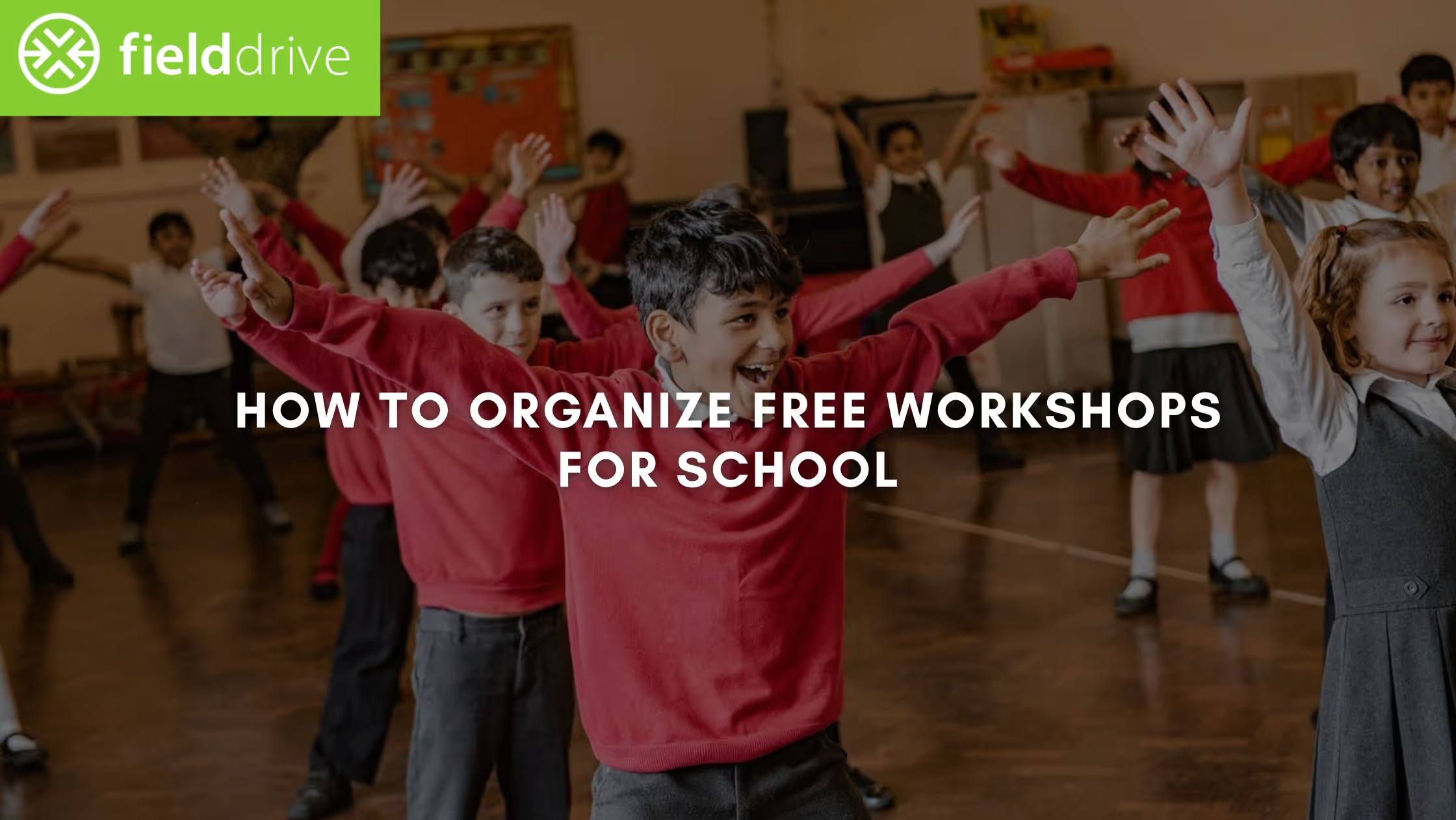
Planning a free workshop for schools often feels straightforward until you’re coordinating with staff, managing schedules, and trying to keep students engaged from start to finish. Without a clear plan, even a well-intended session can struggle with low participation, unclear outcomes, or logistical hiccups that disrupt the experience.
If you’ve tried organizing one before, you’ve likely run into common roadblocks: schools not responding, low attendance, unclear structure, or sessions that feel more like lectures than interactive experiences. Without a clear plan, even a great idea can struggle to deliver impact.
In this article, you’ll learn how to organize free workshops for schools step by step, including how to plan your approach, work with schools, manage logistics, keep students engaged, and run sessions that leave a lasting impact.
Key Takeaways:
- Start with clear outcomes: Define your goal, audience, and the one key idea students should remember
- Make it easy for schools to say yes: Use a short proposal with clear value and curriculum relevance
- Plan logistics in advance: Confirm setup, materials, and compliance before the session day
- Keep students actively involved: Use simple activities and interaction instead of long explanations
- Follow up to build momentum: Collect feedback, capture testimonials, and stay in touch for future workshops
What Are Free Workshops for Schools?
Free workshops for schools are structured learning sessions delivered at no cost to students or schools, typically led by educators, organizations, or subject-matter experts. Unlike traditional classroom lessons, these workshops focus on interactive learning, practical exposure, and topic-specific engagement within a limited time frame.
These workshops are designed to deliver focused learning outcomes, whether it’s building practical skills, introducing new ideas, or supporting classroom learning in a more engaging format.
To understand how they work in practice, it helps to break them down into key components:
Who Organizes These Workshops
These sessions are usually organized by external groups or individuals who want to contribute to student learning or connect with schools.
Typical organizers include:
- Nonprofits and NGOs: Delivering workshops aligned with social or educational causes
- Companies and brands: Running sessions as part of outreach or education programs
- Independent educators: Offering expertise in specific subjects or skills
- Community groups: Supporting local schools with relevant learning initiatives
Knowing what these workshops are is only the starting point, as execution often introduces challenges that are not immediately visible.

The Hidden Challenges of Running Free Workshops for Schools
At first glance, running a free workshop for schools may seem straightforward: pick a topic, contact a school, and deliver the session. In practice, it’s a logistical jigsaw puzzle where the school’s bell schedule, the teacher’s curriculum goals, and your own resources must align precisely.
When things don’t come together, the impact goes beyond a single session; it can affect how schools perceive your work and whether you’re invited back.
Most of the complexity falls into a few key areas:
- Logistical constraints: Aligning with school calendars, navigating approvals, securing appropriate space, and working within tight time slots that can change at short notice
- Resource limitations: Delivering a meaningful session with limited materials, minimal setup time, and little on-ground support
- Value perception gap: When a workshop is free, it may be deprioritized, moved to less suitable spaces, or treated as optional, which affects both delivery and student attention
- Cognitive mismatch: Content that is either too basic or too advanced, causing students to disengage early
- Low interaction levels: Sessions that rely too heavily on talking rather than participation
- Lack of structure: Unclear flow, weak transitions, or poor time control
- Communication gaps: Unclear expectations between you and the school around outcomes, roles, or session format
- Last-minute changes: Schedule shifts, room changes, or attendance uncertainty
- Limited feedback loops: No clear way to understand what worked or what didn’t
A more reliable approach is to treat workshops as structured, event-like experiences. This means planning for constraints, setting clear expectations early, and maintaining a level of professionalism that holds its value, even when the workshop itself is free.
With the challenges in mind, you can now focus on a practical framework to plan and run workshops with more control.
7-Step Process to Organize Free Workshops for Schools
Once you understand the challenges, the next step is building a clear process you can repeat. A structured approach helps you stay in control, even when working with limited resources or changing school conditions.
Here’s a practical step-by-step breakdown you can follow:
Step 1: Define Your Goal and Audience
Start by getting specific about what you want the workshop to achieve and who it’s for. Without this clarity, everything that follows becomes harder to align.
Focus on:
- Learning objective: What students should understand or be able to do by the end
- The “one thing”: If students remember only one idea a week later, what should it be?
- Age group: Primary vs secondary students require very different approaches
- Session outcome: Awareness, skill-building, or exposure to a topic
- Time constraints: Actual usable time, often shorter than scheduled slots
Step 2: Build a Clear, Low-Friction Proposal for Schools
Before reaching out, prepare a short proposal that schools can review quickly. Long documents often get ignored.
Include:
- One-page format: Concise and easy to scan
- Workshop summary: Clear explanation of the session
- Curriculum alignment: Link to specific learning goals or grade-level objectives
- Student benefit: What students gain from attending
- Session format: Duration and structure
- Requirements: Space, basic setup, and materials
Step 3: Secure the School and Confirm Compliance Early
Once a school shows interest, confirm both logistics and compliance before locking anything in. Missing this step can stop the workshop before it starts.
Clarify:
- Date and time: Aligned with the school schedule
- Location: Classroom, hall, or lab
- Point of contact: Teacher or coordinator
- Group size: Number of students
Confirm compliance requirements upfront:
- Background checks: DBS, Working with Children Check, or local equivalents
- Documentation readiness: Ability to share proof if requested
- Supervision rules: Teacher presence during the session
Add a final coordination step before the session:
- T-minus 24-hour email: Confirm timing, room, tech needs, and include your photo so staff can identify you at entry
Step 4: Plan Logistics and Prepare Your “Workshop-in-a-Box”
This is where many workshops break down. Relying on the school for materials or setup can lead to delays.
Prepare everything you need in advance:
- Complete material kit: Bring your own pens, worksheets, adapters, and supplies
- Tech check: Confirm compatibility and carry backups such as offline versions or connectors
- Room setup plan: Seating layout and visibility
- Backup plan: Alternative activity if something fails
- Time buffer: Account for late starts or shortened sessions
Step 5: Design the Workshop Experience
A strong workshop is built around participation, not explanation. Students should feel involved early and stay engaged throughout.
Structure your session around:
- The hook: Start with a question, challenge, or quick activity to capture attention
- Low-stakes participation: Begin with tasks where students cannot be wrong to build confidence
- Active learning: Shift quickly into doing, not just listening
- Clear flow: Move smoothly from introduction to activity to reflection
- Reflection: Reinforce key takeaways through discussion
Timing example:
- Standard 60-minute slot, realistically 50–55 minutes:
- 10 minutes for hook and introduction
- 30 minutes for activity
- 10–15 minutes for discussion
- Short 45-minute slot:
- 5 minutes for hook
- 30 minutes for core activity
- 10 minutes for wrap-up
Step 6: Deliver the Workshop Effectively
On the day, your focus is on managing the room and keeping energy levels consistent. School environments can shift quickly, so stay flexible.
During delivery:
- Clear instructions: Keep explanations short and easy to follow
- Active participation: Involves students consistently
- Use the teacher as an ally: They can support behavior management and reinforce key points
- Adapt in real time: Adjust pace based on student response
- The “hard stop” strategy: Always be ready to shorten your ending if time is cut
Step 7: Follow Up and Build Social Proof
What you do after the workshop determines whether you get invited back. This is where you build credibility.
After the session:
- Collect feedback: From teachers and students
- Capture testimonials: Ask for a short written quote from the teacher
- Request photos if permitted: Useful for future proposals and credibility
- Document outcomes: Note what worked and what did not
- Maintain contact: Keep the relationship open for future sessions
With a structured approach defined, you can now focus on how to run these workshops effectively, even when working with limited or no budget.

How to Organize Workshops for Free (Without a Budget)
Running a workshop for free does not mean operating without resources. It means being intentional about where those resources come from and how you use them. The key is to reduce dependence on money while increasing reliance on partnerships, planning, and clarity.
Here are practical ways to organize workshops without a budget:
- Use school spaces effectively: Most schools can provide classrooms, halls, or labs at no cost if the session aligns with their needs
- Partner with aligned organizations: Nonprofits, local groups, or community initiatives can co-host or support delivery
- Work with volunteers or co-facilitators: Teachers, student leaders, or subject experts can support activities and reduce workload
- Reuse and simplify materials: Design sessions that rely on minimal or reusable resources rather than printed or expensive items
- Seek in-kind support: Local businesses or partners may provide materials, snacks, or tools instead of funding
One important factor to manage is how your workshop is perceived. When something is free, it can sometimes be treated as low priority. To avoid this, maintain a clear structure, communicate expectations early, and present your workshop with the same level of professionalism as a paid program.
Running workshops without a budget depends heavily on partnerships, which makes finding and approaching schools a critical step.
How to Find Schools and Secure Partnerships
Getting a workshop approved is not just about having a good idea. It depends on reaching the right people, at the right time, with a message that fits their priorities. Many workshops fail before they begin because outreach is unclear or sent to the wrong contact.
To improve your chances, focus on how you approach schools and how you position the opportunity:
Where to Find the Right Schools
Start by identifying schools that are more likely to accept external workshops. Not every school will be a good fit, so targeting matters.
Look for:
- Schools with active programs: Institutions that regularly host guest sessions, clubs, or external activities
- Relevant subject alignment: Schools where your topic connects directly to what students are learning
- Existing connections: Alumni networks, teacher contacts, or referrals that give you a warm introduction
How to Reach the Right Person
Sending a generic message to a school email rarely works. You need to contact someone who has both interest and authority.
Focus on:
- Subject teachers: They care about content relevance and student value
- Program coordinators: Often manage external activities and scheduling
- School administrators: Useful when formal approval is required
Keep your outreach short and specific. A clear subject line and a direct explanation of value will get more responses than a long introduction.
How to Position Your Workshop for a “Yes”
At this stage, the goal is not to explain everything. It is to make the decision easy.
Focus on:
- Relevance first: Connect your workshop to what students are already learning
- Clarity over detail: Explain what the session is, who it’s for, and how long it takes
- Low effort for the school: Show that the workshop is easy to host and does not disrupt their schedule
- Professional delivery: Present the session as structured and well-prepared, even if it is free
Turning One Workshop into Ongoing Partnerships
A single session can lead to more opportunities if you approach it as the start of a relationship, not a one-time activity.
Build partnerships by:
- Following up consistently: Stay in touch after the session
- Sharing outcomes: Let schools know what students gained
- Offering continuity: Suggest future sessions or related topics
- Being reliable: Consistency builds trust faster than scale
How to Design Workshops That Keep Students Involved
An engaging workshop is built on participation, not explanation. If students are only listening, attention drops quickly. The goal is to involve them early, keep them active, and create a space where they feel comfortable contributing.
To make your workshop more engaging, focus on these principles:
- Start with a strong hook: Open with a question, challenge, or short activity that immediately captures attention
- Use low-stakes participation: Begin with tasks where students cannot be wrong to build confidence and encourage involvement
- Limit passive talking: Keep explanations short and move quickly into activities or discussions
- Encourage interaction throughout: Ask questions, involve small groups, and invite responses regularly
- Vary activity formats: Mix individual tasks, group work, and open discussion to maintain interest
- Watch energy levels: Adjust pace if students lose focus or become restless
- End with clear takeaways: Reinforce what students learned through a quick recap or reflection exercise
Even a well-designed workshop requires proper communication to ensure students attend and are prepared to participate.
How to Promote Your Workshop and Get Students to Show Up
Even a well-planned workshop can fall short if students do not show up or arrive disengaged. In schools, attendance depends on how the session is positioned to both teachers and students, especially when it is optional.
To improve attendance and participation, focus on these key levers:
While promotion drives attendance, avoiding common execution mistakes is what ensures your workshop delivers value.
Common Mistakes to Avoid When Running School Workshops
Even with a clear plan, small missteps can reduce the impact of your workshop. Most issues are not caused by lack of effort, but by overlooking details that affect how students and schools experience the session.
To avoid these pitfalls, watch out for the following:
- Overloading the session with content: Trying to cover too much leads to rushed delivery and low retention
- Ignoring student engagement: Relying too heavily on explanation instead of participation
- Skipping pre-session checks: Assuming tech, materials, or room setup will be ready
- Treating free as informal: Lowering standards because the workshop is unpaid can affect how it is received
- Not aligning with the audience: Content that feels too basic or too advanced loses attention quickly
- Lack of clear structure: Sessions without a defined flow can feel disorganized
- Poor time control: Running out of time before key takeaways are covered
- Not involving the teacher: Missing the opportunity to use them for support and classroom management
- No follow-up plan: Failing to capture feedback or maintain contact for future sessions
After identifying what to avoid, you can explore how technology supports better coordination and execution of your workshops.
How to Use Technology to Improve Workshop Execution
As you run more workshops, manual coordination can start to slow you down. Managing attendance, tracking participation, and handling on-site logistics becomes harder to control, especially across multiple sessions or locations.
To maintain consistency and reduce friction, it helps to introduce simple systems that support your workflow:
- Digital check-in systems: Tools like facial recognition check-in or touchless check-in kiosks can help track attendance quickly and avoid manual lists or entry delays
- Pre-registration tools: Collect participant details in advance and connect them with an event badge printing solution for smoother on-site organization
- Session tracking: Use a session scanning solution to monitor attendance and participation across different workshops
- Structured data capture: A lead retrieval app can help record participant information and feedback in a consistent format
- Insights and reporting: An analytics platform helps you review attendance, engagement, and outcomes across sessions
- Connected systems: Third-party integrations allow you to link your workshop data with other tools you already use
fielddrive brings all these capabilities together into a single system, combining check-in, badging, and data tracking to help you manage workshop flow and improve execution.
With support from fielddrive Onsite Academy, you also gain access to practical templates, planning resources, and expert insights that help you improve workshop execution over time.

Conclusion
Organizing free workshops for schools comes down to clarity, structure, and consistency. When you treat each session as a well-planned experience rather than a one-off activity, it becomes easier to manage logistics, keep students engaged, and build lasting relationships with schools.
As your workshops grow, managing attendance, flow, and data manually can start to limit what you can deliver. If you’re looking to run more structured, high-quality sessions without adding complexity, it may be worth exploring how the right systems can support your setup.
If you want to see how this can work in practice, you can book a demo and explore how to simplify workshop operations while improving the experience for both organizers and students.
FAQs
1. How far in advance should I plan a school workshop?
You should plan a school workshop at least 2 to 4 weeks in advance. This gives you enough time to contact schools, complete approvals, and align schedules. Some schools require longer notice, especially during exam periods, so early outreach improves your chances of securing a suitable time slot.
2. What is the ideal group size for a school workshop?
The ideal group size for a school workshop is typically between 20 and 40 students. Smaller groups allow for better interaction and participation, while larger groups can make it harder to manage engagement. If the group is bigger, consider adding support or adjusting activities to maintain involvement.
3. Do I need prior teaching experience to run a school workshop?
You do not need formal teaching experience to run a school workshop, but you do need clarity, structure, and the ability to engage students. Schools value clear communication and well-planned sessions more than teaching credentials, especially if your workshop offers practical or topic-specific insights.
4. How long should a school workshop be?
A school workshop should usually be between 45 and 60 minutes, depending on the school schedule. Shorter sessions work better in most cases because they match class periods and keep attention levels high. It is better to deliver one focused session than try to cover too much in a longer format.
5. How do I handle different student engagement levels during a workshop?
You should handle different engagement levels by mixing activities, keeping instructions simple, and involving students frequently. Some students will participate actively while others may hesitate, so using group tasks and low-pressure questions helps bring more students into the session without putting them on the spot.
.svg)
.svg)
.svg)
Want to learn how fielddrive can help you elevate your events?
Book a call with our experts today


.svg)