

.svg)
.webp)
CONTENT
Large Los Angeles events are a significant investment for you and your exhibitors, and expectations around ROI are high. 93% of exhibitors believe that lead quality is the most important outcome of the events they attend. When lead quality falls short, clients question their spend, and you feel the pressure immediately.
At many LA events, lead capture breaks down on the show floor. Crowded layouts, slow badge scanning, unreliable connectivity, and manual data collection make it harder for your exhibitors to capture complete, qualified leads and follow up.
This is why your venue choice matters beyond size or location. A venue’s layout, infrastructure, and modern tech readiness directly impact how efficiently your exhibitors can identify attendees, capture accurate data, and turn conversations into opportunities.
In this article, you’ll learn why exhibitor lead capture is challenging at Los Angeles events, and which venues are better suited for efficient lead capture. You'll also find the essential aspects to check before selecting a venue.
Quick Snapshot
- Multi-hall venues, hybrid indoor–outdoor layouts, and high exhibitor density in LA mean small lead-capture gaps quickly become lost data and missed ROI.
- Venue layout matters as much as venue size. Attendee flow, choke points, and proximity between sessions and event floors directly affect how often exhibitors can scan, engage, and qualify leads.
- Venues like the Los Angeles Convention Center, Pasadena Convention Center, The Reef Magic Box, and others offer layouts that support distributed scanning. They also enable higher exhibitor engagement when paired with the right tech.
- Offline-capable scanning and mobile lead capture are essential to prevent data loss during peak hours or across outdoor and high-density zones.
- Integration determines post-event value. Setups that support clean integration between registration, scanning, and CRMs enable faster follow-up and higher-quality exhibitor outcomes.
Why Exhibitor Lead Capture Is Challenging at Los Angeles Events
Los Angeles is home to some of the most significant and complex events in the U.S. However, that scale often works against exhibitors or organizers when it comes to capturing high-quality leads:
- The Los Angeles Convention Center alone draws nearly 1.6 million attendees across more than 165 events annually. That includes franchise and construction expos, as well as foodservice and art shows.
- Shows hosted here span massive multi-hall configurations with hundreds, or even thousands, of exhibitors and diverse attendee intents. That makes it challenging to create consistent, high-quality interactions on the show floor.
Unique LA Event Realities
- Huge venues & multi-hall layouts: Venues offer massive exhibit spaces, sprawling across interconnected halls that fragment foot traffic and make uniform lead capture difficult.
- Indoor–outdoor hybrid spaces: Many LA events extend into adjacent outdoor areas (plazas, auxiliary lots), complicating connectivity and on-the-spot scanning workflows.
- Heavy exhibitor density: With hundreds of exhibitors packed into a single show (e.g., The Fit Expo, with nearly 300 exhibitors and 50,000+ attendees), competition for attendee attention is fierce. Capturing high-quality lead data quickly becomes a logistical bottleneck.
Common Exhibitor Pain Points
- Congestion during peak hours
- Walkways flood at keynote overlaps or lunch breaks, slowing badge scanning and limiting the time exhibitors have with prospects.
- Long lines at shared badge-scan points or session exits mean missed interactions and dropped data.
- Inconsistent connectivity across halls
- Even large LA venues struggle with uniform Wi-Fi coverage across exhibit halls and outdoor extensions.
- Exhibitors relying on online-only scanning or lead apps risk losing data or experiencing slow uploads during peak density.
- Disconnected or manual lead capture methods
- Relying on business cards, pen-and-paper notes, or generic mobile scanning apps leads to fragmented datasets that take hours or days to clean up.

Understanding these challenges is the first step. The next step is knowing which Los Angeles venues are better positioned to support efficient exhibitor lead capture when paired with appropriate technology.
Top Los Angeles Event Venues That Support Efficient Exhibitor Lead Capture
Los Angeles event venues vary dramatically in scale, layout, and flow, and those differences directly impact how easily you can capture leads. Below are the top LA venues where exhibitor lead capture can work well, when paired with the right onsite technology.
1. Los Angeles Convention Center (LACC)
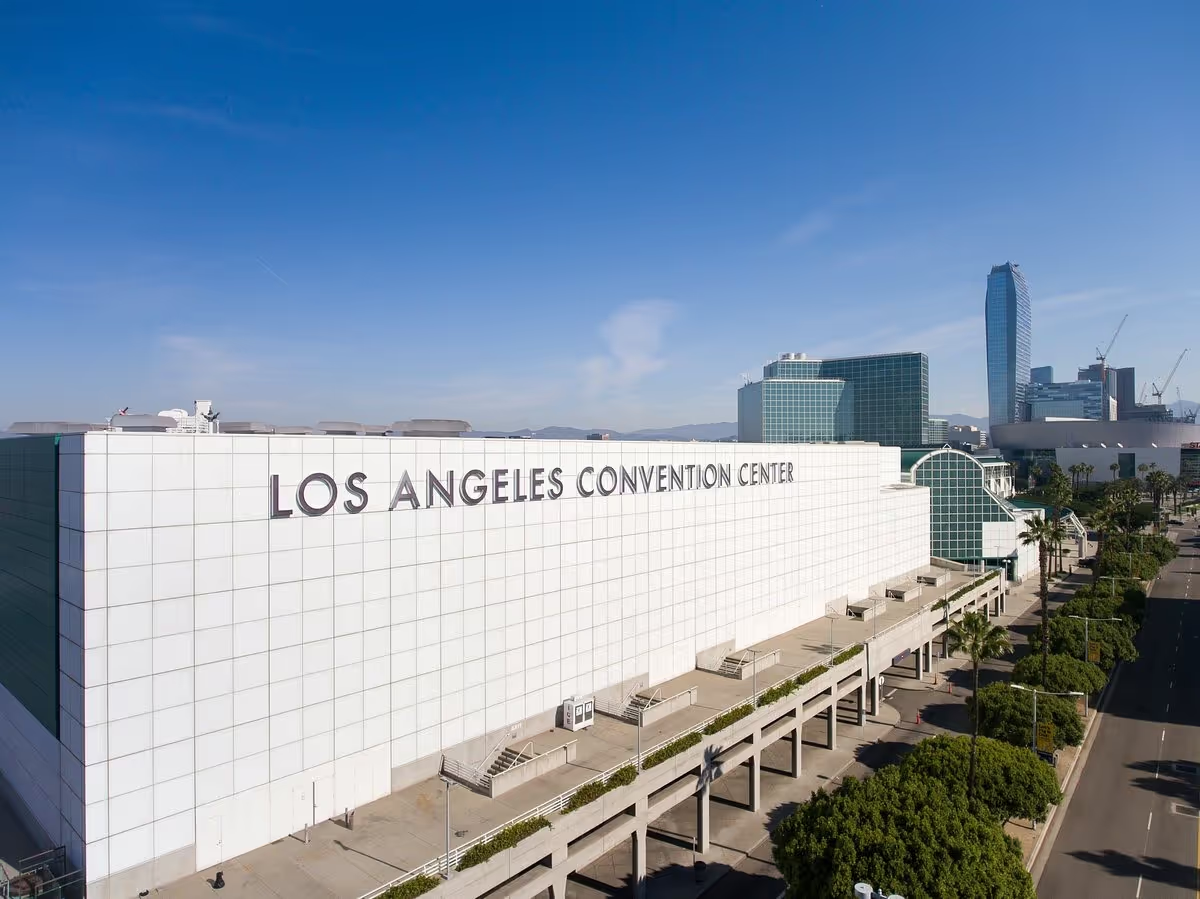
The Los Angeles Convention Center is one of the largest convention venues in the city. It's a hub for high-volume trade shows, exhibitions, expos, and industry conferences. With over 2.4 million square feet of total facility space, it consistently hosts events with massive exhibitor presence and dense attendee traffic. That makes it a key location for high-impact lead capture efforts.
Location: 1201 South Figueroa Street, Los Angeles, CA 90015
Capacity:
- Over 720,000 sq ft of exhibit space
- 64 meeting rooms
- Multiple contiguous exhibit halls (West, South, Concourse)
- 4 outdoor plazas
Key Features:
- Clear, wide concourses that allow distributed badge scanning points
- Meeting room clusters adjacent to the expo halls support targeted sessions. Exhibitors can run demos and capture leads in quieter, data-rich environments.
- Dedicated pre-function spaces that are great for holding areas, badge pickup, and live badge printing setups that keep lead lines moving.
- Dedicated event planning support team
2. Pasadena Convention Center

Located about just 10 miles from downtown Los Angeles, the Pasadena Convention Center is a leading meetings and events venue. The venue supports events of varying scales with flexible exhibit halls, a large ballroom, and a broad selection of breakout and meeting rooms. It's designed to accommodate both exhibitions and conference programming.
Location: 300 E Green St, Pasadena, CA 91101
Capacity:
- 130,000 sq ft of exhibit space
- 25+ meeting rooms
- 25,000-square-foot Grand Ballroom
- 28,000-square-foot Conference Center
- 3,000-seat Pasadena Civic Auditorium
Key Features:
- LEED® Gold Certified
- Centralized entry points that are ideal for single-flow badge scanning
- Walkable transitions allow you to integrate session-attendance data with booth-lead capture to create a richer dataset.
- 3000+ parking spaces
3. Hollywood Palladium
The Hollywood Palladium is one of Los Angeles’ most iconic event venues, blending Old Hollywood character with modern production capabilities. Located close to the Hollywood Walk of Fame, the Palladium is frequently used for corporate events, product launches, premiere parties, brand activations, and niche exhibitions.
Location: 6215 Sunset Boulevard, Los Angeles, CA 90028
Capacity:
- 59,000 sq ft total venue footprint
- Accommodates multiple groups from 50 to 3,700 attendees
Key Features:
- Grand Main Ballroom for large-format exhibits or showcases
- Smaller, premium spaces such as the Champagne Lounge and Lawrence Welk Lounge for VIP experiences, demos, or sponsor activations
- Lounges and VIP areas for targeted lead capture
- Experienced onsite staff help coordinate attendee flow, scanning placement, and operational timing during high-energy activations.
- Custom F&B options through exclusive culinary partners
4. LA LIVE Event Deck
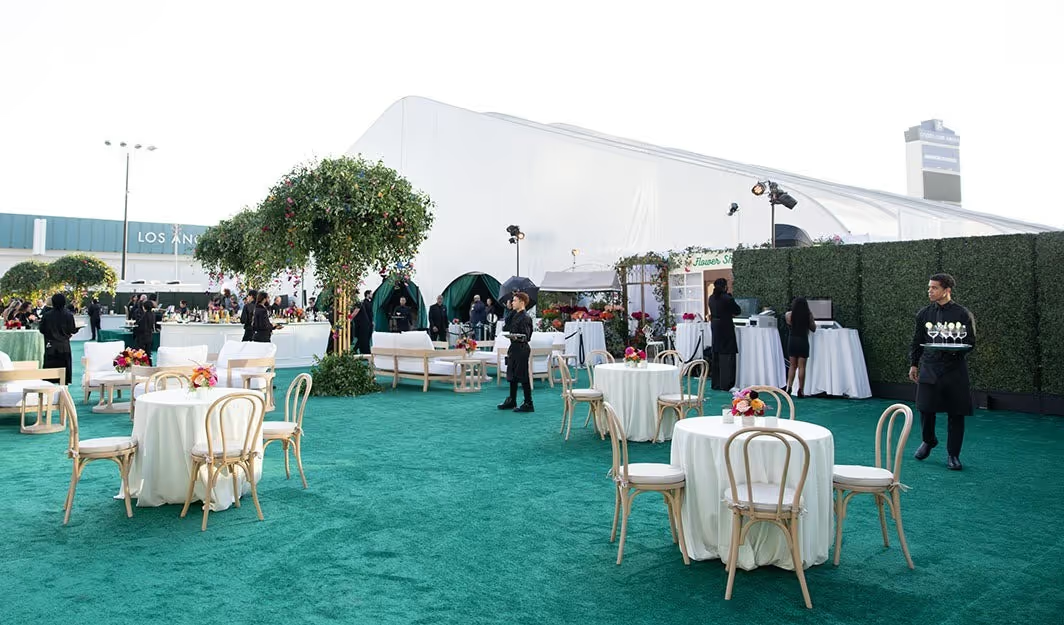
Located in the heart of downtown Los Angeles, the Event Deck at L.A. LIVE is a high-visibility indoor/outdoor venue. It is designed for large-scale corporate showcases, conference-adjacent events, and experiential exhibitions. Sitting steps away from major hotels, entertainment, and the Los Angeles Convention Center, it regularly hosts events where traffic flow and fast engagement are critical.
Location: 800 W Olympic Blvd, Los Angeles, CA 90015
Capacity:
- 90,000 sq ft total event space, including a 42,000 sq ft tented area
- Standard capacity of 3,000 attendees, expandable to 5,000 with additional stairs
Key Features:
- Fully wired infrastructure that supports live badge printing, scanning devices, and real-time data dashboards when paired with reliable onsite technology
- Power and water access throughout the deck
- Modular tent bays that can be added or removed to adjust event size and design intentional exhibitor zones that funnel traffic through scanning points.
- Ramp-accessible layout for efficient load-in and load-out
- Multiple onsite parking structures across the L.A. LIVE campus
5. The Reef Magic Box
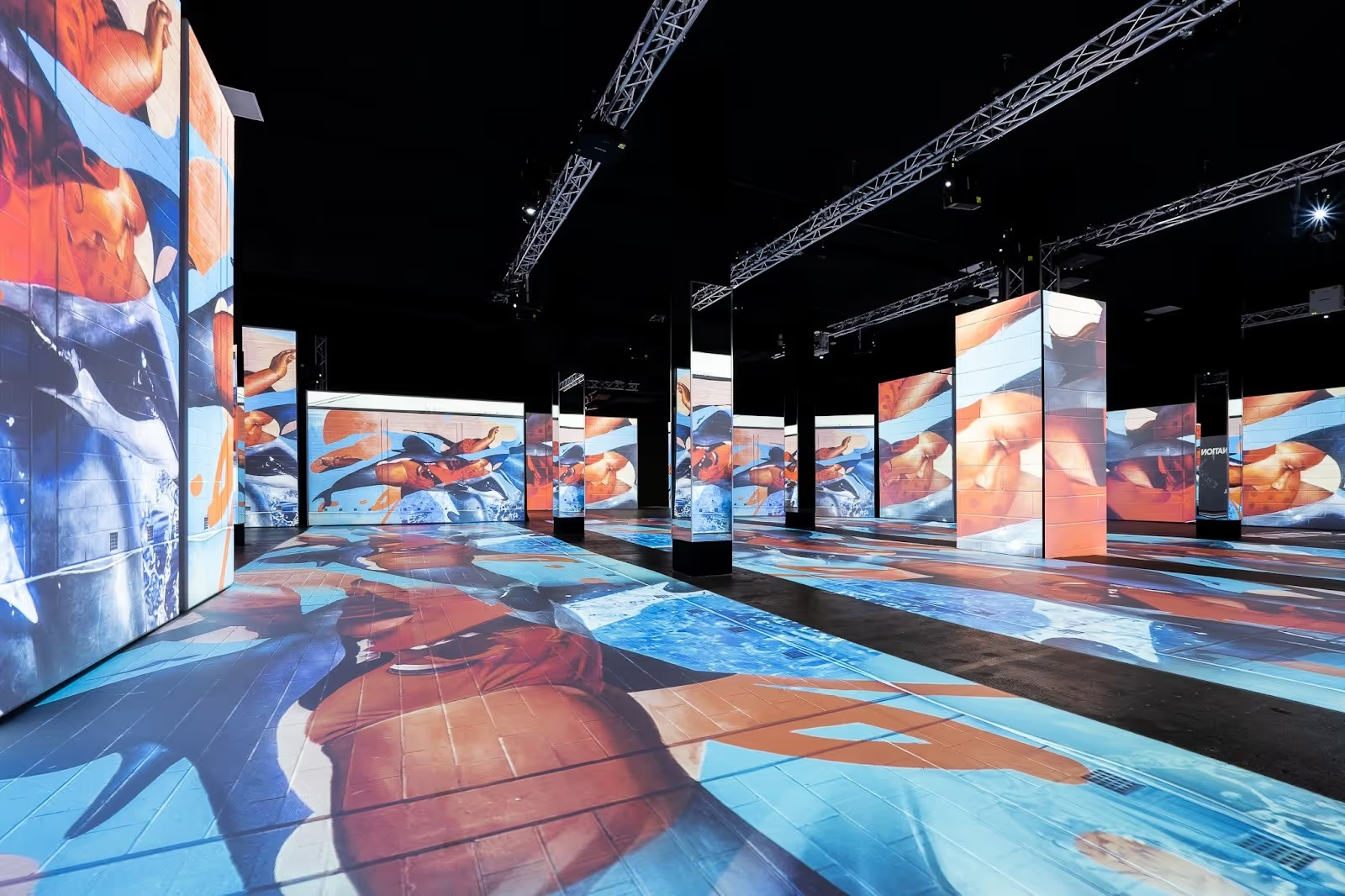
Magic Box at The Reef is one of downtown Los Angeles’ most versatile large-format event venues, built for trade shows, exhibitions, and creative industry events. It combines expansive indoor and outdoor space with a full-service production environment. That makes it a strong option for exhibitor-heavy events that require flexible lead capture workflows at scale.
Location: 1933 S Broadway, Los Angeles, CA 90007
Capacity:
- 200,000+ sq ft of total trade show and event space
- 120,000+ sq ft of indoor exhibit space
- 100,000+ sq ft of outdoor festival space
- Two large parking lots with 1,100 onsite parking spaces
Key Features:
- Multiple exhibit halls, meeting rooms, and creative breakout spaces
- Full-service event center, including:
- Power and Internet connectivity
- Docking facilities and inventory management that simplifies the setup of check-in kiosks, badge printing stations, and exhibitor scanning equipment.
- Security, housekeeping, and exhibitor services
- Box office facilities and audiovisual services
- Non-union venue, offering greater flexibility in production and setup
- No pre-approved food and beverage vendor restrictions
6. Vibiana

Vibiana is another landmark downtown Los Angeles venue known for its historic architecture and flexible event environments. Centered around a grand Main Hall and an adjacent outdoor courtyard, the venue is frequently used for corporate events, brand showcases, private exhibitions, and more.
Location: 214 South Main Street, Los Angeles, CA 90012
Capacity:
- 18,000 sq ft Main Hall with open sightlines and dramatic architectural features
- 15,000 sq ft outdoor courtyard, connected to the Main Hall
- Best accommodates 150–550 guests for seated dinners, and up to 800 attendees for standing receptions, concerts, or showcase-style events.
Key Features:
- The relatively compact layout makes real-time lead syncing and visibility easier for exhibitors and organizers.
- Additional private event spaces next door, which are well-suited for breakout meetings, green rooms, or VIP sessions
- Complete in-house food and beverage program.
Also Read: Philadelphia’s Most Flexible Venues with Lead Retrieval Solutions
Choosing the right venue lays the foundation, but venue features alone don’t guarantee success in capturing exhibitor leads. To truly support efficient lead capture, you need to know a few crucial aspects and how to evaluate them before committing.
What Makes a Venue “Lead-Capture Friendly?”
Not all venues are built to support efficient exhibitor lead capture, especially at scale. Beyond square footage and aesthetics, the most exhibitor-friendly spaces in Los Angeles share a few non-negotiable operational traits. These aspects directly affect lead quality, data accuracy, and follow-up speed.
Below is a practical framework you can use to evaluate whether a venue will help or hinder the exhibitor lead capture process.
1. Badge & Identity Infrastructure
What to look for:
- Support for QR codes, barcodes, and facial-recognition-enabled live badges to avoid pre-printed badges
- Clearly defined space near primary entrances for live badge printing
- Room for multiple check-in or badge pickup points during peak arrivals
2. Floor Layout & Attendee Flow
What to look for:
- Wide aisles that prevent congestion during peak hours
- Logical zoning between expo halls, sessions, and networking areas
- Clear sightlines so booths aren’t hidden behind pillars or corners
Example of poor flow: When the session exits empty directly into narrow expo aisles, crowds bottleneck. Exhibitors closest to those choke points may scan fewer badges simply because attendees are focused on moving rather than engaging.
3. Connectivity + Offline Readiness
What to look for:
- Venue's internet suitability for dense device usage
- The ability to deploy offline-capable scanning tools for exhibitors
- Physical layouts that support mobile scanning across halls and zones
Why is venue Wi-Fi alone not enough?
Even well-equipped LA venues experience:
- Network congestion during keynotes
- Signal drops between halls or outdoor areas
- Temporary outages during peak usage
4. Session-to-Event Data Continuity
What to look for:
- Session access control and attendance tracking
- Ability to link session participation with event activity
Why this matters: A booth visit means more when you know why the attendee is there. Linking session attendance with exhibitor scans allows:
- Better lead scoring
- More relevant follow-up conversations
- Clearer insight into attendee intent
Pro Tip: Allow exhibitors to add custom qualifiers and scoring, so leads reflect real buying intent.
Practical example: An exhibitor knowing an attendee just attended a “Buyer Trends” session can prioritize that lead differently than a casual walk-by, without relying on guesswork.
5. Integration Readiness
What to look for:
- Compatibility with major registration platforms and CRMs
- Clean data export and real-time syncing capabilities
Why this matters: When registration, scanning, and exhibitor tools don’t integrate, you face:
- Manual data cleanup
- Delayed follow-up
- Inconsistent reporting

Also Read: 10 Best Corporate Event Venues in NYC for 2025
Even when a venue meets these criteria, execution still matters. The next step is to understand how the right onsite technology brings these elements together in practice.
How fielddrive Simplifies Exhibitor Lead Capture Across LA Venues
Prominent Los Angeles venues add complexity to exhibitor lead capture. Multiple halls, hybrid indoor-outdoor layouts, and peak traffic surges all demand tools that work fast, stay reliable, and scale without friction. fielddrive is designed specifically for these realities, helping you capture cleaner data and act on it while the event is still live. Here's how:
1. Faster Attendee Identification
At high-volume LA events, the first bottleneck is always entry. When check-in slows, badge quality suffers, and exhibitors feel the impact immediately. fielddrive addresses this with:
- Touchless check-in kiosks with facial recognition, allowing pre-registered attendees to check in within seconds
- QR and barcode scanning for flexible identity verification across different entry points
- Live badge printing in approximately six seconds per badge, ensuring every attendee enters the show floor with an accurate, scannable badge
This reduces registration congestion and ensures exhibitors aren’t dealing with handwritten corrections, duplicate records, or unreadable badges once the event floor opens.
2. fielddrive Leads App for Exhibitors
Exhibitors need lead capture to be fast, intuitive, and usable in the moment, not after the event. With the fielddrive Leads app, exhibitors follow a simple, repeatable workflow:
- Scan the attendee badge at the booth using a mobile device.
- Instantly access attendee details, including registration data.
- Apply custom qualifiers and notes, tailored to the exhibitor’s own sales criteria.
- Sync leads in real time, making them immediately available for review and follow-up.
Because this process happens in seconds, exhibitors can focus on conversations rather than data entry while still walking away with high-quality, structured lead data.
3. Real-Time Data & Visibility
At large LA venues, visibility matters as much as volume. Organizers and exhibitors need to know what’s happening as the event progresses. fielddrive provides:
- Real-time analytics dashboards to monitor check-in counts, booth engagement, and visitor flow
- Live lead visibility showing how many leads are being captured and when peak engagement occurs
This allows teams to:
- Adjust staffing during high-traffic periods
- Identify underperforming zones early
- Help exhibitors refine their onsite strategy instead of waiting for post-event reports
4. Reliability at Large LA Venues
Connectivity at Los Angeles venues can fluctuate, especially across large halls, outdoor areas, or high-density zones. fielddrive is built to perform regardless. Key reliability features include:
- Offline scanning that continues capturing leads even when Wi-Fi drops
- Automatic syncing once connectivity is restored, with no data loss
- Global logistics and onsite support, ensuring kiosks, scanners, and badge printers are delivered, set up, and supported onsite
This combination ensures exhibitors can continue to capture leads consistently in a convention hall, at an outdoor activation, or on a high-traffic concourse.
Wrapping Up
Los Angeles events operate at a different level of complexity. Large, multi-hall venues, hybrid indoor–outdoor formats, and dense exhibitor floors mean that lead capture can break down quickly if workflows aren’t built for scale. For you, success is about whether exhibitors can consistently identify attendees, capture clean lead data, and engage without friction throughout the show.
fielddrive supports this layer of execution across Los Angeles event venues where exhibitor performance matters. Designed by teams with onsite event experience, the platform enables fast check-in, accurate badge printing, reliable exhibitor scanning, and real-time visibility into lead capture. The focus stays on operational reliability and data quality, not patchwork fixes.
If you’re preparing an LA trade show and want exhibitors to leave with qualified, usable leads rather than spreadsheets to clean up, connect with us.
.avif)
FAQs
1. How do exhibitors measure lead quality at large Los Angeles trade shows?
Exhibitors typically assess lead quality by combining engagement context with intent signals, such as session attendance, time spent at the booth, and qualification responses. Without this context, raw lead counts often inflate performance without reflecting real sales potential.
2. What should you clarify with venues before committing to exhibitor-heavy events?
Beyond space and dates, you should confirm where to place scanning zones and how attendee flow will be managed during peak periods. You must also verify whether temporary infrastructure can support exhibitor data capture without disrupting other venue operations.
3. How do hybrid indoor–outdoor venues affect exhibitor data accuracy?
Hybrid layouts often introduce data gaps when tools rely on constant connectivity. Without workflows designed for movement between zones, exhibitors risk missing scans or losing context, especially when attendees engage briefly across multiple locations.
4. What questions do exhibitors ask immediately after an LA trade show ends?
Exhibitors usually ask: Who should we follow up with first? Which conversations mattered most? Did session interest align with booth visits? If those answers aren’t immediately available, momentum is lost within days.
.svg)
.svg)
.svg)
Want to learn how fielddrive can help you elevate your events?
Book a call with our experts today


.svg)