

.svg)
.webp)
Sustainable Badge Practices for Expos Using Green Methods
Discover sustainable badge practices for expos that reduce waste, improve efficiency, and support greener events through smarter workflows and modern technology.
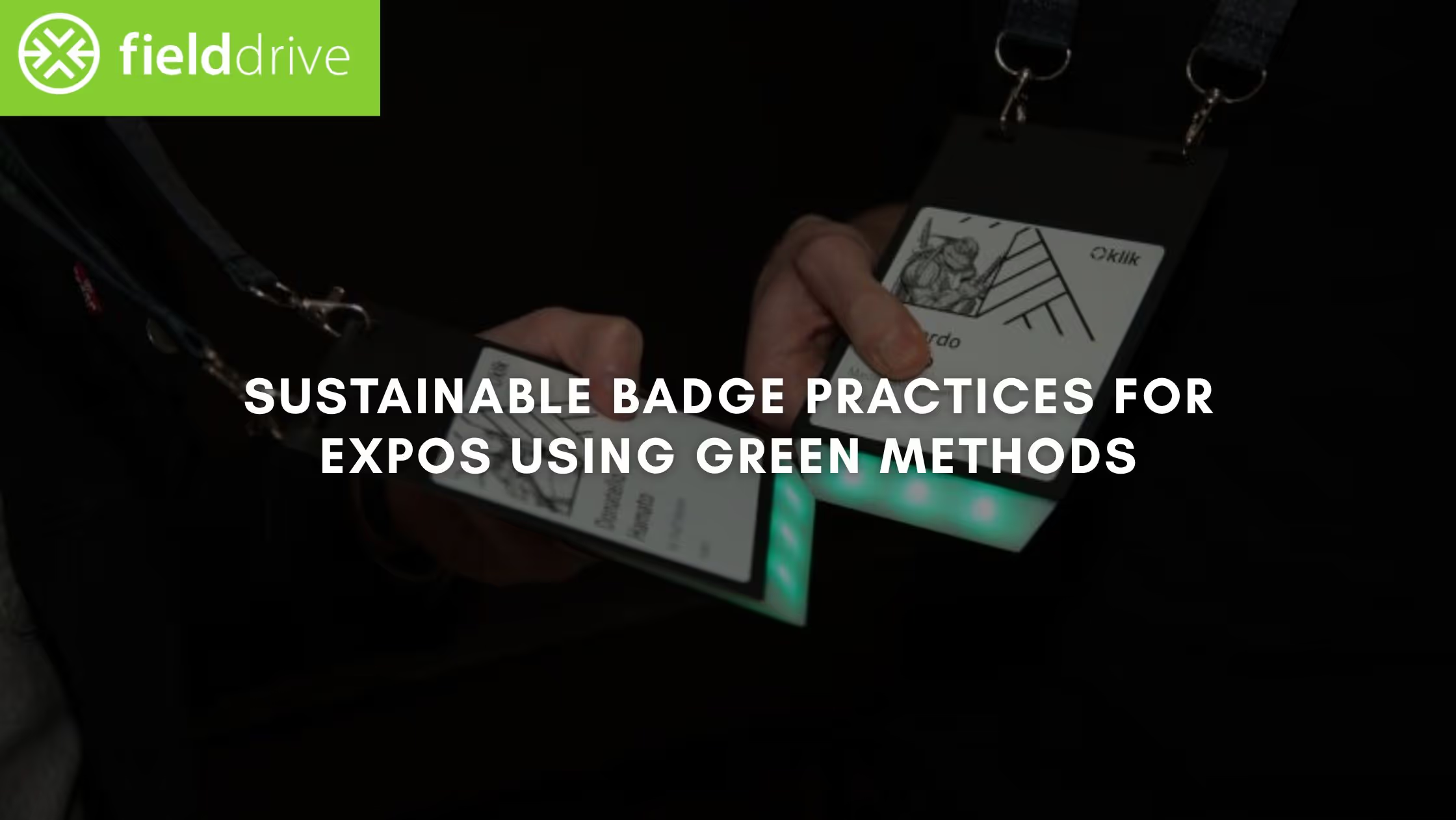
Expo organizers are under growing pressure to make their events genuinely sustainable, and badges have emerged as a critical weak point. Events generate an estimated 2.5 pounds of landfill-bound waste per person per day, and at large expos, badges contribute disproportionately through overprinting, reprints, and unused inventory.
With thousands of attendees, last-minute registrations, and complex access needs, small inefficiencies scale quickly. Badge waste adds up across check-in desks, storage rooms, and post-event disposal, often without teams realizing the full impact until the event is over.
Stakeholders are no longer accepting surface-level fixes. They want measurable reductions, efficient workflows, and proof that sustainability isn’t slowing operations down.
Sustainable badge practices deliver exactly that. By rethinking how badges are produced, issued, and managed, organizers can cut waste, speed up check-ins, and eliminate avoidable printing and logistics costs. The result is a cleaner, faster, more responsible badge process that supports broader sustainability goals.
In this article, we show the practical steps expos can take to make badge workflows truly sustainable, without disrupting event operations.
Key Takeaways
- Sustainable badge practices for expos rely on accurate data, efficient workflows, and on-demand printing, not materials alone.
- Expos produce higher badge waste because of large attendance, walk-ins, multi-day access, and frequent badge corrections.
- Technology improves sustainability by reducing errors, preventing overproduction, and simplifying access control.
- Modern badge systems lower environmental impact while improving speed, accuracy, and overall event operations.
- Track “reprint rate” and “unused badge stock” to prove sustainability gains in post-event reporting.
- fielddrive supports sustainable badge management with automated check-in, real-time badge printing, and reliable data syncing.
Why Sustainable Badge Practices Matter More for Expos Than Any Other Event Type
Expos operate at a scale that magnifies badge-related waste. Traditional workflows can’t keep up, leading to reprints, errors, and emergency badge stock consumption, making expos far more waste-intensive than conferences or single-day events. Here’s why expos face disproportionate pressure to adopt sustainable badge practices:
- High attendee throughput: Thousands of check-ins per hour increase badge output and the probability of errors and reprints.
- Multi-day access requirements: Attendees, exhibitors, and rotating temporary staff need repeated access, multiplying badge creation and replacement needs.
- Walk-ins and on-site registrations: Large volumes of last-minute arrivals force organizers to overprepare with excess stock that often goes unused.
- Exhibitor staff turnover: Exhibitors switching staff daily leads to additional badge issuance and frequent credential updates.
- Complex access control: Multi-zone or tiered access models leave no room for badge errors, resulting in instant reprints.
- Greater sustainability scrutiny: Large expos attract brands, press, sponsors, and ESG teams who expect visible, measurable sustainability improvements.
Every unnecessary badge printed creates material waste, adds logistics emissions, and increases labor hours. Pre-printed badges that never get collected turn into immediate landfill, while constant reprints strain both budgets and check-in operations.

The Badge Waste Problem at Expos: What Organizers Miss in Practice
Once scale and complexity are accounted for, the remaining badge waste at expos is rarely caused by attendee volume alone. It shows up in operational metrics that teams often do not track closely during the event and only notice after costs are locked in.
The problem is visibility. Badge waste is distributed across registration, access control, and on-site operations, which makes it easy to underestimate until post-event reconciliation.
Where badge waste actually accumulates:
- Reprint rate: Late profile edits, access changes, CSV mismatches, and manual overrides drive on-site reprints that compound throughout multi-day events.
- No-show badge waste: Pre-printed badges for expected attendees and exhibitors who never check in become write-offs immediately.
- Badge inventory overruns: Overforecasting to “stay safe” results in surplus stock that cannot be reused across zones, days, or roles.
- Format fragmentation: Multiple badge types for access tiers increase print runs, SKUs, and handling errors.
- Logistics overhead: Early shipping, temporary storage, and post-event disposal of unused badges add emissions and cost beyond printing alone.
These issues are process-driven, not material-driven. Without addressing reprint ratios, no-show waste, and inventory write-offs, even recycled or biodegradable badges fail to deliver meaningful sustainability gains.
6 Sustainable Badge Practices Expo Organizers Can Implement in 2025
Sustainable badge management in 2025 is about rethinking workflows, not just materials. The most impactful improvements come from reducing the volume of badges printed, simplifying distribution, and minimizing last-minute corrections. Below are deeper, practical strategies expo organizers can apply immediately—with examples and explainers to show real-world value.
1. Adopt On-Demand Badge Printing
Switching from bulk pre-printing to on-demand printing eliminates the most common source of badge waste: inaccurate forecasts.
Why it works:
- Only prints badges for attendees who actually show up.
- Removes stockpiling and avoids boxes of unused badges post-event.
- Helps manage unplanned arrivals without reprinting entire batches.
Example: Instead of printing 10,000 badges before doors open, print each badge the moment a QR code is scanned or a face is recognized, only the required badges, zero extras.
Implementation detail:
- Set print rules so badges are generated only after a successful check-in trigger (QR scan, facial recognition, or ID lookup).
- Disable bulk print permissions for staff to prevent fallback batch printing during peak hours.
2. Switch to Digital Pre-Registration
Encouraging early profile completion ensures attendee data is accurate before anyone arrives on-site.
Why it matters:
- Reduces manual data edits that cause reprints.
- Cuts down on printed forms, confirmation slips, and paperwork.
- Speeds up onsite badge processing, reducing congestion and operational stress.
Practical tip: Offer incentives like “fast-lane access” for those who complete profiles early.
3. Introduce Reusable Badge Holders or Return Bins
Many expos overlook the amount of plastic wasted in badge holders. A structured recovery system can dramatically reduce this footprint.
What to implement:
- Clearly marked return bins at exits and session halls.
- Inform attendees at registration that badge holders must be returned.
- Staff or volunteers guiding attendees to return points during closing sessions.
4. Use Smart Routing for Badge Distribution
Complex expos require smarter distribution patterns to prevent bottlenecks and printing spikes.
How it helps:
- Directs attendees to designated zones based on category (exhibitor, VIP, speaker, general).
- Reduces manual sorting, mistakes, and unnecessary badge reprints.
- Helps manage peak times by spreading the load across stations.
Implementation detail: Pre-map badge stations by attendee type in the registration system and enforce routing via signage, floor staff, and digital confirmations to prevent cross-queue printing errors.
5. Deploy QR-Code Self-Check-In Kiosks
Self-check-in reduces human error and speeds up front-of-house operations, critical for lowering waste.
Benefits:
- Ensures data accuracy by pulling directly from the registration system.
- Eliminates hand-written notes, paper slips, and manual name corrections.
- Reduces staff dependency, minimizing rushed reprints during peak surges.
See how fielddrive did this:
At Routes events, fielddrive introduced self-check-in kiosks that allow attendees to scan a QR code or enter their details for instant check-in. This reduced manual check-in bottlenecks, streamlined entry during peak periods, and improved the overall attendee experience at high-profile, multi-day events.
6. Offer Eco Badges for Energy Expos
For environmentally focused events, the badge becomes part of the event’s sustainability narrative.
Why it matters:
- Reinforces brand alignment for energy and climate-focused expos.
- Shows a visible commitment to sustainability without compromising function.
- Enhances ESG reporting for exhibitors and sponsors.
Example: Use seed-paper badges or recycled stock printed on demand for energy-sector attendees.
See how fielddrive did this:
fielddrive helped ICCA reduce badge waste: badges were printed on biodegradable paper using eco-friendly ink, contained no PVC or glue, and eliminated the need for plastic badge holders, significantly reducing the environmental impact of event badging.
Technology That Makes Badges More Sustainable (Without Compromising Security)
Technology plays a central role in reducing badge waste at expos. By shifting away from manual processes and fragmented systems, organizers can eliminate unnecessary printing, improve data accuracy, and streamline onsite operations, all while maintaining strict security standards.
These tech-driven improvements make badge management more efficient, more sustainable, and more scalable for large events.
Below are the key technologies helping expos cut badge waste and operational overhead:
- Facial recognition check-in dramatically reduces queues: Faster flows mean fewer rushed badge prints, fewer manual errors, and significantly fewer reprints caused by pressure during peak arrival times. When attendees check in within seconds, staff spend less time correcting mistakes and more time supporting smooth operations.
- Real-time attendee tracking eliminates unnecessary badge variations: When organizers can see who is onsite, where they entered, and which areas they’ve accessed, they no longer need multiple badge formats for every role or zone. This simplifies inventory, reduces printing, and decreases badge stock complexity.
- Secure access control removes the need for multi-badge systems: Tech-driven access management ties permissions directly to the attendee profile. One badge can handle all zones, eliminating the outdated practice of printing separate badges for VIPs, exhibitors, staff, or special sessions.
- Cloud-based profiles cut down on printing errors and reprints: When attendee data syncs in real time, there’s no reliance on outdated spreadsheets or last-minute CSV uploads. This reduces inconsistencies and prevents the most common cause of onsite badge corrections.
- Green badge solutions at exhibitions are increasingly tech-powered: Modern sustainability strategies use automation, real-time data, and digital workflows to minimize waste before it’s created. Technology ensures that eco-friendly materials are supported with efficient processes, not overshadowed by operational inefficiencies.
These technologies work together to shrink badge waste, reduce printing volume, and create a more sustainable badge ecosystem for high-volume expos, all without compromising attendee security or access control.

Sustainable Expo Badge Ideas for High-Attendance Events
High-attendance expos need sustainability strategies that scale without slowing operations. Beyond improving workflows, organizers can adopt new badge formats, recovery systems, and material choices that meaningfully reduce waste while enhancing the attendee experience. The ideas below are practical, low-friction, and proven to work for events with tens of thousands of participants.
One-Badge-for-All-Access Models
Simplifying badge design into a single, permission-based “universal badge” can dramatically cut printing volume and eliminate the confusion that leads to reprints.
Instead of creating separate badge types for exhibitors, staff, VIPs, and speakers, organizers can assign access digitally, allowing one badge to handle every zone or session. This reduces inventory complexity, lowers print demand, and ensures no badge becomes obsolete due to permission changes.
Modular Eco Badge Components
A modular badge system allows only the essential components, such as the printed insert, to be replaced, while holders, frames, or casings remain fully reusable.
This approach reduces the need for full badge reprints and minimizes single-use materials. It also aligns well with sustainability initiatives for exhibitions seeking green badge solutions that don’t disrupt existing registration workflows. Reusing most of the badge structure preserves quality while lowering environmental impact.
Return Incentives Through Gamified Sustainability
Return rates for badge holders skyrocket when organizers add engaging, reward-based mechanisms. This could include a digital prize draw triggered when attendees scan a QR code at return stations or awarding points for sustainable actions tracked through the event app.
By turning badge returns into a simple, rewarding experience, organizers can drastically reduce plastic waste and increase end-of-event material recovery.
Smart Badges for Energy Expos
Smart badges, equipped with NFC, QR codes, or integrated digital features, fit naturally within the sustainability expectations of energy-focused events. They reduce the need for printed guides, access slips, and paper-based materials while offering a more interactive attendee journey.
For organizers targeting eco-conscious audiences, positioning these as eco badges for energy expos reinforces the event’s environmental identity and supports measurable waste reduction goals.
Badge Recycling Stations with Automated Counting
Strategic placement of automated recycling stations encourages attendees to return badges without friction. Using sensors or counters, organizers can track how many badges have been returned in real time and display the numbers on screens around the venue.
This visible progress motivates participation and gives organizers concrete data for post-event sustainability reporting, helping demonstrate transparency and accountability.
Partnerships With Recycling Vendors
Working with specialized recycling providers ensures badge components are processed correctly and don’t end up in general waste. These partners can dispose of biodegradable badges for expos, recycle lanyard textiles, or recover plastics from badge casings.
Many offer certification reports that help organizers document sustainability performance for exhibitors, sponsors, and internal ESG teams, turning responsible disposal into a tangible operational advantage.
How fielddrive Supports Sustainable Badge Practices for Expos
fielddrive strengthens sustainable badge workflows by integrating automation, accuracy, and real-time intelligence into the entire check-in and access process. These capabilities directly reduce waste, eliminate unnecessary printing, and streamline operations for large-scale expos.
- Instant Facial Recognition Check-In: fielddrive’s facial recognition identifies attendees in seconds, eliminating manual data entry errors and preventing the reprints commonly caused by rushed or inaccurate check-ins.
- Sustainable Live Badge Printing: Badges are printed only when attendees arrive, replacing bulk pre-printing that often leads to hundreds or thousands of unused badges being discarded after the event.
- Unified Access Control: Permissions are assigned digitally, allowing one badge to manage all session or zone access. This removes the need for multiple badge types and significantly cuts material consumption.
- Live Analytics: Real-time attendee data helps organizers forecast demand more accurately, limiting the risk of printing excess badges or overordering materials for future expos.
fielddrive helps expos reduce badge waste by replacing manual, high-error processes with automated, data-driven systems.

Conclusion
Sustainable badge practices are now a baseline requirement for large-scale expos under pressure to reduce waste and operational friction. By rethinking how badges are printed, distributed, and managed, organizers can cut unnecessary consumption while improving speed and reliability at check-in.
The biggest gains come from workflow changes, not materials alone. Accurate data, smarter access control, and real-time check-in systems reduce waste before badges are even printed.
fielddrive supports this shift with on-demand printing, automated identification, and live attendee insights that keep badge operations efficient by design.
Discover how fielddrive’s automated check-in, on-demand printing, and real-time data workflows help reduce badge waste while improving operational efficiency. Book a demo today for your next sustainable expos.
FAQs on Sustainable Badge Practices for Expos
1. Why do expos generate more badge waste than other events?
Expos handle higher attendance, more walk-ins, and frequent exhibitor staff changes. These factors increase badge production, reprints, and unused inventory, making waste levels significantly higher than at conferences or single-day events.
2. What makes a badge practice “sustainable”?
A sustainable badge practice reduces waste at every stage of the badge lifecycle, like printing, distribution, access control, and post-event recovery. This includes on-demand printing, digital workflows, reusable components, and efficient access systems.
3. Are sustainable badges more expensive to implement?
Not necessarily. Workflow changes like on-demand printing, digital pre-registration, and unified badge types often lower operational costs by reducing reprints, shipping, and excess inventory.
4. How does technology improve badge sustainability?
Tech solutions like facial recognition check-in, cloud-based profiles, and real-time analytics improve accuracy and reduce unnecessary badge printing, lowering waste while speeding up operations.
5. Can sustainable badge practices work for large expos with tens of thousands of attendees?
Yes. High-volume events benefit the most because scalable technologies cut waste at the source. On-demand printing, automated check-in, and digital access controls are built to handle peak throughput.
.svg)
.svg)
.svg)
Want to learn how fielddrive can help you elevate your events?
Book a call with our experts today


.svg)