

.svg)
.webp)
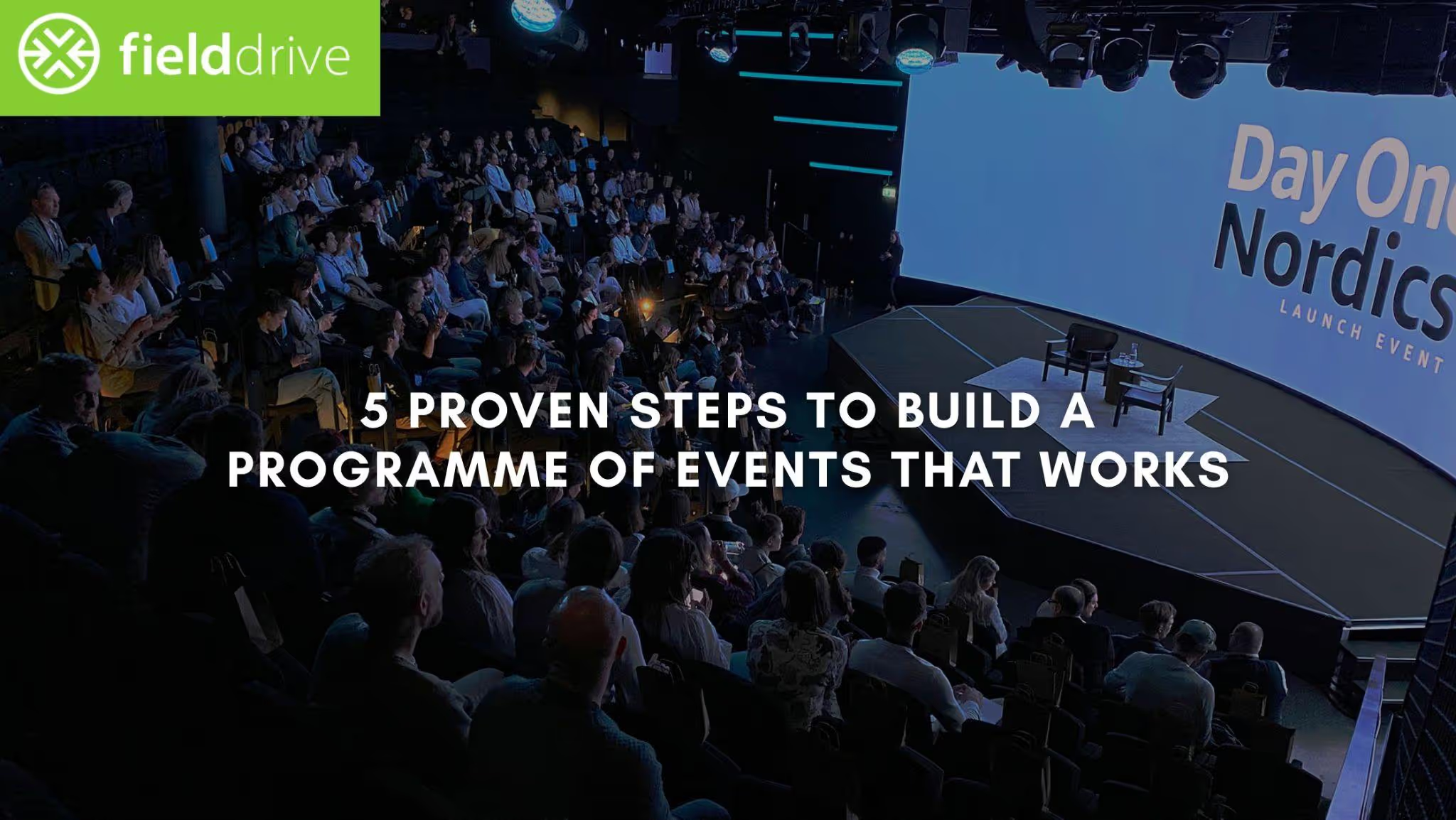
Crowds build up at the entrance while your first session is already running late. Attendees keep checking their phones, unsure where to go next. Speakers rush through content because earlier segments overran. This is what a poorly structured programme of events looks like in practice. It does not fail on paper. It fails in motion.
77% of consumers report that their trust in a brand increases after interacting at a live event, yet that trust is fragile when the experience feels disjointed. A programme of events is not just a document you share. It is the invisible structure that controls how people enter, move, and engage. When that structure is weak, entry bottlenecks form, transitions stall, and small delays turn into visible friction.
In this guide, we move past the agenda. You will learn how to create an event programme designed for execution, where most schedules break under pressure, and how to use the right structure and templates to turn friction into a smooth attendee journey.
Key Takeaways:
- Programme ≠ Schedule: A programme of events is not a list of sessions. It controls movement, timing, and attention across the event.
- Flow Drives Outcomes: When people move smoothly, sessions stay full, energy holds, and key moments land as planned.
- Sequence Beats Volume: More sessions create noise. Better sequencing keeps attention and prevents drop-offs.
- Design for Movement First: Time fails when movement is ignored. Entry speed, transitions, and crowd flow decide if the plan holds.
- Data Closes the Gap: What you planned and what actually happens are rarely the same. Track attendance and flow to adjust in the moment.
Why a Programme of Events Is More Than a Timetable
A programme of events is often treated as a simple list of sessions with timings. That view misses what actually shapes the attendee experience. People experience events through movement, waiting, transitions, and moments of attention.
A schedule tells people what is happening. A programme controls how the event unfolds. The difference becomes clear when you look at how each one behaves in practice:
The gap between these two only becomes visible once people start moving.
Where Things Break in Practice
A well-structured programme anticipates where things usually break. It accounts for the 10:30 AM coffee line that forms when too many people move at once and avoids placing your most data-heavy panel in the 2:00 PM slump when attention drops.
These patterns repeat across conferences, trade shows, and corporate events. The issue is not unpredictability. They are rarely planned for. Most programmes fail because they focus on content first and flow later.
The breakdown usually happens in predictable ways:
- Entry bottlenecks: Large groups arrive at the same time, but check-in and access points are not designed for that volume.
- Transition overload: Attendees are expected to move between sessions faster than the venue allows, creating delays that compound.
- Session spillovers: One session overruns, pushing the entire schedule off balance for the rest of the day.
- Energy mismatches: High-focus sessions are placed at low-attention times, reducing engagement and retention.
- The density problem: Five hundred people cannot move through a single doorway in ninety seconds, yet many programmes are built as if they can.
When this happens, sessions start late, attendees skip content, and high-value moments lose attention. A delay in one session rarely stays isolated. It cascades across the rest of the day.
A schedule assumes your attendees are teleporters. A programme accounts for how they actually move.
Once you account for this, the programme stops being a schedule and starts becoming a control system.
What a Programme Actually Controls
When you shift from listing sessions to designing flow, the role of a programme changes:
- It reduces bottlenecks at entry points and session transitions
- It keeps sessions starting and ending on time across tracks
- It synchronises staff, security, and catering to the same pulse
- It reduces confusion without constant intervention
A programme is not a document attendees read; it is a choreography they follow. When it works, people do not notice the transitions. They just arrive where they need to be, exactly when they need to be there.
Once you see how programmes behave in practice, the next step is building one that holds under pressure.
Building an Event Programme Around Human Behavior
Most event programmes are built as timelines. High-performing ones are built as experience arcs that control how people move, engage, and exit. Events do not follow schedules. They follow energy, attention, and movement.
This shift becomes clear when you break the programme into phases that control flow:
Each phase solves a different problem. Miss one, and the rest start to fail. More sessions create density; better sequencing creates value. A programme is a filter, not a bucket.

A clear process needs a structure to support it, which is where a practical programme template becomes useful.
How to Build a Programme of Events for Smooth Execution
A programme of events fails when it is built for the document, not for the floor. The goal is not to fill time slots. The goal is to control movement, attention, and timing under real conditions where delays and density shape the outcome.
Build your programme as a system. Each step should reduce friction, not add structure for its own sake.
This is how you move from planning to execution:
1. Define the Outcome Before the Agenda
Most teams start with sessions. High-performing teams start with outcomes. What should attendees do, feel, or remember at specific points in the event?
This shifts the programme from content-first to experience-first.
Focus on outcomes before structure:
- Start with the primary goal: Define whether the event is driving leads, engagement, announcements, or networking.
- Identify key moments: Map where attention must peak and where interaction matters most.
- Track success signals: Use live data, like automated session scanning, to confirm your Peak has the audience you planned for—not attendees still stuck elsewhere.
2. Map Movement Before You Assign Time
Time is not the first constraint. Movement is. If people cannot move fast enough, your schedule will break regardless of how well it is planned.
Design for how people flow through the space:
- Audit entry points: Don’t guess. Calculate throughput. If your check-in setup cannot process 500 people in 20 minutes, your 9:30 AM keynote is already a 9:45 AM keynote.
- Map transition paths: Measure distances, bottlenecks, and density between sessions.
- Account for dwell zones: Factor in coffee stations, sponsor booths, and networking areas that slow movement.
Once the physics of the venue are solved, you can design the psychology of the day.
3. Sequence for Energy, Not Convenience
Most programmes are built around speaker availability. This creates uneven pacing and attention drops.
The sequence should follow how attention builds and fades:
- Front-load clarity: Open with direction and context, not heavy content.
- Alternate intensity: Pair high-focus sessions with shorter or interactive formats to sustain attention.
- Protect attention windows: Schedule critical sessions when energy and attendance are highest.
4. Build in Buffer, Not Optimism
Schedules often assume everything runs on time. They rarely do. Small delays compound quickly.
A buffer is not dead time. It is insurance.
Design for reality, not best-case scenarios:
- Insert transition buffers: Give time for movement, overruns, and resets.
- Limit back-to-back sessions: Avoid fatigue and cascading delays.
- Create recovery points: Use breaks as shock absorbers that prevent small overruns from becoming major disruptions.
5. Align Teams to the Same Timeline
A programme is not just for attendees. It coordinates staff, speakers, security, and vendors.
Misalignment creates breakdowns that surface during execution. If the AV team does not know the caterers are running five minutes late, your buffer becomes a bottleneck. Sync the heartbeat of the event.
Keep all teams aligned:
- Align stakeholders early: Ensure everyone operates on the same timeline and expectations.
- Assign clear ownership: Define who controls transitions, timing, and flow.
- Prepare for deviation: Set clear responses for delays and last-minute changes.
Each step builds on the previous one. Skip one, and execution starts to break under pressure.
Programme of Events Template You Can Use Immediately
A programme of events template is a strategic framework used to organise the timing, flow, and operational execution of a conference, corporate meeting, or trade show.
Most templates fail because they only show structure, not decisions. A useful template should help you control flow, timing, and movement—not just list sessions.
Use this as your base:
Standard Programme for Event Template (Ready-to-Use Format)
Download our execution-ready template (Excel/Google Sheets)
How to Use This Template
A template only works if you adapt it to your event conditions.
Apply it with intent:
- Run the density check: If 200 people are in Room A and 200 in Room B, your break area must physically support 400 people at once.
- Design the golden buffer: Every three hours of content needs a 30-minute shock absorber. If the schedule holds, it becomes networking. If it breaks, it saves the day.
- Sequence for flow, not preference: Align sessions with attention and movement, not speaker convenience.
The 3-Track Variation
As events scale, complexity increases fast. A single-track template breaks down when multiple sessions run in parallel.
Adapt the structure:
- Separate tracks clearly: Define Track A, B, and C with distinct flows to reduce confusion.
- Add capacity visibility: Track room capacity percentages in the Notes column to prevent overcrowding.
- Monitor movement between tracks: Identify where transitions will create friction across sessions.
A template does not make your programme effective. The decisions behind it do.
How to Adjust Your Event Programme for Different Event Types
A template gives you structure. Customisation makes it work. Most event teams use the same programme format across every event. That is where things start to break. A conference, a corporate event, and a trade show do not fail for the same reasons. Your programme should not treat them the same.
The structure stays consistent. The emphasis changes.
Here’s how to adapt your template based on event type:
For Conferences (Multi-Track Complexity)
Conferences fail when movement is not controlled. Too many sessions, too many choices, and not enough coordination.
Adjust your template to handle density and parallel flow:
- Prioritise track clarity: Separate sessions clearly to reduce cross-room confusion.
- Add capacity visibility: Do not guess. Use pre-registration data or Day 1 scan counts to predict which rooms will overflow on Day 2.
- Synchronise transitions: Align break timings across tracks to prevent collisions.
- Use wave starts: Stagger track start times by a few minutes to avoid thousands of attendees hitting the same hallway at once.
- Centralise peak moments: Bring all attendees back together for key sessions.
For Corporate Events (Precision & Messaging)
Corporate events fail when timing slips or messaging loses impact. One delay or poorly placed session can dilute the entire narrative. In this format, the programme is a messaging architecture.
Adapt your template for control and clarity:
- Use precision buffers: Replace long breaks with short reset windows between key speakers to absorb delays without losing pace.
- Account for executive buffers: Plan for key speakers to run over. Build that flexibility into transitions so the next session is protected.
- Sequence for emotional resonance: Do not follow a dense technical session with a leadership keynote. Use a short format shift, like an interactive poll or high-energy segment, to reset attention first.
- Limit parallel sessions: Keep focus centralised to avoid fragmentation.
- Protect key moments: Ensure leadership sessions land at high-attention points in the day.
For Trade Shows (Movement & Traffic Flow)
Trade shows fail when people stop moving. If attendees cluster in one area, the rest of the floor loses value.
Modify your template to drive movement:
- Design traffic triggers: Add demos or scheduled moments to pull attendees across zones.
- Distribute engagement: Avoid stacking high-interest activities in one area.
- Track and redirect flow: Use badge scanning or heat-mapping to identify where traffic builds, then deploy real-time nudges or pop-up demos to shift movement toward quieter zones.
- Create movement cycles: Use time blocks to push attendees through different areas of the floor.
The Event-Type Golden Rule
The template stays the same. The objective changes.
- Conferences: Design for volume: How many people can you move without friction
- Corporate events: Design for impact: When is your audience most receptive
- Trade shows: Design for discovery: How do you guide attendees across the entire floor
Customisation defines structure, but clarity depends on selecting what information to include and what to remove.
How to Write a Program for an Event Without the Clutter
Most event programmes fail because they try to include everything. More information does not create clarity. It creates friction. A strong programme filters aggressively. It shows only what helps people move, decide, and engage.
Use this checklist to keep it focused:
What to Include in an Event Program
Include only what improves flow and decision-making:
- Clear timing: Exact start and end times so attendees can plan movement.
- Session titles with intent: Not just names, but what the attendee will get.
- Location details: Room names or zones that are easy to find quickly.
- Format indicators: Keynote, panel, workshop, networking—set expectations instantly.
- Speaker identifiers: Names and roles, kept brief and scannable.
- Visible transitions: Label buffers as “Transition & Networking” so attendees know they can move, not wait.
- Navigation cues: Use live-updating digital directions. If a room is full, attendees should know before they walk in.
- Key moments highlighted: Peak sessions that anchor attention across the day.
What to Leave Out
Remove anything that slows reading or adds cognitive load:
- Long speaker bios: They belong on the website, not in the programme.
- Dense descriptions: If it cannot be scanned in seconds, it will be skipped.
- Decision-heavy layouts: Too many parallel tracks create fatigue and hallway gridlock.
- Unstructured sponsor blocks: Adds noise without guiding action.
- Hidden updates: Timing or room changes must be visible, not buried.
- Redundant information: If it does not help movement or decisions, remove it.
The Programme Litmus Test
Does this word help an attendee find a seat, understand a value, or manage their time? If not, it does not belong. If the answer is “it makes a sponsor happy,” move it to signage, not the programme.
Even with the right content, execution can still break down if common mistakes are not addressed early.
Common Event Programme Mistakes and How to Fix Them
Most event programmes don’t fail because of poor planning. They fail because small gaps in execution build up under pressure. Here are the mistakes that show up repeatedly and how to fix them:
1. Slow Check-in Creates Early Bottlenecks
When entry slows down, everything shifts. Attendees arrive late, sessions start half-empty, and momentum never builds.
Fix the first point of friction:
- Use facial recognition for high-security, high-speed verification, or deploy rapid QR-based check-in to clear the lobby in minutes
- Deploy touchless check-in kiosks to handle peak arrivals without queues
- Enable fast event badge printing solutions so badges are issued instantly, not in batches
2. No Visibility Into Where Attendees Actually Are
Programmes assume people are where they should be. In reality, rooms fill unevenly, and key sessions lose attendance.
Close the visibility gap:
- Use a session scanning solution to track attendance in real time
- Use an analytics platform to see which sessions are over or under-performing
- Adjust room assignments and flow based on actual data, not assumptions
3. Poor Flow Between Sessions
Transitions break when attendees move without direction. People cluster, walk back and forth, or arrive late.
Control movement actively:
- Guide attendees with clear transitions and timing buffers
- Use data signals to identify bottlenecks and adjust flow during the event
- Align staff to manage movement, not just sessions
4. Missed Opportunities for Engagement and Capture
Attendees engage, but that value is often lost. Conversations happen without follow-up, and leads go untracked.
Capture interaction where it happens:
- Use a lead retrieval app so networking breaks are not “dark time,” but measurable engagement
- Connect interactions to your CRM through third-party integrations
- Ensure every transition window contributes to the pipeline, not just attendance
5. No Feedback Loop After the Event
Many teams measure success too late or not at all. Without insight, the same mistakes repeat.
Turn data into decisions:
- Use an analytics platform to review attendance patterns, drop-offs, and peak engagement
- Identify where the flow broke and where it worked
- Apply those insights to your next programme design
A programme does not fail all at once. It breaks at the edges: entry, transitions, visibility, and exit. Fix those, and the rest holds.
fielddrive does not just support this flow. It turns it into a system you can see and measure. From high-speed check-in to session visibility and post-event insights, you can track what is happening and act on it while the event is still live.
Conclusion
A programme of events is not a document. It is the system that controls how your event moves, where attention builds, and where it breaks. When flow is clear, people arrive on time, sessions stay full, and key moments land as intended. When it is not, delays spread, rooms fragment, and value drops.
The difference is not more content. It is better sequencing, clearer direction, and tighter control of movement.
If you want to see how this works in practice, book a demo with fielddrive. You’ll see how fast check-in, live session data, and real-time visibility help you run your programme as it was planned, not as it drifts.
FAQs
1. How detailed should a programme of events be?
A programme should be detailed enough to guide decisions, not so detailed that it slows reading. Attendees need clarity on timing, location, and session value within seconds. Adding excessive descriptions or operational notes can reduce usability.
The right level of detail depends on event complexity. A single-track event can stay minimal, while multi-track events need a clearer structure. Focus on what helps attendees decide where to go next quickly.
2. Should you share the programme of events before the event?
Yes, sharing the programme in advance helps attendees plan their time and set expectations. It also improves session attendance, as people arrive with a clear idea of what they want to attend. Early access allows attendees to prioritise sessions and reduces confusion on the day.
For larger events, pre-event visibility also spreads out decision-making, which reduces crowding at key moments. Updates should remain visible if changes occur closer to the event.
3. How do you handle last-minute changes in an event programme?
Last-minute changes are common, so visibility matters more than perfection. Any update should be communicated clearly and immediately to avoid confusion. Printed programmes alone are not enough in such cases.
Use channels like screens, mobile updates, or announcements to keep attendees informed. The key is not avoiding change, but making sure attendees do not feel lost when it happens.
4. How long should each session be in an event programme?
Session length depends on format and attention span. Keynotes can hold attention longer, while panels and workshops benefit from shorter durations. A common mistake is extending sessions without considering fatigue.
Shorter, focused sessions often perform better than longer ones with declining attention. Breaks should also be factored in to reset energy. The goal is to maintain attention across the day, not just within individual sessions.
5. Can a programme of events improve event ROI?
Yes, a well-structured programme directly impacts attendance, engagement, and lead capture. When sessions run on time and rooms stay full, attendee satisfaction improves. Clear scheduling also increases participation in key moments such as demos or networking.
Better flow leads to more meaningful interactions, which can translate into stronger business outcomes. The programme shapes how value is experienced during the event, not just how it is planned.
.svg)
.svg)
.svg)
Want to learn how fielddrive can help you elevate your events?
Book a call with our experts today


.svg)