

.svg)
.webp)
30 Post Event Survey Questions Examples to Ask Attendees
Discover 30 essential post event survey questions examples that help you gather valuable feedback, improve attendee satisfaction, and enhance future event planning.
.avif)
Imagine throwing an event that felt pretty good, but you’re unsure if it truly hit the mark. Did your attendees enjoy it? What worked well, and what needs fixing?
Knowing the answers could transform your future events from guesswork to guaranteed success. In fact, 89% of event planners rely on surveys to improve their planning, proving that attendee feedback is a vital secret weapon for growth.
Events are complex with countless moving parts, and without direct feedback, it’s difficult to understand attendee experience or measure success truly. That’s where post event surveys are useful, they provide clear, actionable insights that help you refine your approach, boost engagement, and maximise ROI.
This blog shares 30 carefully crafted post event survey question examples you can ask to gather honest feedback and make your next event even better.
Key Takeaway
- Post event surveys are essential for capturing honest attendee feedback, measuring event success, and uncovering areas for improvement.
- Using a balanced mix of rating scales, multiple choice, and open-ended questions ensures you get both quantitative data and insightful qualitative feedback.
- Timing is critical: sending surveys within 24-48 hours post-event maximises response rates and data accuracy.
- Segmenting questions by categories like sessions, logistics, technology, and engagement helps organise feedback and points to precise improvement opportunities.
- Analysing survey data rigorously and acting on common themes transforms feedback into tangible event enhancements.
What Are Post Event Survey Questions and Why Are They Important?
Post event survey questions are carefully crafted prompts you ask attendees after an event to gather their honest feedback. These questions are designed to assess specific aspects, including overall satisfaction, session quality, logistics, and engagement.
Gathering this information helps businesses understand what worked, what didn’t, and how future events can be improved.
Here’s how post event survey questions can create lasting value for your event strategy:
- Measure true attendee experience: These questions provide a direct line to attendees’ opinions beyond assumptions or incomplete observations.
- Identify strengths and weaknesses: Detail helps pinpoint exactly which parts of your event exceeded expectations and which need refinement.
- Support data-driven decisions: By analysing responses, organisers can plan smarter budget allocation, better content, and enhanced logistics.
- Demonstrate ROI to stakeholders: Concrete feedback shows value and supports continued investment.
- Increase future engagement: Addressing attendee concerns encourages repeat attendance and positive word-of-mouth.
To truly benefit from post event feedback, it's crucial to integrate it with advanced event technology. fielddrive facilitates this by capturing attendee data seamlessly through facial recognition and real-time tracking.
Ready to make your event feedback truly count? Let’s break down the different types of survey questions you can use to get the most useful and actionable insights from your attendees.
Top 6 Types of Post-Event Survey Questions
When designing your post-event survey, using precise question types helps you understand attendee experiences in detail, so you can fine-tune everything from your check-in experience to your future session line-up.
Here’s how each type adds value:
1. Rating Scale Questions
Measures satisfaction or experiences on a numerical scale for quick comparison. It quickly shows which areas score highest or lowest, making patterns easy to spot.
Example: How would you rate the event check-in experience? (Scale from 1–5 or 1–10)
2. Multiple Choice Questions
MCQs help attendees pick one or more predefined answers to categorise preferences or experiences. It analyzes responses for fast analysis and highlights popular choices.
Example: Which session was most valuable to you? (Session A, B, C).
3. Likert Scale Questions
This question measures agreement or satisfaction along a defined range, usually a 5-point scale (from strongly agree to strongly disagree). It’s ideal for assessing attitudes and perceptions and gives nuanced, statistically useful data.
Example: I felt well-informed throughout the event. (Strongly Agree, Agree, Neutral, Disagree, Strongly Disagree)
4. Open-Ended Questions
This type of question lets attendees answer in their own words for in-depth insights. It uncovers specific suggestions and honest feedback you might never anticipate with closed questions.
Example: What could we improve for next time?
5. Matrix Questions
These types of questions allow attendees to rate multiple items (like sessions or speakers) all in one question. It efficiently assesses multiple elements while saving survey space and time.
Example: Rate each workshop you attended on a scale of 1–5.
6. Demographic or Profile Questions
These type of questions helps you understand your audience’s background for future segmentation or marketing. It helps customise experiences and track trends across different attendee segments.
Example: What is your job role? Or have you attended our events before?
Pro Tip: Mix and match these question types in your post-event survey. This blend captures the numbers you need for reporting and the stories you need for improvement.
You’ve got the inside scoop on why asking smart, targeted questions matters, so now let’s put it into action.
30+ Post Event Survey Questions Examples to Ask Attendees
Below you’ll find 30+ post event survey questions, grouped into key categories that help you zero in on every part of your attendees’ experience. These examples go beyond the basics, so you collect feedback that leads to measurable improvements for all kinds of events.
General Event Experience
Get a big-picture view of how your event landed and what stood out in attendees’ minds.
- How would you rate your overall experience at the event? (Scale 1–5)
- Was the event worth your time and investment? (Yes/No/Not Sure)
- What was your favourite part of the event?
- Did the event meet, exceed, or fall short of your expectations? (Exceed/Meet/Fall short)
- How likely are you to attend another event with us? (Very Likely → Very Unlikely)
- Would you recommend this event to others in your industry? (Yes/No/Maybe)
Sessions & Speakers
Let attendees tell you which content mattered and how they felt about the delivery.
Which session did you find most valuable?
- How would you rate the keynote speaker’s effectiveness? (Scale 1–5)
- Were the speakers engaging and knowledgeable?
- Did the session content meet your needs?
- Which session would you have liked more time for?
- What topics do you wish had been covered?
Venue & Logistics
Uncover if your environment and operational flow helped or hindered attendees.
- How would you rate the event’s venue and facilities?
- Did you have any issues with signage or directions on-site?
- How smooth was the check-in process?
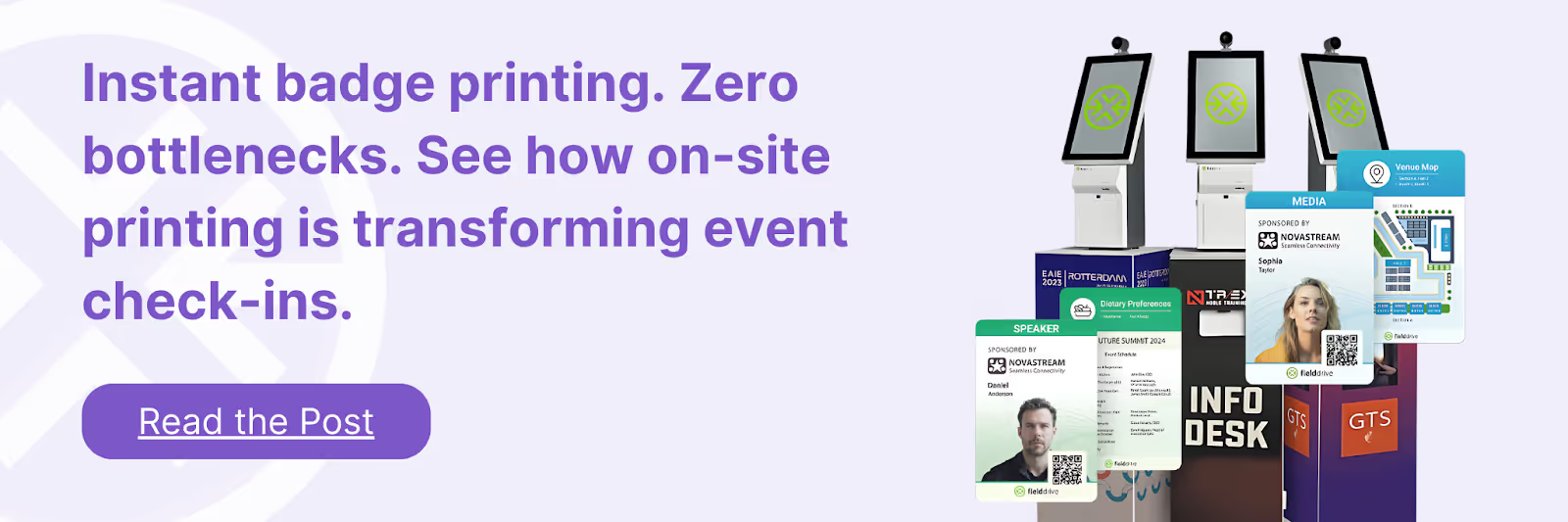
- Was on-site badge printing efficient? (Yes/No)
- How would you rate the accessibility of the venue?
- Was the food and beverage selection adequate?
Networking & Engagement
Discover if attendees made valuable connections and felt included.
- Did you have enough opportunities to network?
- How satisfied were you with the networking tools or spaces provided?
- Did the event promote a sense of community?
- Did you take part in interactive sessions or activities?
- How likely are you to follow up with contacts you made?
Technology
Pinpoint if your event tech, apps, or virtual features actually worked for your audience.
- Did the event technology enhance your experience?
- How user-friendly was the event app or digital platform?
- Did you experience any technical issues (audio, video, connectivity)?
- Was live streaming or hybrid participation smooth?

Organisational & Staff
Find out if your team and communication made a positive impact.
- How friendly/helpful was the event staff?
- Was pre-event information clear and timely?
- Did staff handle any issues efficiently?
- Was there enough support on-site for questions or help?
Open-ended Questions
These let attendees share direct, detailed insights in their own words, often the most valuable data.
- What did you enjoy most about the event?
- What could we improve for future events?
- What was missing from your experience?
- Do you have any additional comments or suggestions?
Also Read: 20+ Innovative Corporate Event Ideas to Boost Team Engagement
You’ve gathered valuable insights from your attendees, but what about the other key players who make your event successful? Let’s understand tailored questions specifically designed for exhibitors, sponsors, volunteers, and staff to ensure you capture their unique experiences and needs.
Post Event Survey Questions for Exhibitors, Sponsors, and Volunteers
Understanding the perspectives of exhibitors, sponsors, and volunteers is also essential to improve all aspects of your event beyond just the attendee experience. These stakeholders each have distinct goals and challenges, so targeting your questions helps you build stronger relationships, optimise future events, and secure ongoing support.
Exhibitors’ Feedback Questions
Exhibitors invest time and resources to maximise their brand visibility and generate leads. Precise questions help you assess whether you delivered value and identify areas for improvement:
- How relevant was the event audience to your business? (Very relevant, Somewhat relevant, Not relevant)
- Did your booth location and layout meet your expectations?
- How satisfied were you with the support provided by event staff before and during the event?
- Did you achieve your key objectives (e.g., lead generation, networking, sales)?
- Were the tools and resources sufficient to manage your exhibit effectively?
- What improvements would enhance your exhibiting experience next time?
Sponsors’ Feedback Questions
Sponsorship is critical for funding and enhancing event quality. These questions help evaluate ROI, visibility, and partnership potential:
- How satisfied were you with your brand visibility and engagement opportunities?
- Did the event effectively support your marketing and sales goals?
- How would you rate communication and coordination with event organisers?
- Was the event audience aligned with your target market?
- Would you consider sponsoring this event again? Why or why not?
- What additional support or features would make sponsorship more valuable?
Volunteers and Staff Feedback Questions
Volunteers and staff are the backbone of event operations. Gathering their feedback helps improve training, coordination, and morale:
- How clearly were your roles and responsibilities communicated before the event?
- How effective was the training and preparation provided?
- How would you rate the support you received from event leadership during the event?
- Were scheduling and task assignments well organised?
- What challenges did you face, and how can they be addressed in future events?
- Do you feel recognised and appreciated for your contribution?
You've explored the importance of asking the right questions and tailoring them to various event participants. Now, let's focus on crafting your survey for maximum impact.
Expert Tips for Writing Effective Post-Event Surveys
Creating an effective post-event survey is about precision, clarity, and timing. Here’s how to design surveys that truly engage your attendees and deliver actionable insights:
- Keep It Short and Focused: Aim for 5 to 10 questions to respect attendees' time and avoid survey fatigue. Prioritise questions that align directly with your event goals and what you must know.
- Use Clear, Active Language: Write questions using active voice for more direct and engaging communication. For example, "How easy was it to navigate the event app?" instead of passive phrasing. Avoid jargon, complex phrasing, or double negatives that confuse respondents.
- Mix Question Types Thoughtfully: Combine closed (rating scales, multiple choice) with a small number of open-ended questions to balance ease and depth. Use Net Promoter Score (NPS) questions early to gauge overall sentiment quickly.
- Time Your Survey Strategically: Send surveys within 24 to 48 hours after the event, while memories are fresh, but attendees have had time to reflect. Consider embedding the survey link in thank-you emails or event apps for easy access.
- Personalise and Incentivise: Use personalised greetings and references (e.g., attendee name, sessions attended) to increase relevance. Offer incentives such as discounts or prize draws to encourage participation without biasing responses.
- Be Transparent About Data Use: Clearly state how you will use and protect respondents’ data, ensuring privacy and compliance with regulations.
Also Read: 20+ Interactive Game Ideas for Corporate Events for Increased Engagement
Now that you know the best methods for capturing meaningful feedback, let’s see how you can improve this process using fielddrive solutions.
How fielddrive Enhances Your Post Event Feedback and Event Management
fielddrive offers an integrated suite of advanced event technology tools designed to maximise efficiency, accuracy, and insights throughout the entire event lifecycle, from check-in to post-event analysis.
Here’s how fielddrive solutions improve post event feedback and event management:
- Instant, Accurate Data Collection: fielddrive’s facial recognition and real-time check-in capture precise attendee information, ensuring your feedback surveys reach the right people with no data loss or manual errors.
- Integrated Feedback and Analytics: Combines attendee survey results with behavioural data (session attendance, dwell time, engagement) for a better understanding of event impact, helping you pinpoint what worked and what needs to change.
- Live Attendance Tracking: Real-time tracking identifies which sessions or zones were most popular, allowing you to correlate survey responses with actual attendee behaviour for deeper insights.
- Faster Survey Distribution: Automated post-event communications can be triggered based on checkout or session completion times, ensuring timely feedback requests that boost response rates and data relevance.
- Seamless Data Export: All captured feedback and attendance data can be exported to your CRM or analytics tools in a few clicks, making follow-up, reporting, and campaign planning far more efficient.
These capabilities help you learn more from every event and continuously raise the standard for attendee experience, engagement, and ROI.
Explore fielddrive’s event management solutions today and take your post event feedback to the next level. Request a demo to see how fielddrive can help deliver data-driven, seamless events every time.
Summing Up,
Mastering post event surveys isn’t just about collecting opinions; it’s about translating those insights directly into measurable improvements and memorable attendee experiences. The difference comes from asking the right questions, analysing feedback systematically, and acting fast to refine every detail of your future events.
Implementing a smart survey strategy paired with fielddrive’s innovations will elevate your results. fielddrive’s facial recognition check-in, custom badge printing, and live attendee tracking streamline operations and empower you to gather complete, accurate feedback instantly.
Ready to enhance your post-event success? Contact us today and see how fielddrive turns feedback into action.
Start delivering better experiences and smarter events, and your attendees (and your team) will thank you.
Frequently Asked Questions
1. What is the ideal length for a post-event survey?
Keep surveys concise, ideally 5 to 15 questions, to avoid survey fatigue and increase the likelihood of completion while still gathering meaningful data.
2. When is the best time to send a post-event survey?
Send surveys within 24 to 48 hours after the event to capture fresh and accurate feedback while memories are still vivid.
3. How can I encourage more attendees to complete the survey?
Use personalised invitations, keep questions simple and relevant, and consider offering incentives like discounts or entry into prize draws to boost response rates.
4. What balance of question types should I use in my survey?
Combine quantitative questions (rating scales, multiple choice) for easy analysis with a few open-ended questions to collect detailed, qualitative feedback.
5. How should I analyse qualitative feedback from open-ended questions?
Categorise responses by common themes or keywords to identify key areas for improvement and tailor future event planning accordingly.
.svg)
.svg)
.svg)
Want to learn how fielddrive can help you elevate your events?
Book a call with our experts today


.svg)