

.svg)
.webp)
90+ Event Planning Industry Statistics Every Planner Should Know in 2026
Explore key event planning industry statistics for 2026 with trends, budgets and tech insights to help you plan smarter and strengthen event results.
You’re planning events in a world that keeps accelerating. With the global events economy expected to surpass $2789.56 billion by 2030, you’re operating in an industry where data sets the pace for success.
That’s why event planning industry statistics matter more than ever. The choices you make for 2026 depend on understanding how audiences, budgets, and technologies are shifting right now.
This blog breaks down the numbers that actually influence your planning: in-person demand, virtual trends, hybrid growth, budgets, engagement patterns, technology adoption, and more. You’ll see where the industry is heading, and how to build events that stay ahead of it.
Key Takeaways
- The event planning industry is accelerating across all formats, with in-person experiences continuing to deliver the strongest impact and highest revenue potential.
- Virtual and hybrid events remain essential for reach and ROI, with hybrid leading as the most effective format for 2026 strategies.
- Rising budgets, increased F&B costs, and higher tech investment make data-driven financial planning critical for US event teams.
- Engagement success hinges on interactive sessions, personalized experiences, and integrated event technology that supports smooth attendee journeys.
- AI, sustainability, and DE&I are shaping the future of events, influencing attendee expectations, brand perception, and long-term event performance.
Why Knowing Event Planning Statistics Matters?
You wouldn't launch a product without market research. The same logic applies to events. Statistics provide the foundation for strategic decisions that determine your event's success.
Understanding industry benchmarks helps you allocate budgets effectively, identify emerging trends before competitors, and justify investments to stakeholders. When 95% of event teams prioritize demonstrating ROI, having concrete data becomes essential for securing future budgets.
Here's why these numbers should guide your 2026 planning:
- Budget justification: Executives demand proof. Statistics show 67% of executives plan to increase meeting budgets in 2025, but they expect measurable returns.
- Competitive advantage: The event planning industry is growing exponentially, and understanding what drives this growth keeps you ahead of market shifts.
- Risk mitigation: With 50% increases in food and beverage costs expected, historical data helps you anticipate and manage rising expenses.
- Attendee expectations: Your audience is constantly evolving. Data shows that many attendees prioritize networking with experts, which shapes how you design experiences.
- Technology investments: When 79% of professionals use event management software, you need benchmarks to evaluate your tech stack.
The stakes are higher than ever. Organizations that leverage data make informed decisions, from selecting venues to measuring success. Those who don't risk falling behind in an increasingly competitive landscape where every dollar must demonstrate clear value.
With this context established, let's examine the specific statistics that will shape your event strategy.
In-Person Event Statistics
In-person events have roared back stronger than anyone predicted. After years of uncertainty, the numbers tell a compelling story of renewed confidence and investment.
Here are the key statistics driving the in-person event resurgence:
- 86.4% of organizers aim to maintain or boost in-person event numbers in 2025 compared to 2024 (Bizzabo)
- 57% of event organizers saw increased attendance at in-person events in the past year (Bizzabo)
- 78% of organizers identify in-person events as their most impactful marketing channel (Bizzabo)
- 80% of organizers believe in-person conferences will become increasingly critical to organizational success (Bizzabo)
- 82.8% of organizers and 77.7% of attendees agree that in-person conferences offer ideal networking environments (Bizzabo)
- 70% of attendees say in-person events provide the best training and professional content (Freeman)
- 75% say demonstrations and hands-on activities are ideal formats for technical information (Freeman)
- 80% of respondents say in-person events are the most trusted marketing channel, up 5% from 2023 (Freeman)
- 64% of consumers retain positive impressions of brands they meet at live events (Freeman)
- 77% say their trust in a brand increased after interacting at a live event (Freeman)
- 58% of event teams plan to host more small in-person events with fewer than 200 attendees (Forrester)
- 83% of meetings planned for 2025 will feature an in-person component (ATN Event Staffing)
The data confirms what event professionals feel on the ground. Attendees crave authentic connections that only face-to-face interaction provides. This isn't a temporary bounce. It represents a fundamental recognition that in-person experiences deliver value that digital channels simply cannot replicate.
As in-person events dominate, organizers are simultaneously exploring digital formats to expand their reach.
Virtual Event Statistics
Virtual events haven't disappeared. They've found their niche. The format that kept the industry alive during lockdowns now serves specific strategic purposes.
The following statistics reveal how virtual events fit into modern event strategies:
- The global virtual events market is projected to reach $297.16 billion by 2030, growing at 20.0% annually (Grand View Research)
- 70% of businesses plan to increase investment in virtual events over the next few years (EventX)
- The average virtual event has 305 registrants on the Bizzabo platform (Bizzabo)
- Virtual events see average attendance rates of 40-50%, compared to 20-30% for webinars (ON24)
- 62% of event organizers plan to increase their virtual event frequency
- Virtual event platforms can reduce event costs by up to 75% compared to in-person events (EventMB)
- 80% of attendees appreciate the flexibility and convenience of virtual events (Kaltura)
- 58% of event marketers use virtual events to generate leads
- The average virtual event attendee spends 45 minutes engaged with content
- 91% of virtual event attendees prefer live sessions over pre-recorded content
- Virtual events can reach audiences 10 times larger than physical events
- 67% of virtual attendees say they would not have attended if the event were only offered in person (Bizzabo)
- 52% of organizers report that virtual events help them reach new audiences
Virtual events excel at democratizing access. Geographic barriers disappear. Travel budgets become irrelevant. Organizations use virtual formats for training, product launches, and community building where physical presence isn't necessary.
The key is matching format to purpose. Virtual works brilliantly for educational content and global reach. Yet, many organizations find the sweet spot lies in combining both approaches. This brings us to the fastest-growing event format.
Hybrid Event Statistics
Hybrid events represent the best of both worlds. They combine in-person energy with virtual accessibility, creating experiences that maximize reach without sacrificing engagement.
These statistics demonstrate why hybrid has become the preferred format for many organizations:
- Hybrid events are expected to make up 22% of all events
- 93% of event organizers plan to invest in hybrid events going forward (Markletic)
- Hybrid events can increase attendance by up to 20-30% compared to in-person only (Kaltura)
- Hybrid events generate 2.5 times more engagement than virtual-only events (EventMB)
- 68% of attendees say hybrid events provide better value for money (Freeman)
- Hybrid events see 70% virtual attendance rates when executed well (ON24)
- 52% of organizers report that hybrid events increase sponsorship opportunities (EventMB)
- Organizations using hybrid formats report 35% higher ROI than single-format events (Bizzabo)
- 74% of event planners say creating seamless hybrid experiences is their top challenge (Northstar Meetings Group)
Hybrid events demand sophisticated coordination. You're essentially running two events simultaneously. Technology becomes critical for bridging the physical and digital divide. When executed well, hybrid formats multiply your reach while maintaining the impact of face-to-face interaction.
Yet success requires investment. Platform selection, production quality, and audience engagement strategies must work flawlessly across both environments. This level of execution depends heavily on budget allocation and marketing strategies, which in turn lead us to financial considerations.
Event Budget and Marketing Statistics
Money drives decisions. Understanding where the industry allocates resources helps you benchmark your spending and identify opportunities for strategic investment.
Here's what the data reveals about event budgets and marketing spend:
- 67% of executives plan to increase their meeting budgets in 2025 (Northstar Meetings Group)
- 53% of event planners report budget increases in 2025 (Bizzabo)
- Food and beverage costs are expected to increase by 50% at many venues (ATN Event Staffing)
- 39% of event budgets go toward venue and catering
- Technology and software represent 15-20% of average event budgets (Bizzabo)
- Marketing and promotion account for 15% of total event spend (Markletic)
- The average cost per attendee for in-person events is $169 per day (Momencio)
- Virtual events cost up to 75% less than in-person events to produce (EventMB)
- 71% of event marketers plan to increase their event marketing budgets in 2025 (Content Marketing Institute)
- Email marketing generates the highest ROI for event promotion at 4,200% (DMA)
- Social media advertising accounts for 35% of event marketing spend (EventMB)
- Early bird pricing strategies increase registration rates by 28% (Eventbrite)
- 61% of event planners say demonstrating ROI is their biggest challenge (Bizzabo)
Budget pressures are real. Costs are rising faster than many organizations anticipated. Venue expenses, staffing, and technology investments all compete for limited resources. Smart planners use data to justify every expenditure and demonstrate clear returns.
The challenge intensifies in the B2B sector, where expectations for professional experiences and measurable outcomes are highest. Let's examine how these dynamics play out in business events.
B2B Event Industry Statistics
B2B events operate in a unique ecosystem. They're not just gatherings. They're strategic business tools that drive pipeline, close deals, and build relationships that translate directly to revenue.
These statistics highlight the critical role of B2B events in business growth:
- 95% of B2B marketers say events are essential to achieving business goals (Bizzabo)
- 68% of B2B marketers rank events as their most effective lead generation channel (Content Marketing Institute)
- 87% of B2B buyers are more likely to buy after attending an event (Freeman)
- B2B events generate 3 times more leads than other marketing channels combined (EventMB)
- The average B2B event generates $4.23 in revenue for every dollar spent (Bizzabo)
- 79% of B2B marketers use events to generate sales leads (Content Marketing Institute)
- 52% of B2B event attendees have buying authority or significant influence (Freeman)
- Trade shows and conferences influence 83% of B2B purchasing decisions (CEIR)
- 74% of attendees say they have a more positive opinion about companies after events (Freeman)
- B2B event attendees are 5 times more likely to become customers than non-attendees (Bizzabo)
- 91% of B2B marketers plan to maintain or increase event budgets in 2025 (Northstar Meetings Group)
- The average B2B event attracts 30-40% C-level executives (EventMB)
- 62% of B2B companies use events for customer retention and upselling (Markletic)
B2B events deliver unmatched value when properly executed. They compress months of relationship building into concentrated interactions. Decision-makers attend with intent, creating opportunities that digital channels struggle to replicate.
Yet delivering value requires keeping attendees engaged throughout the experience. This is where many events struggle and where technology can make a measurable difference.
Attendee Engagement Statistics
Engagement determines success. An event with passive attendees fails regardless of production quality or speaker lineup. Understanding what drives participation helps you design experiences that resonate.
The data reveals what attendees want and how they interact with events:
- 81% of attendees prioritize networking with experts and peers as their primary event goal (Bizzabo)
- 72% of attendees say networking is their main reason for attending events (Freeman)
- 68% of attendees prefer sessions lasting 30-45 minutes (EventMB)
- Interactive sessions generate 3 times more engagement than lecture-style presentations (Kaltura)
- 91% of attendees use event apps when provided (EventMB)
- 70% of attendees check event apps multiple times per day during events (Bizzabo)
- Live polling increases session engagement by 75% (Slido)
- Q&A sessions drive 2.5 times more engagement than one-way presentations (Mentimeter)
- 83% of attendees say gamification makes events more enjoyable (EventMB)
- Attendees spend an average of 3.5 hours engaged with event content per day (Bizzabo)
- 66% of attendees prefer personalized event experiences tailored to their interests (Markletic)
- Mobile event apps increase attendee satisfaction scores by 20% (EventMB)
- 78% of attendees say they would attend more events with better networking opportunities (Freeman)
- Sessions with audience interaction see 60% higher satisfaction ratings (Kaltura)
Attendees vote with their attention. Passive experiences lose. Interactive formats win. The data consistently shows that connection matters more than content consumption. People attend events to engage, not to sit and listen.

Technology is increasingly central to creating these engaging experiences. From registration to post-event follow-up, the right tools can transform how attendees interact with your event.
Event Technology Statistics
Technology has evolved from a nice-to-have to a must-have. Modern events require sophisticated platforms that manage everything from registration to analytics.
Here's what the numbers tell us about technology adoption and impact:
- 79% of event professionals use event management software (Bizzabo)
- The event management software market will reach $14.8 billion by 2028 (Grand View Research)
- 91% of organizers plan to increase their event technology budgets in 2025 (EventMB)
- Mobile event apps are used by 84% of event organizers (Markletic)
- Event registration platforms improve efficiency by 67% (Eventbrite)
- 86% of event organizers use data analytics tools to measure event success (Bizzabo)
- Virtual event platforms saw 1,000% growth in adoption between 2020-2024 (Grand View Research)
- 72% of organizers say technology integration is critical for event success (EventMB)
- RFID and NFC technology adoption in events grew by 45% in 2024 (MarketsandMarkets)
- 71% of attendees expect events to offer mobile apps (EventMB)
- Event tech solutions reduce check-in times by up to 75% (Bizzabo)
- 92% of organizers track attendee engagement through technology (Markletic)
- Live streaming technology is used by 67% of hybrid event organizers (EventMB)
The right technology stack amplifies everything you do. Registration becomes effortless. Check-in flows smoothly. Data collection happens automatically. Poor technology creates friction that frustrates attendees and limits your ability to measure impact.
Within the broader technology landscape, artificial intelligence is emerging as a transformative force that's reshaping how events are planned, executed, and measured.
AI in Events Statistics
Artificial intelligence has moved from experimental to essential. Event professionals are discovering practical applications that solve real problems and deliver measurable value.
The following statistics show how AI is reshaping the event industry:
- 67% of event professionals plan to use AI tools in 2025 (Bizzabo)
- The AI in events market will reach $1.8 billion by 2028, growing at 28% annually (MarketsandMarkets)
- AI-powered personalization increases attendee satisfaction by 34% (EventMB)
- 52% of organizers use AI for event marketing and promotion (Markletic)
- AI chatbots reduce attendee service inquiries by 40% (Drift)
- Predictive analytics using AI improves attendance forecasting accuracy by 60% (Bizzabo)
- 41% of event planners use AI for content recommendations (EventMB)
- AI-driven matchmaking tools increase networking connections by 45% (Markletic)
- 73% of event professionals say AI helps them save time on administrative tasks (Bizzabo)
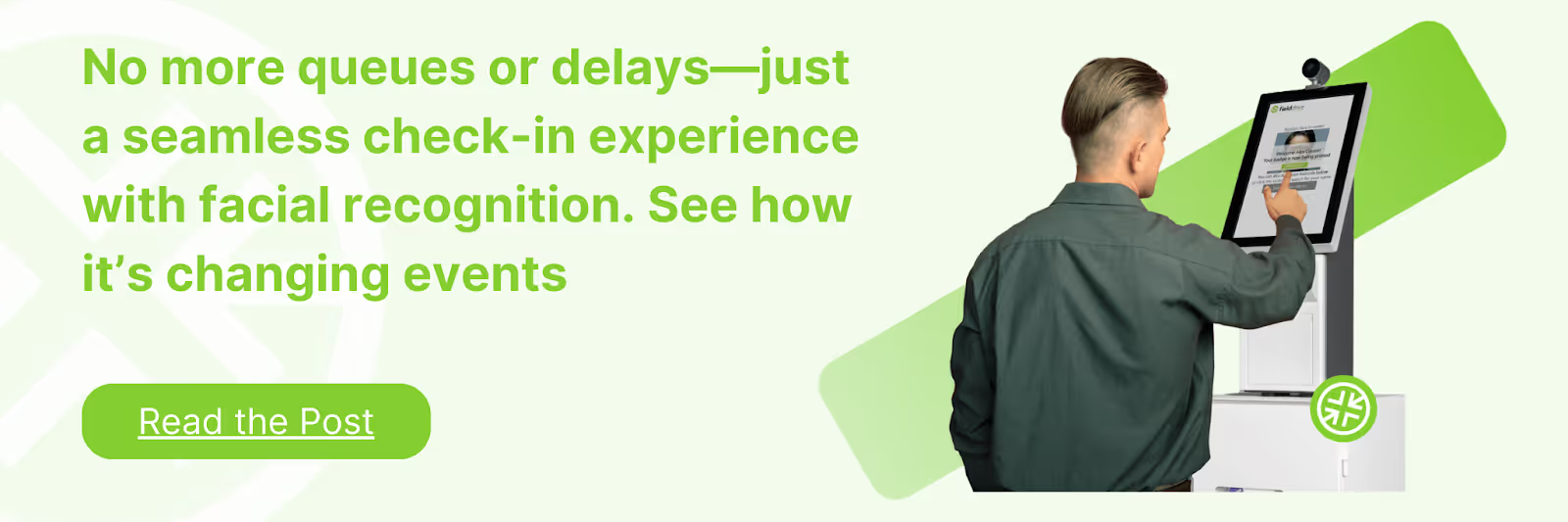
- Facial recognition technology for check-ins reduces wait times by 70% (fielddrive data)
- AI-powered sentiment analysis helps 58% of organizers improve future events (EventMB)
- 38% of organizers use AI for automated email marketing campaigns (Markletic)
AI solves specific pain points. It personalizes experiences at scale. It automates repetitive tasks. It provides insights that humans would miss. Organizations that strategically embrace AI are gaining competitive advantages in efficiency and attendee satisfaction.
Yet technology alone doesn't create meaningful events. Attendees increasingly demand that events reflect values around diversity, equity, inclusion, and environmental responsibility.
DE&I and Sustainability Statistics
Values matter. Today's attendees and stakeholders expect events to demonstrate commitment to diversity, inclusion, and environmental stewardship.
Here's what the data reveals about DE&I and sustainability priorities:
- 86% of attendees consider sustainability when choosing which events to attend (EventMB)
- 74% of event professionals say sustainability is a top priority for 2025 (Bizzabo)
- Events that prioritize sustainability see 20% higher attendee satisfaction (Markletic)
- 68% of organizers have implemented sustainable practices in their events (EventMB)
- Sustainable events reduce waste by an average of 45% (Event Industry Council)
- 91% of millennials expect events to be environmentally responsible (Freeman)
- 63% of companies require sustainability reporting for their events (EventMB)
- Diverse speaker lineups increase event registrations by 28% (Bizzabo)
- 72% of attendees say diversity and inclusion efforts improve their event experience (Markletic)
- Events with accessibility features see 15% higher attendance rates (EventMB)
- 55% of organizers have formal DE&I policies for their events (Bizzabo)
- Carbon-neutral events generate 32% more positive media coverage (EventMB)
Sustainability and inclusion aren't optional extras. They’re expectations. Organizations that ignore these priorities risk alienating attendees and missing partnership opportunities. Those who embrace them authentically build stronger brands and more engaged communities.
Ultimately, all these investments and efforts must justify themselves through measurable returns. Now let's look at how organizers are tracking and demonstrating event value.
Event ROI and Performance Statistics
Every dollar must prove its worth. Executives demand clear evidence that events deliver business value. Understanding industry benchmarks helps you set realistic goals and measure success effectively.
These statistics show how the industry measures and achieves ROI:
- 95% of event teams prioritize demonstrating ROI as a key objective (Bizzabo)
- Events generate an average ROI of 4.23:1 for every dollar invested (EventMB)
- 87% of event organizers track registration and attendance metrics (Markletic)
- 72% measure lead generation and conversion rates (Bizzabo)
- 68% of organizers struggle to accurately measure event ROI (EventMB)
- Events that set clear KPIs achieve 42% better ROI (Bizzabo)
- Post-event surveys have average response rates of 20-30% (EventMB)
- 83% of organizers use attendee satisfaction as a key performance indicator (Markletic)
- Net Promoter Scores for successful events average 50+ (Bizzabo)
- Events with data analytics platforms see 35% improvement in ROI tracking (EventMB)
- 58% of organizers measure social media engagement as part of event success (Markletic)
- Real-time data tracking increases decision-making effectiveness by 54% (Bizzabo)
- Organizations using comprehensive event analytics report 28% higher satisfaction with their event programs (EventMB)
ROI measurement remains challenging but critical. The organizations that crack this code secure bigger budgets and greater stakeholder support. Success requires defining clear metrics before the event, collecting data systematically, and connecting event activities to business outcomes.
Despite improving tools and strategies, event professionals still face significant obstacles that can derail even the best-planned events.
Common Challenges Faced by Event Planners and How to Solve Them
Event teams deal with shifting budgets, rising costs, and fast-changing attendee expectations. Many work under tight timelines while leadership demands consistent results. A clear view of the major pressure points helps planners build systems that reduce friction and protect event performance. Once the challenges are outlined, solutions become far easier to shape.
Budget volatility and rising operational costs
Budgets fluctuate throughout the year, and vendor pricing can change without notice. This creates uncertainty in planning and approval cycles.
Solutions to try
- Compare historical spending with current inflation-adjusted estimates.
- Negotiate multi-event agreements with venues and AV partners.
- Track budgets in real time to avoid last-minute surprises.
Fragmented technology stacks
Teams often rely on separate tools for registration, check-in, engagement, and analytics. Data becomes inconsistent, and teams lose time fixing manual errors.
Solutions to try
- Move toward a unified event platform.
- Select systems with strong native integrations.
- Train teams regularly to keep adoption aligned with new features.
Proving event ROI under higher scrutiny
Leadership wants clear proof that events influence revenue, pipeline, and retention. Many teams still lack the data workflows to show this.
Solutions to try
- Define KPIs tied to business objectives before planning begins.
- Track engagement from registration to post-event actions.
- Connect event data to CRM dashboards for consistent reporting.
Engagement fatigue among attendees
Audiences expect shorter sessions, more interaction, and clear value for their time. Traditional formats struggle to hold attention.
Solutions to try
- Shorten sessions and increase interaction points.
- Add formats that support peer discussion.
- Build personalized agendas for different segments.
Workforce shortages and operational overload
Event teams remain small while event complexity increases. Many teams struggle to find trained onsite staff.
Solutions to try
- Automate tasks like check-in, badge printing, and communication by integrating innovative fielddrive tools like touchless check-in kiosks.
- Maintain a roster of skilled freelance specialists.
- Cross-train internal staff for operational flexibility.
Compliance and data privacy pressure
Events collect sensitive attendee information. Any weakness in consent, storage, or data access creates compliance risk.
Solutions to try
- Standardize privacy workflows across all events.
- Work with vendors that maintain strong compliance certifications.
- Use registration systems that automatically track consent.
Rising expectations around sustainability
Attendees prefer events that reduce waste and use suppliers that practice responsible sourcing. Poor sustainability planning now impacts brand perception.
Solutions to try
- Use digital, sustainable event badge-printing solutions from popular brands like fielddrive.
- Select suppliers with verified sustainability standards.
- Share event sustainability metrics after the event.
Delivering smooth hybrid and in-person experiences
Hybrid remains important for global audiences while in-person demand grows. Many teams struggle to support both formats without doubling the workload.
Solutions to try
- Reuse content across both formats when possible.
- Test audio, switching, and streaming teams together.
- Choose platforms built for hybrid engagement.
Data-Backed Recommendations for Your 2026 Event Strategy
Statistics only matter when they inform action. Here are specific recommendations based on the data we've examined, designed to help you make strategic decisions for 2026.
Apply these evidence-based strategies to your event planning:
Prioritize high-impact in-person experiences
With nearly 80 percent of organizers citing in-person as their strongest channel, direct the largest share of your resources to formats that support expert-led networking, skill-building, and community growth. Attendees value opportunities that feel exclusive and purposeful.
Use hybrid formats to expand reach and revenue
Hybrid events now deliver higher ROI because they retain the in-person depth while reaching audiences who would never travel. Treat the virtual component as a revenue driver, not an add-on, and design value-specific experiences for each audience type.
Adopt AI to personalize attendee journeys
AI adoption continues to rise across registration, matchmaking, and communication. Use it to deliver tailored agendas, targeted networking, and automated session recommendations that adapt to attendee behavior.
Redesign agendas for short, interactive learning
Engagement data shows a strong preference for brief sessions that are interactive. Build based on attention patterns instead of legacy formats. Keep learning segments focused and give audiences room to participate.
Build ROI measurement into the planning cycle
Teams that define KPIs before launching registration capture more meaningful data across the lifecycle. Establish clear goals, integrate your CRM early, and use engagement tracking to build revenue-linked reporting.
Treat sustainability as a strategic advantage
Attendee preference for sustainable choices continues to grow. Use this as an opportunity to differentiate your event and strengthen brand perception. Make decisions that reduce waste and select suppliers with credible environmental practices.
Strengthen your technology foundation
Adoption rates for event apps and integrated platforms remain high. Ensure your tech stack supports smooth registration, efficient check-in, and clear data flow from start to finish. Prioritize tools that integrate cleanly and reduce manual workload.
These recommendations work because they're grounded in what actually drives event success. They reflect how attendees behave, what organizers achieve, and where the industry is heading. Implement them systematically, and you'll position your 2026 events for measurable success.
Conclusion
The data shows a planning environment that keeps shifting. Attendees expect smoother experiences, teams have less room for error, and leaders want proof that every decision makes sense. Strong information and the right tools give planners the control they need, especially when pressure peaks during onsite execution.
This is where fielddrive makes a real difference. It gives planners the kind of support that actually reduces stress instead of adding new steps. The tools work quietly in the background so your team can focus on the parts of the event that need your attention the most.
Here is how each product helps you deliver smoother, more predictable events:
- Facial Recognition Check-In: Speeds up arrivals through instant identity verification, cutting long lines and helping your team set a strong first impression right away.
- Real-Time Attendee Tracking: Shows exactly how attendees move and interact with the event, so you can catch crowding, low-engagement zones, or timing issues before they become problems.
- On-Site Badge Printing: Prints badges automatically as soon as an attendee is verified, without any last-minute chaos.
- Integrated Event Data Analytics: Pulls all engagement insights into one place, giving you a clear understanding of attendee behavior and a solid foundation for future decisions.
- Secure Access Control: Ensures the right people access the right areas without manual checks or additional staff, keeping security tight and operations smooth.
fielddrive helps teams run events that feel organized, confident, and easy for attendees from the moment they arrive. Book a demo and see how these tools support your planning and strengthen every on-site moment.
FAQ’s
1. What are the 5 C's of event planning?
The five C’s are Concept, Coordination, Control, Culmination, and Closeout. They guide planners from defining the event purpose through logistics management, execution supervision, experience delivery, and final post-event evaluation and reporting.
2. What are the trends in the event industry?
Key trends include shorter learning formats, data-informed decision-making, localized micro-events, experiential design, wellness-focused programming, stronger community building, learner staffing models, mobile-first planning, and increased emphasis on operational resilience.
3. What key events are happening in 2025?
Major 2025 events include global technology expos, international sustainability forums, large-scale medical congresses, major sports championships, leading fintech conventions, cultural festivals, aerospace showcases, and multiregional trade gatherings shaping innovation, policy, and cross-industry collaboration.
4. What are the top 10 trends in event management?
Key trends include modular staging, real-time content shifts, adaptive seating layouts, biometric entry, microlearning tracks, precision forecasting, inclusive programming, sensory design, ethical sourcing, and expanded wellness integrations to support smoother attendee experiences.
.svg)
.svg)
.svg)
Want to learn how fielddrive can help you elevate your events?
Book a call with our experts today


.svg)